Why Does the ‘Cockroach’ Movement Want India’s CEC to Resign?
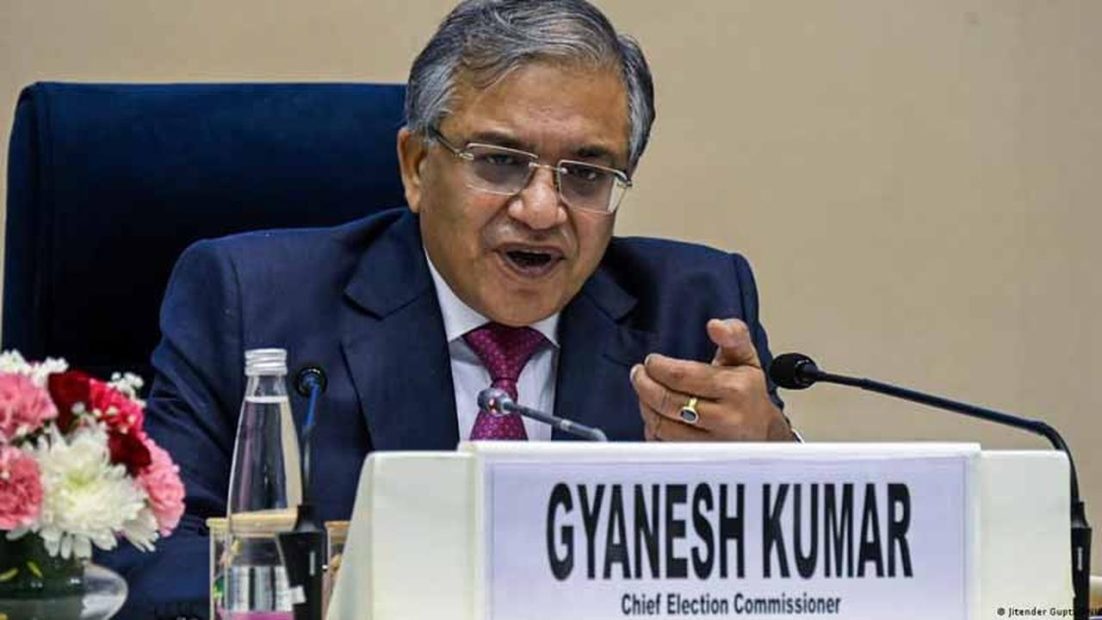
A youth-led movement known as the “Cockroach movement” has emerged as an influential force in Indian politics. Amid an intense ongoing debate over voter-list updates and public confidence in the electoral system, the Election Commission has become the main target of their recent protests.
Supported by opposition parties, the protests have created a new political challenge for the government of Indian Prime Minister Narendra Modi.
After a newspaper investigation revealed information about irregularities in the voter-list revision process, India’s youth-based “Cockroach Janata Party” (CJP) and opposition parties demanded the resignation of Chief Election Commissioner (CEC) Gyanesh Kumar.
A report published in The Indian Express said several key decisions related to the “Special Intensive Revision” (SIR) of the voter list, which began last year, may have been taken without the approval of the other two members of the commission.
The other two election commissioners, Sukhbir Singh Sandhu and Vivek Joshi, had raised at least 14 formal objections over the past 10 months regarding several decisions concerning the registration, deletion and restoration of voters’ names, as well as control over voter-list data. In one objection, Commissioner Sandhu alleged that the Election Commission had ignored the written advice of the two commissioners, making the actions completely “unauthorised and illegal.”
However, in a statement issued by the Election Commission and published in local media, the commission said the allegations presented only one side of the events and that differences of opinion in the decision-making process are normal.
‘Cockroach’ Founder Abhijit Dipak Warns of Nationwide Protests
At a press conference on Thursday, Cockroach Janata Party founder Abhijit Dipak described Chief Election Commissioner Gyanesh Kumar as “the biggest threat to India’s democracy” and demanded his resignation.
Dipak warned that if Gyanesh Kumar did not resign by Saturday, mass protests would begin across the country from Mumbai on October 2, the birth anniversary of Mahatma Gandhi, regarded as the Father of the Nation in India. However, the CEC did not resign even after the Saturday deadline set by Dipak had passed.
Later, after Mumbai Police denied permission for the proposed October 2 programme, Abhijit Dipak called on his supporters through social media platform X, formerly Twitter, to defy the restrictions imposed on them and offer themselves for mass arrests. Following this, protesters demonstrated on Friday and pledged to continue the movement despite administrative obstacles.
Opposition Alliance Voices Strong Criticism
Joining the CJP’s position, the main opposition Congress and other opposition parties have strongly criticised the Election Commission and Gyanesh Kumar.
Congress chief spokesperson Pawan Khera said, “What Gyanesh Kumar has done is no less than treason.” Writing on social media, he said, “If decisions related to the SIR were taken without the knowledge or approval of the other two commissioners… then all those decisions and the entire SIR process are legally invalid.”
Opposition parties have long alleged that the Election Commission manipulated voter lists in collusion with the ruling Bharatiya Janata Party (BJP) to benefit it in recent state elections, although both the commission and the BJP have denied the allegations.
What Are the Main Demands of India’s CJP Movement?
The Cockroach movement, which has millions of followers on social media, reportedly forced India’s Education Minister Dharmendra Pradhan to resign last July following intense street protests led by students.
The group has currently put forward three main demands:
- The resignation of Chief Election Commissioner Gyanesh Kumar and the initiation of criminal proceedings against him.
- The immediate suspension of the SIR process, postponement of all upcoming elections, and repeal of the 2023 law concerning the appointment of election commissioners.
- Restoration, through an independent review, of the names of millions of voters who were excluded from the voter list.
Civil rights activist Amrita Johri told Deutsche Welle (DW) that the lack of transparency surrounding the SIR process and public concerns have played a major role in the movement’s decision to target the Election Commission. She said, “The way this process has been conducted without any clear explanation or public consultation, along with the disclosure of the repeated objections raised by the two commissioners, has dealt a major blow to public confidence.”
From Education Movement to Electoral Politics
Political analyst Sudheendra Kulkarni views the movement less as the emergence of a single political force and more as a strong “pressure group.” He told Deutsche Welle, “It will be difficult for the CJP to develop an independent political future. For now, it can function as a strong political pressure group, but as the next general election approaches, it will have to coordinate with the opposition alliance.”
Political commentator and analyst Radhika Ramaseshan, however, sees the issue differently. She said, “The right to vote is linked to the fundamental rights of citizens and constitutional protection. This directly affects young people who are voting for the first time. Even if the CJP expands the scope of its movement, its influence on the core issue will not diminish.”
What Is Likely to Happen Next?
As Gyanesh Kumar has refused to resign, attention is now focused on the CJP’s proposed street programme in Mumbai on October 2.
However, it is not possible to remove a Chief Election Commissioner simply through street protests. Under the Constitution of India, the Chief Election Commissioner can be removed only by a special majority in both Houses of Parliament—the Lok Sabha and the Rajya Sabha and only on the basis of proven misconduct or incapacity.
Former Chief Election Commissioner of India S. Y. Quraishi told Deutsche Welle, “The legal route is more realistic than removing someone through street protests. Unilateral decisions taken by the three-member commission can be challenged in court, and the Supreme Court may have to intervene.”
The confrontation with the Election Commission is a major test for the youth-led “Cockroach movement,” which will determine how firmly its position becomes established in the Indian political landscape.