All Duties on Solar Equipment Withdrawn
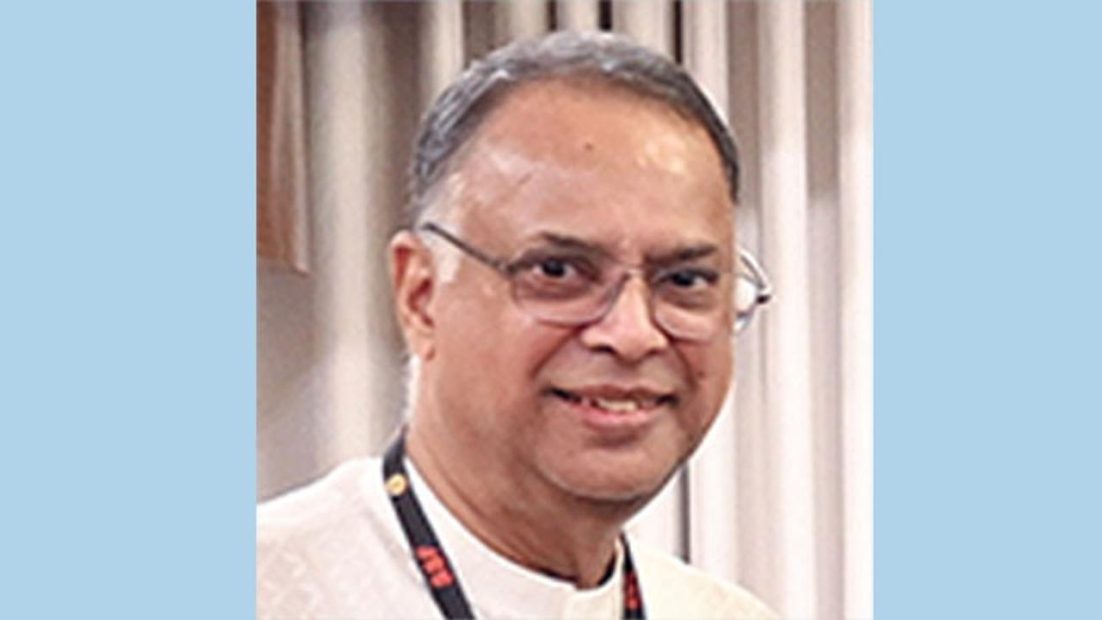
Power, Energy and Mineral Resources Minister Iqbal Hasan Mahmud has said all duties on solar power equipment have been withdrawn to promote renewable energy.
He said previous governments had discussed renewable energy for years but had taken no effective steps. The current government had acted shortly after taking office. The President had issued an ordinance on the matter, and a special energy law would be placed before the next parliament.
He made the remarks at the opening ceremony of the three-day Renewable Energy Fest 2026 at the central playground of Bangladesh University of Engineering and Technology (BUET) on Tuesday.
The minister said the special energy law had faced criticism, alleging that the previous government had introduced such a law to facilitate corruption. He also expressed concern over the power grid’s capacity to accommodate more solar electricity.
“The country’s power grid is not yet modern. It must be able to accommodate electricity from nuclear, fossil fuel-based and renewable sources. But the Power Grid Company of Bangladesh (PGCB) is not yet prepared for this,” he said. He added that the BNP government had begun modernising the grid.
“If you cooperate, we will be able to achieve the target of generating 10,000 megawatts of renewable electricity by 2030,” he said.
Describing the challenges facing the power and energy sector, Iqbal Hasan Mahmud said the government still had to buy electricity at high prices and sell it at lower rates, creating a huge deficit. It also had to pay capacity charges even when power plants remained idle. Problems persisted with electricity purchases and fuel supplies, he added.
On liquefied natural gas (LNG) imports, the minister said Qatar had suspended supplies following bomb attacks when Bangladesh was dependent on the country. As a result, LNG that had cost $10–12 had to be purchased for $30.
He said Bangladesh had substantial underground resources but alleged that not a single well had been drilled in the past 17 years. He warned that poor planning and management would leave the country struggling for another 50 to 60 years.
BUET Vice-Chancellor Professor Ekramul Haque said rising international energy prices were putting pressure on the country’s economy. Promoting renewable energy could help address the situation, he added.
Farah Kabir, country director of ActionAid Bangladesh, said 96 per cent of Bangladesh’s electricity generation depended on fossil fuels, most of which were imported. This left the sector exposed to various risks, she added.
The festival, jointly organised by ActionAid Bangladesh, BUET, the Just Energy Transition Network Bangladesh (JETNET-BD) and BUET’s Institute of Energy and Sustainable Development, will continue until October 28.
Held under the theme “A Just, Inclusive and Green Energy Transition”, the event has brought together more than 1,000 representatives. One of its key objectives is to develop a specific action plan to promote renewable energy.