Gadi Eisenkot Secures First Coalition Partner in Bid to Form New Israeli Government
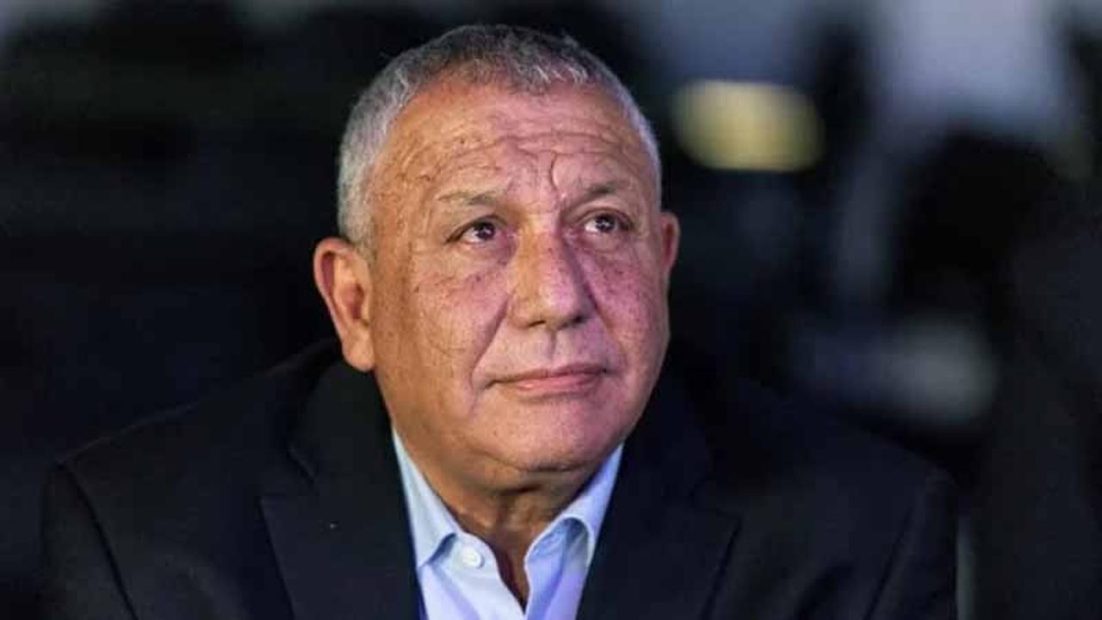
Former army chief and opposition leader Gadi Eisenkot has found his first coalition partner in his effort to form a new government in Israel. His Yashar Party has reached an agreement to form a coalition with the right-wing opposition party Yisrael Beiteinu. The agreement with party leader Avigdor Lieberman has brought Eisenkot one step closer to forming a government. However, he still needs support from several other parties to secure a majority in parliament.
Meanwhile, talks are also taking place with Prime Minister Benjamin Netanyahu’s Likud Party to form a national unity government. This has created a new political situation in Israel. However, it is still uncertain whether Eisenkot will be able to form a government.
According to a Reuters report, Mr. Eisenkot, leader of the Yashar Party, met Avigdor Lieberman, head of Yisrael Beiteinu, on Tuesday (November 24). After the meeting, the two leaders agreed to form a coalition. This is the first coalition agreement since the October 27 election, which was held to form a new government.
No party won the 61 seats needed to form a government on its own in the election. As a result, Israel’s parliament was sworn in on November 10 without a new government. Mr. Netanyahu lost his majority after the election. However, the opposition parties also failed to secure enough seats to form a government.
In this situation, Israeli President Isaac Herzog gave Eisenkot the responsibility of forming a new government after talks with different political groups. Meanwhile, Mr. Netanyahu is serving as caretaker prime minister.
Under Israeli law, Eisenkot has 28 days to form a government. He must complete the process by December 6. If needed, he can ask for an extra 14 days.
If Mr. Eisenkot fails to form a government within this period, Mr. Netanyahu will get the next chance. If he also fails, no side may be able to form a government. In that case, Israel may hold another election next year.
In the election, Mr. Netanyahu’s right-wing Likud Party performed better than expected by joining forces with far-right and ultra-Orthodox parties. Despite this result, the alliance failed to keep its majority in parliament. The alliance currently holds 53 seats in Israel’s 120-seat parliament.
On the other hand, the centre-right Yashar Party and Eisenkot’s possible coalition partners have a total of 48 seats. However, Eisenkot may also get support from parties that represent the Arab minority. These parties hold 19 seats. They share a common position with Mr. Eisenkot on opposing Mr. Netanyahu.
Eisenkot’s party won 21 seats in the election, while Lieberman’s party won seven. Their decision to form a coalition has surprised many. This is because Lieberman had opposed forming a government with support from Arab parties. He had also opposed a national unity government with Netanyahu. Earlier, Lieberman said his main goal was to remove Mr. Netanyahu from power.
Meanwhile, talks are also taking place among Eisenkot, some partners in his ‘pro-change alliance’ and Netanyahu’s Likud Party to form a national unity government. However, this effort has caused disagreements within the opposition camp.
The left-wing Democrats Party has said that it has temporarily stopped talks with Mr. Eisenkot. The party took this decision because of Mr. Eisenkot’s talks with Likud to form a national unity government and the lack of progress in forming a ‘government of change’.
The Democrats Party won eight seats in the election. Its leader, Yair Golan, said he supports forming a government without Netanyahu and with the support of Arab parties.
Sources: Reuters, Al Jazeera