HRW’s 95-Page Report Exposes Dire Plight of India’s Marginalized Muslims Under Modi
Human Rights Watch (HRW) has accused Indian PM Narendra Modi’s government of systematically weakening democratic institutions, eroding the rule of law, and deploying state agencies against political opponents, Muslims, and other minorities. In a 95-page report released on Monday titled ‘“So What’s This Democracy We’re Talking About?’ Modi’s Authoritarian Playbook in India,” the international rights organization warned that India has experienced a decade of democratic backsliding and rising authoritarianism. The Bharatiya Janata Party (BJP)-led administration is accused of subverting parliamentary norms, suppressing political dissent, and utilizing central investigative agencies to advance partisan political interests while leaving marginalized communities increasingly vulnerable to state-backed intimidation and systemic discrimination across the country.
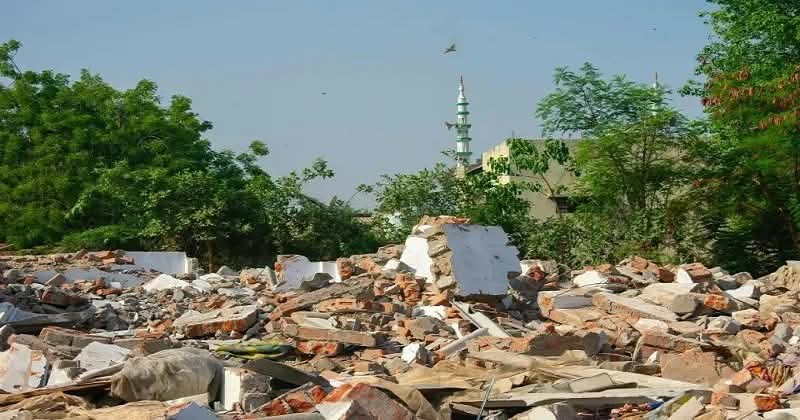
According to the comprehensive report, the BJP government has actively promoted policies over the past ten years that undermine constitutional safeguards, stigmatize religious and ethnic minorities, and normalize vigilante violence through institutional impunity. HRW highlighted rampant anti-Muslim hate speech, violent attacks on Muslims and Dalits over alleged cow slaughter, harassment of interfaith couples under the ‘love jihad’ narrative, and the misuse of anti-conversion laws against Muslims and Christians. Furthermore, the report documented the targeting and expulsion of Bengali-speaking Muslims, deportation of Rohingya refugees to Myanmar, punitive demolition of Muslim properties despite a 2024 Supreme Court ruling, and the branding of protesting Sikh farmers as ‘Khalistani.’
Elaine Pearson, HRW’s Asia director, emphasized that the administration has systematically dismantled vital democratic guardrails. ‘Over the past decade, the Modi government has hollowed out the very independent institutions in India that are essential to checking executive power and protecting civil liberties,’ Ms. Pearson stated in the report. She further warned that the government has undermined the rule of law and promoted Hindu majoritarianism, resulting in a rollback of human rights protections, erosion of the rights of marginalized communities, and a deepening slide toward authoritarianism. HRW stressed that while New Delhi promotes India globally as the mother of democracy, its domestic policies reflect a sharp pivot toward repression.
The organization criticized the government for routinely bypassing parliamentary oversight mechanisms to push through major legislative agendas without adequate scrutiny. During its first two terms from 2014 to 2024, the BJP administration frequently left key opposition posts vacant, sidelined parliamentary committees, and misclassified major legislation as money bills to circumvent upper house review, often passing laws within 24 to 48 hours. Notable examples include the 2019 amendment to the Prevention of Money Laundering Act (PMLA), the abrupt abrogation of Article 370 in Jammu and Kashmir amidst communications blackouts and mass detentions, and the December 2023 law cementing executive control over election commissioner appointments following mass opposition suspensions.
Scrutiny of the Election Commission of India formed a major pillar of HRW’s critique, particularly regarding its alleged failure to hold Modi and senior BJP leaders accountable for hate speech and violations of the model code of conduct. The rights group also raised alarms over the Special Intensive Revision (SIR) of electoral rolls, noting that over 130 million names have been removed since June 2025, sparking widespread fears of arbitrary disenfranchisement. Citing data from West Bengal showing that roughly 93 percent of appealed deletions were eventually restored, HRW asserted that Muslims have been disproportionately targeted, compounded by revised Form 6 rules forcing deleted voters to reapply from scratch.
Central investigative agencies have been heavily weaponized to intimidate political rivals, journalists, and civil society organizations, according to official figures cited by HRW. Between April 2015 and February 2025, the Enforcement Directorate (ED) initiated cases against 193 politicians, predominantly from opposition parties, marking an increase of over 600 percent compared to the 26 politicians investigated during the preceding decade. The report noted that critics widely refer to the BJP as a washing machine, where corruption probes abruptly halt once accused politicians join the ruling party. At the same time, independent groups like Amnesty International India, Oxfam India, Greenpeace India, NewsClick, NDTV, and the BBC faced raids, account freezes, and tax probes.
Counterterrorism laws and agencies have similarly been deployed to stifle dissent and target minority communities, with the National Investigation Agency (NIA) increasingly invoking the stringent Unlawful Activities (Prevention) Act (UAPA). Official government statistics reveal that between 2014 and 2024, authorities arrested 19,868 individuals across 10,118 UAPA cases, yet secured convictions for only 1,275 people- a conviction rate of just 3.8 percent. Citing a SOAS study on Karnataka UAPA cases from 2005 to 2025, HRW noted that nearly seven-eighths of those accused were charged during the BJP’s tenure, with Muslims accounting for over 84 percent, even as the NIA declined to appeal acquittals in bombing cases involving Hindu extremist groups.
The Indian judiciary and independent statutory bodies also came under sharp scrutiny for failing to safeguard fundamental freedoms and check executive overreach adequately. HRW pointed to alleged executive interference in judicial appointments and transfers, alongside inconsistent bail rulings in politically sensitive cases, such as the Supreme Court’s January 2026 denial of bail to activists Umar Khalid and Sharjeel Imam- a decision a subsequent bench in May 2026 noted violated judicial discipline. The report also cited the 2022 ruling expanding ED powers under the PMLA, the arrest of activist Teesta Setalvad following Modi’s exoneration in the 2002 Gujarat riots case, and a 2026 ban on a textbook chapter discussing judicial corruption.
Statutory watchdogs meant to protect vulnerable populations were accused of partisan selectivity in their interventions. HRW alleged that bodies such as the National Commission for Women (NCW) and the National Commission for Protection of Child Rights (NCPCR) pursued complaints aggressively in opposition-ruled states like West Bengal while remaining largely passive regarding severe abuses in BJP-ruled states or those governed by political allies. Specifically, the report contrasted the commission’s proactive posture against opposition governments with their muted responses to widespread sexual violence during the ethnic conflict in Manipur and major sexual assault allegations in the Prajwal Revanna case, reinforcing perceptions of institutional capture.
Academic freedom in India has simultaneously suffered a severe decline due to sustained state pressure, censorship, and campus intimidation. HRW documented widespread arrests, harassment, and violence directed at students and faculty members critical of government policies, alongside frequent cancellations of academic conferences and restrictions on scholarly research. Referencing global data compiled by the V-Dem Institute, the report highlighted that India plummeted into the bottom 15 percent of countries worldwide for academic freedom in 2025. HRW argued that this crackdown on universities and intellectual dissent directly violates India’s international human rights obligations to protect free expression, equality before the law, and institutional autonomy.
To reverse these trends, HRW urged the Indian government to restore democratic accountability, end political interference in independent institutions, and halt the misuse of investigative agencies and counterterrorism laws against critics. The organization called for repealing draconian statutes such as the National Security Act and the Armed Forces (Special Powers) Act, while reforming the UAPA, PMLA, and Foreign Contribution Regulation Act (FCRA). Additionally, HRW demanded that authorities immediately scrap the controversial SIR electoral roll revision process, release individuals detained for exercising their fundamental rights, cease punitive property demolitions, and lift restrictions imposed on independent media outlets and civil society groups.
Concluding its assessment, HRW appealed directly to the international community and India’s democratic partners to take a firmer stance against New Delhi’s authoritarian trajectory. The report urged foreign governments and international institutions to publicly express concern over India’s democratic backsliding, support beleaguered human rights defenders, monitor politically motivated trials, and press Indian authorities to uphold constitutional freedoms. ‘Halting India’s democratic backsliding means stopping the weaponization of state institutions against government critics and rebuilding them as safeguards for everyone’s rights,’ Ms. Pearson concluded, adding that India’s allies should press the Modi government to end this assault on independent institutions and restore checks on executive power.