Modi Government Deliberately Weakening India’s Democratic Institutions: HRW
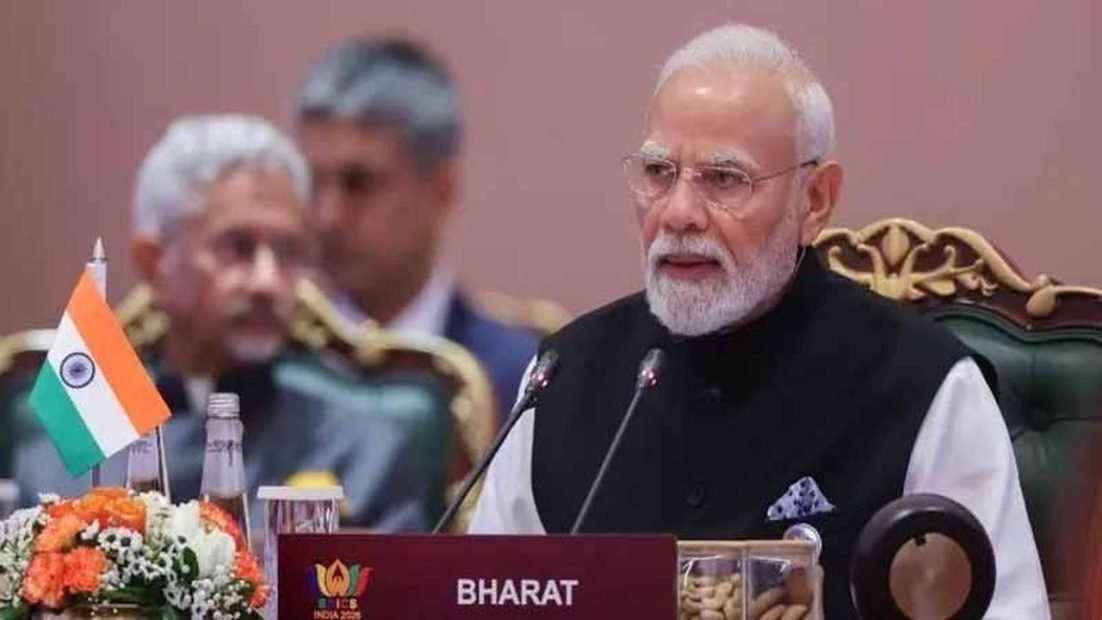
The government led by Indian Prime Minister Narendra Modi is deliberately weakening institutions created to protect human rights and democratic freedoms in the country, according to Human Rights Watch (HRW).
The international rights group said India’s democratic system is being harmed through the suppression of opposition parties, political use of central investigation agencies and increased control over constitutional institutions. HRW made these observations in a 95-page report titled “So What’s This Democracy We’re Talking About? Modi’s Authoritarian Playbook in India,” published on Monday (November 23).
The report said Indian citizens are increasingly taking to the streets to protest against government repression, corruption and problems in the process of revising voter lists. HRW accused the BJP-led government of ignoring parliamentary rules, suppressing political opponents and using central investigation agencies for political purposes. The group also accused the government of weakening institutions such as the Election Commission, Central Information Commission, anti-corruption ombudsman and Human Rights Commission. It also raised concerns about interference in the judiciary.
The report was based on interviews with more than 40 lawyers, journalists, rights activists, researchers, academics, serving and former judges, and former government officials. The interviews were conducted between January 2025 and September 2026. After the report was published, Elaine Pearson, HRW’s Asia director, said the Modi government had weakened India’s independent institutions from within over the past decade. She said these institutions play an important role in checking executive power and protecting civil liberties.
Pearson accused the government of weakening the rule of law and reducing the protection of the rights of minority groups by promoting Hindu majoritarianism. According to the report, the Modi government has ignored parliamentary checks and balances to carry out its political agenda. In December 2023, a law was passed that increased executive control over the appointment of election commissioners. The law also gave commissioners wide legal protection for actions, decisions or statements made while performing their duties. The report said the law was passed while 100 Lok Sabha members and 46 Rajya Sabha members had been suspended for the entire session of Parliament.
From 2014 to 2024, the BJP did not have a majority in the Rajya Sabha. Normally, both houses of Parliament must approve a bill for it to become law. However, Rajya Sabha approval is not required for a bill introduced as a money bill. HRW alleged that this system was used to pass laws affecting basic rights like money bills.
The group cited a 2019 amendment to the Prevention of Money Laundering Act as an example. According to HRW, the amendment greatly increased the powers of the Enforcement Directorate (ED), the central financial investigation agency.
The report said the ED was later used against political opponents, rights activists and critics. It also said the increase in the ED’s powers did not meet the required conditions for a money bill. HRW also raised questions about the role of the Election Commission. The report said the commission repeatedly failed to hold Prime Minister Modi and senior BJP leaders accountable for hate speech that violated election rules.
The group also said there had been no credible investigation into allegations of voter-list manipulation, hiding voting information, irregularities in vote counting and interference with voting machines.
The report said the Election Commission was facing a crisis of trust because of concerns about its ability to work independently from the executive branch. HRW also accused the government of removing more than 130 million names during a “Special Intensive Revision” process that began in June 2025. The process was meant to remove the names of dead, duplicate and ineligible voters. According to the report, protests spread across India in October 2026 over the issue.
HRW also accused the government of using central investigation agencies to pressure leaders of rival political parties to leave their parties and join the BJP.
Citing government data, the report said the ED filed cases against 193 politicians between April 2015 and February 2025 after changes to the money laundering law. Most of them were opposition politicians. The report said that during the first 10 years of the Modi government, 26 politicians had been investigated. It also claimed that investigations were stopped or charges were withdrawn against some politicians after they joined the BJP.
Because of this, opposition parties have called the BJP a “washing machine.”
The report said the use of central investigation agencies against human rights groups, lawyers, rights activists and media organisations under financial laws, including the Foreign Contribution Regulation Act, has increased since 2014.
HRW also accused the government of misusing the Unlawful Activities (Prevention) Act, or UAPA, against human rights activists, journalists, students, peaceful protesters, academics and critics. The group said many people have been kept in detention for years without trial.
The organisation also criticised the role of Indian courts in protecting basic freedoms.
According to the report, in 2022 the Supreme Court of India approved and expanded the powers of investigation agencies to arrest people, conduct searches and seize property under the money laundering law. Legal experts had criticised the ruling, saying it could harm the rights to life and personal freedom.
The report also said the Supreme Court is hearing petitions challenging the legality of the voter-list revision process.
In May 2026, after millions of names were removed from voter lists, the court said the available information did not indicate “systematic denial of voting rights.”
HRW questioned this observation even after 9 million names were removed from the voter list in West Bengal. The organisation said the court had effectively accepted that people could not vote during the period when their names were removed, even if their names were later added back to the list.
The report said that after protests, the Election Commission began reversing some decisions to remove names without proper grounds by November.
According to HRW, the actions of the Modi government over the past decade are not separate institutional failures. Rather, they are part of an authoritarian strategy.
The group said a weak opposition has limited the ability to stop laws that increase executive power. It also said human rights commissions led by political appointees have failed to properly protect civil society voices.
At the same time, the organisation said these abuses have continued because courts have failed to provide effective remedies in time.
Human Rights Watch also called on India’s allied countries to raise concerns about the country’s human rights situation and the decline of democratic institutions during high-level meetings, UN Human Rights Council discussions and talks on bilateral trade and security agreements.
Elaine Pearson said preventing democratic decline in India would require the government to stop using state institutions against its critics. She also called for pressure on the Modi government to rebuild these institutions, protect everyone’s rights and restore checks and balances on executive power.