Netanyahu Wants Quick Strike on Iran, Eisenkot Rejects It
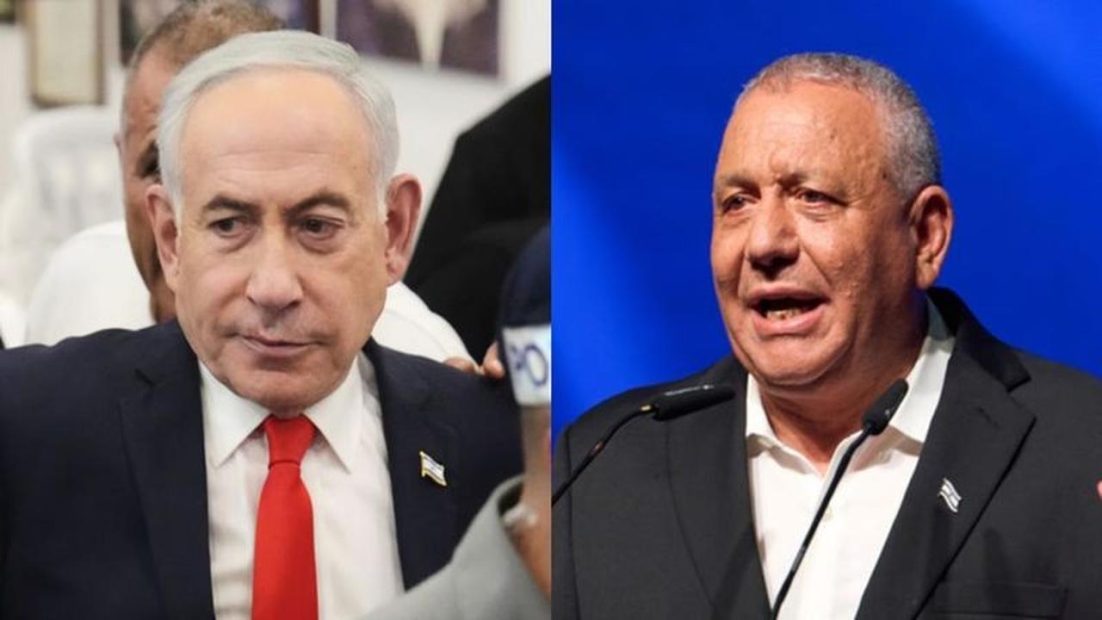
Israeli caretaker Prime Minister Benjamin Netanyahu has accused his political rivals of downplaying the security threats facing Israel for political gain. He also again called for a national unity government to protect the country’s sovereignty and existence.
Mr. Netanyahu made the remarks on Monday, November 23, in a rare statement to the media before a weekly meeting of his Likud party at the Israeli parliament, the Knesset.
His statement came after his political rival, Gadi Eisenkot, chairman of the Yashar party, said that Israel did not face any immediate threat from Iran. Mr. Netanyahu said Israel’s ability to deal with the major threats around it and protect the country depends on national unity. He said those who mock or downplay the immediate and serious threats around Israel are doing so for political reasons.
The prime minister called for a national unity government that would also include ultra-Orthodox parties. He said all sides must be flexible on sensitive issues such as compulsory military service. Ultra-Orthodox parties oppose compulsory military service, while Eisenkot’s alliance supports it.
Netanyahu said every side must be ready to compromise to form a national unity government. He said a solution must be found together with the ultra-Orthodox community, especially on compulsory military service. He also said the ultra-Orthodox parties must be part of the unity government. Netanyahu’s Likud party is currently holding talks with Eisenkot’s Yashar party to form a new coalition after losing its majority in last month’s election. However, the talks have made little progress so far.
Mr. Netanyahu had earlier also called for a unity government. He said all parties in his outgoing coalition must remain in the government and that he must continue as prime minister.
Meanwhile, Mr. Netanyahu had reportedly tried to start a new military operation against Iran. The Israel Defense Forces (IDF) stopped the move, according to reports.
Opposition leaders accused Netanyahu of trying to create another conflict to delay the process of forming a new government.
Mr. Netanyahu also repeated his opposition to any government that depends on support from Arab-majority parties. He accused Arab lawmakers of supporting terrorism and said such a government would not be able to fight Hamas or Iran.
Mentioning Arab-led Joint List lawmakers Ahmad Tibi and Ofer Cassif, Netanyahu said a Zionist government could not be controlled by them or their allies. He said a government that wants to protect the future of the Jewish state cannot depend on people who want to destroy it.
Eisenkot Sees No Need for Immediate Military Action Against Iran
Meanwhile, Gadi Eisenkot said at a meeting of his party that he did not see any immediate threat from Iran that would require urgent military action before a new government is formed. Instead, he said Israel should focus on Iran’s stockpile of enriched uranium.
Mr. Eisenkot said Iran’s biggest threat is its 440 kilograms of enriched uranium, which has not yet been destroyed or removed. He said Israel should focus on this issue. Regarding coalition talks, Mr. Eisenkot said his party would work for “real unity,” not a political deal.
However, he said his party would not compromise on several issues. These include a state investigation into the Hamas attack on October 7, 2023, equal military service for everyone, changes in the security situation and protecting democracy. Mr. Eisenkot also strongly condemned what he called “toxic statements” targeting families mourning soldiers who were killed.
Recently, Likud minister for diaspora affairs Amichai Chikli wrote a post targeting Shira Shapira, the mother of Yashar lawmaker and fallen soldier Aner Shapira. He accused her of supporting people who helped the killers of her son. Mr. Eisenkot expressed anger because Netanyahu and other ministers did not condemn the statement. He said grieving families should be kept outside political disputes.
Mr. Eisenkot also described violence by Israeli settlers in the occupied West Bank as “lawlessness and a lack of control.” He said such actions are harming the settlements and seriously damaging Israel’s image around the world.
Source: The Times of Israel