Pakistan Tensions Rise Over Imran Khan
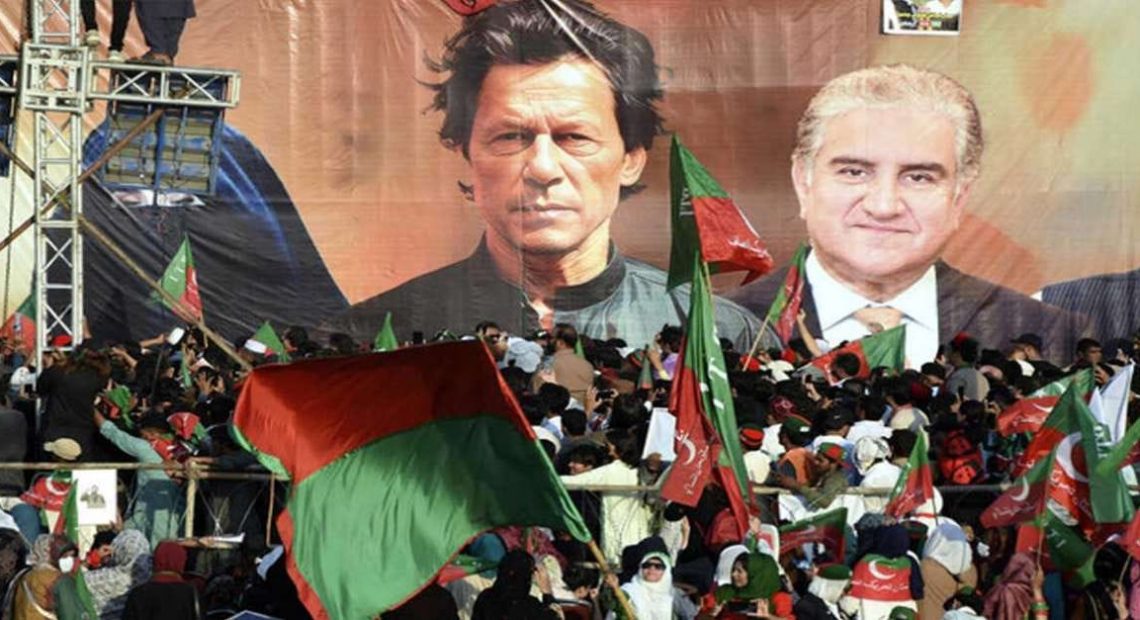
To mark the third anniversary of the arrest of Imran Khan, the party’s founder and former prime minister, the Pakistan Tehreek-e-Insaf (PTI) held protests and rallies across the country. Khyber Pakhtunkhwa (KP) Chief Minister Sohail Afridi warned during the rallies that the party would launch a prolonged march toward Islamabad if fair trials for cases against Imran Khan and his wife, Bushra Bibi, were not guaranteed by September 27 and restrictions on meetings with their relatives were not lifted.
PTI supporters protested in Peshawar, Lahore, Karachi, Islamabad and other cities on Wednesday. Police in Lahore and Karachi used roadblocks, tear gas and baton charges and arrested several workers. Addressing a large crowd in Peshawar, Sohail Afridi said, “If the judiciary were independent and judges delivered verdicts on merit, Imran Khan would have been released within thirty minutes.” He claimed that Imran Khan’s family, lawyers, medical professionals and political figures had been denied access to him at Adiala Jail for the past eight months. He also called on party workers nationwide to besiege Islamabad if their demands were not met by September 27.
Earlier in Lahore, clashes broke out between police and PTI workers near the Civil Secretariat during a protest led by the party’s Central Punjab chapter. Police used baton charges and detained a Member of the National Assembly (MNA), four Members of the Provincial Assembly (MPAs) and several workers and supporters. In Karachi, police blocked roads with containers to prevent the rally from reaching the Karachi Press Club and dispersed PTI workers near Zainab Market with tear gas and baton charges. At least 10 workers were arrested at one location, along with others elsewhere. Faisalabad, Multan, Rawalpindi, Hyderabad and Larkana also saw peaceful but sometimes tense protests. The PTI has continued its campaign for Khan’s release while accusing the judiciary of unfair treatment.
The Pakistani government has imposed new restrictions on the movement of journalists working for foreign news organisations. International human rights groups and local journalists have described the measures as an attempt to further restrict independent reporting. Foreign media journalists may now work without prior official approval only in Islamabad, Karachi and Lahore. The restrictions followed recent political unrest and elections in Pakistan-administered Kashmir.
Pakistan ranks 153rd out of 180 countries on the World Press Freedom Index published by Reporters Without Borders (RSF). Journalists covering protests in the Kashmir region have faced increasing pressure. The Committee to Protect Journalists (CPJ) said two prominent independent journalists working in Pakistan-administered Kashmir were arrested and taken to undisclosed locations in early August. Several other journalists have been summoned before courts on allegations of disseminating “fake and false information.”
The Pakistani government also ordered international journalists to leave Pakistan-administered Kashmir immediately and criticised a report by a female journalist for Al Jazeera. Human Rights Watch (HRW) Senior Asia Associate Director Patricia Gossman called the move a “worrying step” that restricts freedom of expression and the press. The Pakistan Federal Union of Journalists (PFUJ) demanded the immediate withdrawal of the restrictions, saying the government should do so if it genuinely supports democracy and press freedom.
Federal Interior Minister Mohsin Naqvi said Shehbaz Sharif would remain prime minister for the full five-year constitutional term of the current Pakistani government. Speaking to reporters outside the Ministry of Interior in Islamabad on Wednesday, Naqvi sought to clarify earlier remarks that Pakistan’s governance system had “collapsed” and that new provinces or administrative divisions were needed to improve public services and accountability. “The future of the government is to complete its five-year constitutional term. Shehbaz Sharif Sahib will remain the country’s Prime Minister for the full five years,” Naqvi said.
Regarding his earlier claim that the governance system had “collapsed,” Naqvi said he stood by the statement but clarified that it was not an accusation against the current government. “I was talking about the administrative system that has been running for the last 80 years,” he said. Pakistan could have achieved great things if the system had functioned properly, he added, arguing that its failure stemmed from the outdated structure. Naqvi’s remarks had triggered political controversy, and a day later, the military spokesperson also urged political parties to restructure the country’s security and stability framework.
Sources: The New York Times, Dawn