Millions Along the River Eagerly Await Inauguration of 'Teesta Mega Project'-2
People Upset with BNP Over Delay in Launching Teesta Mega Project
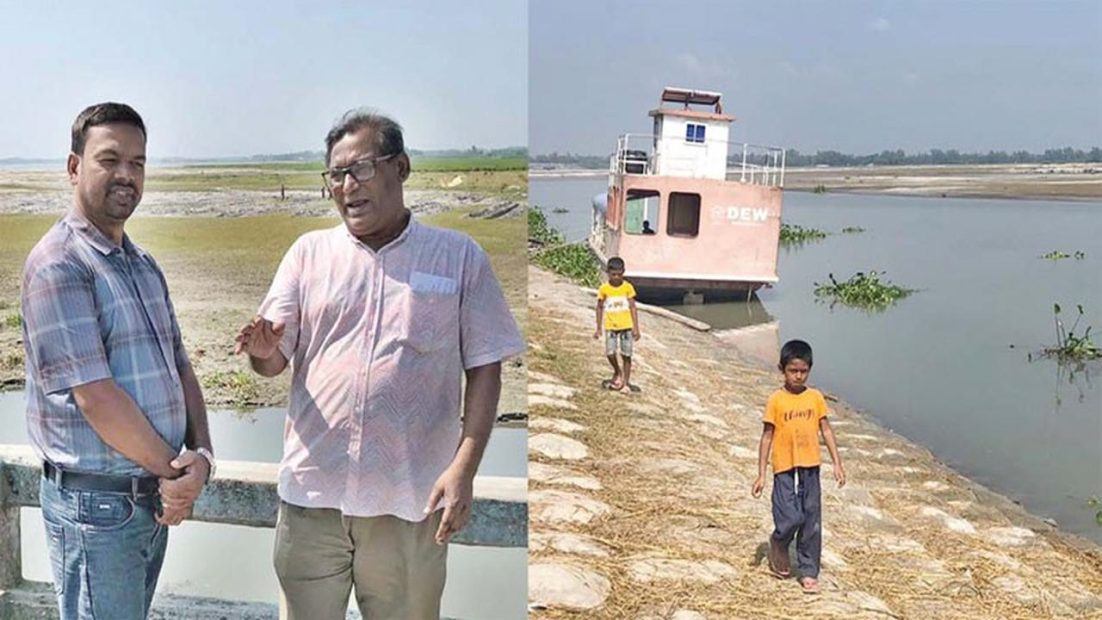
The Mahipur Bridge over the Teesta River has shortened the distance from Rangpur city to Burimari Land Port by nearly 50 kilometres. The bridge connects Mahipur Ghat in Lakshmitari Union of Gangachara upazila in Rangpur with Kakina in Kaliganj upazila of Lalmonirhat.
As we reached the bridge, about 16 kilometres from Rangpur city, lush green fields stretched along both sides. Some paddy fields had already developed ears of grain, while others were turning golden.
Midway across the bridge, I asked local journalist Akhtaruzzaman Milon to stop his motorcycle. “Where is the Teesta River?” I asked.
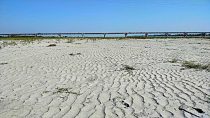
He looked puzzled at first. After understanding my question, he pointed towards the vast paddy fields, pumpkin plots and stretches of sandy riverbed.
“This is the Teesta,” he said. “Just three months ago, the river roared with powerful currents that swept away homes. As the water receded, farmers began cultivating the exposed riverbed. This year’s harvest has been good.”
Pointing towards the west, he showed me an embankment protecting the bridge. Part of it had collapsed last month. “Come further. You will see how people are suffering,” he said.
Several tea stalls stand at the northern end of the bridge, where people gather throughout the day. There, Mohammad Nuruzzaman introduced himself and called over several locals to share their experiences.
He said they had participated in movements led by BNP leaders demanding the Teesta Mega Project, which was proposed to be financed by China. The BNP had secured votes by promising to dredge the river.
Farmer Shahidul Islam said, “Those green fields you see in the distance belong to us. But we do not want to grow paddy in the riverbed. We want water in the river. India is holding back water upstream through the Gazoldoba Barrage. If China dredges the river, we will be protected from erosion. I have had to relocate my home three times because of river erosion.”
He said people in Lalmonirhat voted for the BNP in the last election because of its promise to dredge the Teesta. BNP leader Asadul Habib Dulu had organised rallies and human chains on the river islands, demanding measures to save the river. During a two-day programme, cattle were slaughtered and khichuri was cooked and served to thousands of people. Local residents participated in those programmes in the hope that the mega project would finally be implemented.
“But even nine months after the BNP came to power, dredging has not started. We are disappointed,” he said.
Nuruzzaman said three ministers, Shahid Uddin Chowdhury Anee, Asadul Habib Dulu and State Minister Farhad Hossain Azad, visited Dalia two months ago and assured residents that the dredging process would begin. People are still waiting for the China-funded project.
Chinese representatives have visited the area twice and collected sand samples from beneath Mahipur Bridge. Thousands gathered to see the experts. Former interim government adviser Syeda Rizwana Hasan also visited the bridge and held a public hearing in Kaunia on the project. She supported its implementation with Chinese funding. Several other advisers visited the area and promised that dredging would begin in 2026-27.
Even BNP Land Minister Asadul Habib Dulu assured residents after taking the oath of office that work on the project would begin soon.
“But now we hear that a new joint committee comprising Bangladesh, China and the Netherlands will conduct another assessment. This has disappointed us. Has the government fallen under India’s influence?” Nuruzzaman asked.
Mohammad Shahin, another local resident, said people dream of the Teesta being dredged, river erosion being prevented, satellite towns being developed and employment opportunities being created.
“We joined the BNP’s sit-in programme on the riverbanks, danced and sang on the river islands, and even spent nights sleeping on straw there. Tarique Rahman addressed a rally of thousands by mobile phone from Dhaka. Minister Dulu secured votes by promising to implement the Teesta Mega Project,” he said.
He alleged that people in the riverbank areas rejected Jamaat’s promises of a “ticket to heaven” and money offered secretly and voted for the BNP’s sheaf of paddy symbol instead.
“If the Teesta project does not begin, people will not vote for the BNP in the upcoming union parishad and upazila parishad elections,” he warned.
Starting at 10am, I visited several river islands in Gangachara of Rangpur and Hatibandha and Kaliganj of Lalmonirhat. I spoke to people from different professions. Under the scorching sun, farmers were working on the exposed riverbed.
Several residents suggested visiting Chandimari Spur No. 1 in Kaliganj to see the river’s condition. It took nearly an hour to cover the two-kilometre distance from Mahipur through sandy roads and several villages by motorcycle.
Six spur embankments were built across the Teesta several years ago to protect the riverbanks. Now they stand amid paddy fields and serve little purpose. Locals use them as gathering places, while visitors come from distant areas to see their impressive construction.
But the river they were built to protect has turned into a dry sandy bed covered with crops. Vast stretches of sand extend in every direction, providing grazing grounds for cattle and goats. Several agricultural labourers were preparing land to grow pumpkins.
Rashedul, one of the workers, said they were sharecroppers. Influential local people, including supporters of the ruling party, cultivate pumpkins on several acres of the riverbed. The crop yields well. He said the river had still contained water two months ago, but it dried up during Kartik, allowing locals to begin cultivation.
In Vote Mari and Kakina unions, as well as Madati, Mahishkhocha and Chandimari, the river has almost no water. At several points, people cross it on foot through knee-deep water. Yet these areas face annual erosion and are submerged during floods.
As the river dries up, residents use irrigation pumps to grow wheat, maize, garlic, onions, peanuts, gourds, pumpkins and pulses. Paddy cultivation is more common in Kaunia of Rangpur.
Riverbank resident Robiul Alam Auwal said dredging the Teesta had been a major election issue. BNP candidates organised rallies and human chains, and journalists were brought from Dhaka to cover the campaign. Residents joined the programmes because they hoped dredging would protect them from erosion.
“We heard that embankments and towns would be built on both sides of the river with Chinese funding. We voted for the sheaf of paddy with those hopes,” he said.
He alleged that India closes all the gates of the Gazoldoba Barrage during the dry season, reducing the Teesta to a narrow canal. Navigation stops, fishermen cannot catch fish, and boat owners and workers lose their livelihoods. Many residents are forced to depend on irrigation pumps for farming while struggling with poverty and natural disasters.
“Being born beside the Teesta seems like a curse. We want to survive. We want the river dredged. We were promised the mega project, but after the election, BNP leaders seem to have forgotten their commitment. Hasina has fled, and we want Tarique Rahman to implement the project. We will accept him as our leader for life and vote for him,” Auwal said.
At Char Kashiabari, vast stretches of sand covered the area, and the river had shifted nearly two kilometres away. Sandy paths full of holes and uneven ground stretched for miles. A horse-drawn cart was carrying goods towards a local market.
A resident named Zahirul said he had grown brinjal, radish and bottle gourd on his land and was taking the produce to the weekly market. Brinjal sells for Tk 5 to Tk 8 per kilogram at the field and Tk 8 to Tk 12 at the market.
When I told him that the same brinjal sells for Tk 80 to Tk 100 per kilogram in Dhaka and radish for Tk 40 to Tk 50, he expressed regret.
“If the Teesta Mega Project had been implemented, we would have received fair prices for our produce. We would no longer have to live in poverty,” he said.
On my way back from Mahishkhocha in Kaliganj, Lalmonirhat, I saw a wedding party walking across the sandy riverbed. The groom was returning home with his newlywed bride.
A member of the wedding party said walking across the sand was normal for people living beside the Teesta.
“We grow up fighting floods, dry riverbeds and sudden erosion. Even pregnant women and patients from riverside villages have to be carried on makeshift stretchers made of wooden boards or low beds tied to bamboo poles and carried on people’s shoulders to nearby hospitals,” he said.
He added that the hardships caused by floods and droughts discouraged others from forming family relationships with people living on the river islands.
“We saw the campaign for river dredging before the election and joined the human chains ourselves. BNP minister Dulu secured votes by promising to dredge the river. We are still waiting for the work to begin,” he said.
The previous evening, I spoke with several cultural personalities at Rangpur Town Hall. Although they live in a divisional city, they said people in the region were highly politically conscious. Even a rickshaw puller, despite struggling to afford food, has strong opinions about politics.
They believe that if the BNP implements the Teesta Mega Project, people across greater Rangpur will remember Tarique Rahman with affection.