Severe Navigability Crisis Cripples Waterways Across 16 Kurigram Rivers
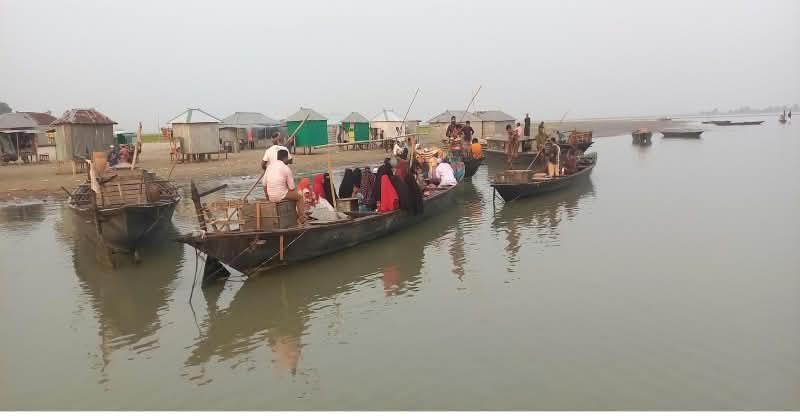
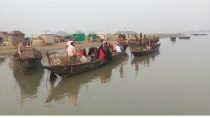
A severe navigability crisis has gripped 16 rivers, including the Brahmaputra, Dharla, Teesta, and Dudhkumar, in the northern district of Kurigram, severely disrupting passenger and cargo transport. Receding water levels and emerging sandbars have left roughly 550,000 char residents facing immense hardship, while nearly a hundred boat terminals are on the verge of closure. Across the narrowed river channels, boats frequently run aground, forcing passengers to walk miles across sandy stretches to reach terminals and creating a critical stalemate in transporting goods and emergency patients to district and upazila headquarters.
The vital Jatrapur boat terminal in Kurigram Sadar, which links at least 50 other terminals, has shifted nearly a kilometer due to siltation, cutting daily boat operations in half from over 500 to around 250. Journeys to isolated chars like Bhagabatipur, Kalir Alga, and Doi Khawar Char now take more than twice as long, rising from 45 minutes to two and a half hours, while fares have jumped by Tk 10 to Tk 20. Consequently, thousands of boatmen, fishermen, horse-cart drivers, and terminal porters are losing their livelihoods as cargo movement stalls.
Commuters bear the brunt of the daily struggle and rising expenses. Aminul Islam, a resident of Narayanpur union in Nageshwari upazila, stated that boats cannot dock directly at the ghats, forcing people to cross vast sandy terrain on foot or by motorcycle, often causing them to miss urgent court and official appointments. He added that reserving a boat for medical emergencies now costs up to Tk 1,500, placing an unbearable financial burden on low-income families living in isolated riverine pockets.
Residents and boat operators are calling for urgent intervention to ease the transport bottleneck. Hossain Ali, a resident of Kalir Alga char, said, ‘Only one boat is available all day to go to the char, and even that takes more time and money. Poor residents of the chars would benefit greatly if boats were operated under government management, similar to BRTC.’ Meanwhile, boatmen Shah Alam and Jahurul noted that navigating around submerged shoals drains their earnings through higher diesel consumption and frequent propeller damage.
Despite the worsening humanitarian and economic fallout, immediate relief remains uncertain for the riverine population. Contacted regarding the crisis, Md. Rakibul Hasan, executive engineer of the Kurigram Water Development Board (BWDB), confirmed that there are currently no plans to dredge the affected rivers. However, he mentioned the possibility of a future mega-project to excavate the Brahmaputra-Jamuna river system, expressing optimism that its eventual implementation would restore navigability and ease communication woes for the district’s stranded char residents.