Tariffs, Taxes Driving Up Electricity Prices
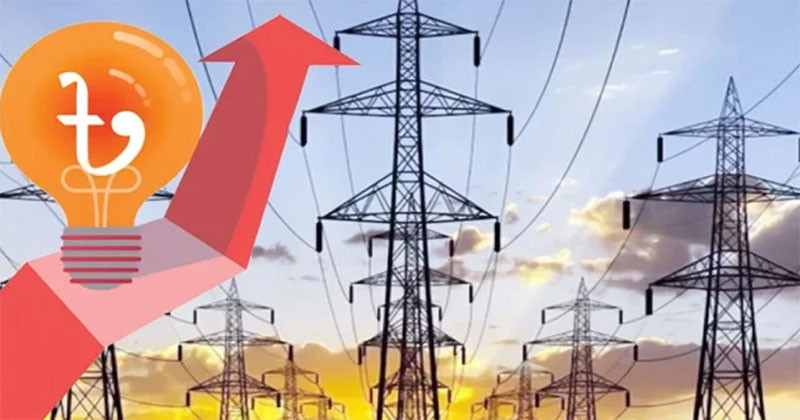
The unjust war imposed by the United States in the Middle East has sent shockwaves across the world, and Bangladesh is no exception. The war has driven international energy prices sky high, adding heavy pressure on subsidies in the national budget. To manage this pressure, the government has been forced to raise fuel oil prices twice, which eased the subsidy burden somewhat but did not remove it.
At the same time, the government has imposed tariffs and taxes on imports of fuel oil, LNG, coal, direct electricity, and power generation equipment, even though these imports remain essential. The Bangladesh Power Development Board (PDB) raised these issues in a letter sent to the power division.
Currently, various taxes apply at every stage of electricity import, generation and supply in the country, and this directly affects the price consumers pay, since all costs eventually fall on them. Direct electricity imports carry a 15 percent VAT. Imported equipment and materials needed for power plants also carry a 15 percent VAT at the import stage, plus a 5 percent advance income tax.
Importing HFO, a key input for generation, requires a 10 percent customs duty and 15 percent VAT. Even imports of old machinery get no exemption. The total tax burden on electricity imports stands at 31 percent, and in some cases the real burden runs even higher.
A large share of the country’s electricity comes from coal fired power plants. The Payra, Rampal, Matarbari, Patuakhali and Barapukuria plants, along with the imported Adani power plant, together generate an average of 4,500 to 5,000 megawatts of electricity daily. These plants also pay 5 percent VAT and 5 percent income tax on coal imports.
Any power plant that holds savings or fixed deposits pays a 20 percent tax at source on the interest earned. Interest on foreign loans carries a 10 percent income tax. On top of this, power plants must pay a 3 percent tax at source on electricity sales, regardless of whether they make a profit or a loss.
Energy sector analysts say the institutional structure of corruption in the power and energy sector must be dismantled, or else a change of government will bring the public no real benefit. They say the government should apply the same policy to the energy sector that it applies to ensuring food security. This sector should not be treated as a source of revenue collection or as a purely commercial sector. Doing so would ease both the government’s struggle to afford energy purchases and the pressure of high prices on the public.
To cut the cost of power generation and supply, PDB has sought major relief in income tax, VAT and import duties. The organization has submitted a 10 point proposal to the power division seeking reductions or withdrawals of various taxes and duties on power generation, electricity imports, fuel, and power plant equipment. PDB claims that if these exemptions take effect, the cost of power generation will fall, and the government’s subsidy burden will ease as well.
However, this raises the question of revenue loss for the government, since the power sector itself contributes to state coffers through taxes and VAT. According to PDB’s latest annual accounts, the organization paid 36.448 billion taka in taxes in fiscal year 2024 to 2025. In the same period, PDB received 386.3669 billion taka in subsidies from the government.
The budget for fiscal year 2025 to 2026 allocated 370 billion taka in subsidies for the power sector, though actual need may run higher. For fiscal year 2026 to 2027, the power division had estimated a subsidy requirement of about 591.45 billion taka, including 450.40 billion for private power producers, 78.21 billion for electricity from Adani Power, and 19.74 billion for power imported from India and Nepal. Yet the final budget for the current fiscal year allocated only 370 billion taka in subsidies for the power sector, well below the power division’s stated need.
In its proposal to the power division, PDB said that paying a 3 percent tax at source when settling bills with public and private power producers causes about 18.66 billion taka in extra losses each year. It has proposed cutting this rate to 0.60 percent, and has proposed the same 0.60 percent rate for tax at source on power producing companies. PDB has also sought a VAT exemption on imported materials and equipment related to power generation, and has proposed bringing the current 15 percent VAT on electricity imports down to zero, arguing that easing this VAT burden on imported electricity would also reduce the government’s subsidy load.
Citing the current 10 percent customs duty and 15 percent VAT on imported heavy fuel oil used in power generation, PDB has called for restoring an earlier exemption on this item. By its own estimate, this could bring the government’s monthly subsidy burden down from about 7 billion taka to roughly 6.5 billion taka.
PDB has also proposed withdrawing the 3 percent trade tariff index on electricity imports, exempting imported goods used to refurbish old power plant equipment from duties and taxes, and withdrawing the 5 percent advance income tax on imported goods and equipment used in power generation.
PDB has further sought a reduction in the 10 percent income tax on interest from foreign loans, along with relief on taxes applied to interest from savings and fixed deposits. It has also proposed lowering taxes and VAT on imports of coal and other materials related to power generation.
PDB’s accounts for fiscal year 2024 to 2025 show that the organization earned about 693.84 billion taka from electricity sales that year. But the cost of purchasing and generating electricity ran far higher. Spending on generation and on power purchased from IPPs, India, rental power plants and government plants together came to about 1,170 billion taka. This large gap between sale price and purchase cost remains one of the main drivers of the government’s subsidy burden.
Even after adjusting electricity prices, the need for subsidies has not fully disappeared. A new tariff structure took effect in June 2026. According to the Bangladesh Energy Regulatory Commission, this tariff adjustment could bring in about 142 billion taka in additional revenue. Even so, the power sector may still need around 410 billion taka in government support.
Asked about the matter, Prof. Mr. M. Shamsul Alam, energy adviser to the Consumers Association of Bangladesh (CAB), told Inqilab that the government collects revenue at various stages of the supply chain through duties, VAT and advance income tax on power generation and on imports of coal and necessary equipment. He said energy security is directly and deeply tied to food security. Energy is used at every stage of farming, from land preparation to harvesting, processing and food storage. Just as the government does not treat food security as a means of revenue collection or as a commercial sector, it should apply the same policy to energy.
He said that bringing revenue collection down to a reasonable level would ease the pressure of high prices on the public. He added that turning this sector into a commercial one through the state structure causes roughly 400 billion taka in wasteful, exploitative spending in the power sector every year, money that proper management could save. He said that if the government brings this sector back from commerce to service, and lowers revenue collection to a reasonable level, it would resolve both the government’s struggle to afford energy and the burden of high prices on the public.
Prof. Mr. M. Shamsul Alam also told Inqilab that to curb corruption and crime in this sector, the government urgently needs to set up a speedy trial tribunal to prosecute “energy offenders.” He said the Bangladesh Energy Regulatory Commission, the Competition Commission, the National Consumer Rights Protection Directorate, and the BSTI must all be strengthened and given full authority. He warned that unless the institutional structure of exploitation and corruption is dismantled, a mere change of government will bring the public no real benefit, since the government itself remains controlled by that same old structure.