US Reportedly Moves to Impose Fresh Tariffs on Imports from 16 Major Trading Partners, Including Bangladesh
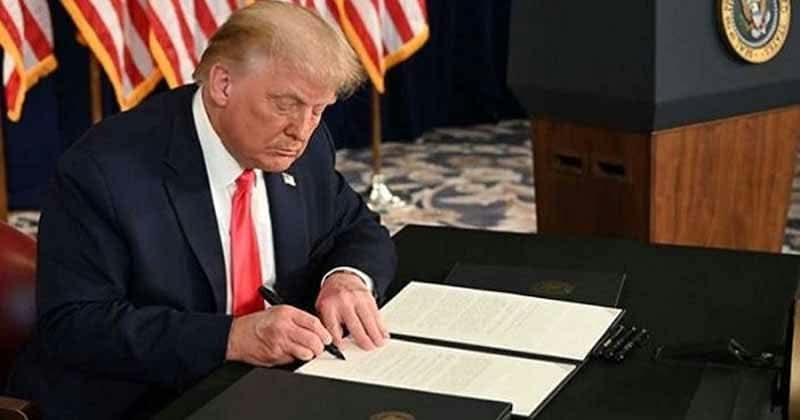
The United States is preparing to impose fresh tariffs on imports from 16 major trading partners, including Bangladesh, following an investigation into alleged excess industrial production capacity. According to a Reuters report citing three sources familiar with the matter, President Donald Trump’s administration is expected to release the findings of the Office of the United States Trade Representative (USTR) probe on Tuesday afternoon or Wednesday, U.S. local time. Conducted under Section 301 of the Trade Act of 1974, the investigation targets China, India, Japan, South Korea, Mexico, Vietnam, Taiwan, Thailand, Malaysia, Indonesia, Switzerland, Norway, Singapore, Bangladesh, Cambodia, and the European Union, potentially raising export costs to the American market.
These proposed duties are designed to partially replace sweeping “Liberation Day” global tariffs that the U.S. Supreme Court struck down in February. While exact rates remain unconfirmed and immediate tariffs on Mexico and Norway appear unlikely, the White House is expected to honor existing trade deal ceilings—such as 15 percent for the European Union, Japan, and South Korea, and 19 percent for Malaysia. Chinese goods face a 20 percent cap, though this hinges on renewing the U.S.-China trade truce before it expires on January 10. Washington holds Beijing primarily responsible for flooding global markets with excess steel, electric vehicles, and solar products, an accusation China rejects as stemming from competitive advantages.
Former senior U.S. Commerce Department official Ryan Majerus, now a partner at King & Spalding, noted that the findings could recommend country-specific tariffs ranging from 15 to 25 percent. Majerus stated that these new duties could be stacked onto existing 10 or 12.5 percent tariffs previously imposed under a parallel probe into forced labor enforcement across 59 nations and the European Union. Alternatively, he suggested the administration might introduce lower initial rates with conditions that escalate tariffs in phases if targeted economies fail to curb excess capacity. Neither the White House nor the USTR responded to requests for comment regarding the impending announcement.
A central focus of the investigation involves Chinese investments in Southeast Asian economies, particularly Vietnam, Indonesia, and Cambodia. U.S. officials allege that Chinese companies are establishing manufacturing hubs in these nations specifically to bypass existing American trade barriers and continue supplying the U.S. market. Launched last March alongside the forced labor inquiry, the excess capacity probe reflects the administration’s broader effort to construct a legally durable tariff framework. For economies like Bangladesh, which already face heightened trade scrutiny, the addition of Section 301 duties threatens to compound existing export expenses and complicate commercial access to the United States.
Despite the administration’s aggressive trade posture, the tariff policies have contributed to rising consumer prices across the United States, sparking growing domestic pushback. A Reuters/Ipsos poll conducted after the November midterm elections revealed that 62 percent of American respondents would support efforts to repeal the tariffs. Nevertheless, the White House appears committed to leveraging Section 301 findings to reshape global supply chains and penalize perceived industrial overproduction. As the formal announcement approaches on Wednesday night Bangladesh time, exporters and policymakers across the 16 targeted economies are bracing for potential disruptions to bilateral trade flows and heightened economic uncertainty.
Source: Reuters