Wall Street Signals Bangladesh Is Ready for Investment as New Opportunities Open Up
Prime Minister Tarique Rahman has returned home after attending the 81st session of the United Nations General Assembly. His meetings with major economic powers and efforts to strengthen bilateral relations have sent a new message about Bangladesh’s economic prospects. The visit highlighted Bangladesh’s openness to business and is expected to improve the country’s standing with development partners and donor agencies, while encouraging faster approval of foreign investment projects.
During his New York visit, Tarique Rahman took part in more than 30 high-level meetings and official programmes. He highlighted economic diplomacy, reforms in multilateral relations and a commitment to building a human rights-based global order. The government also assured investors of policy continuity, investment protection and safe repatriation of capital.
Commerce Minister Khandaker Abdul Muktadir said the prime minister’s US visit would have a positive impact on Bangladesh’s trade and investment. He said the prime minister’s speech at the UN and bilateral meetings with heads of state and government would create new opportunities for trade and investment. Prime Minister’s Adviser Mahdi Amin said the visit made maximum use of time, with special attention given to increasing investment in Bangladesh.
Economist and Investment Corporation of Bangladesh (ICB) Chairman Professor Abu Ahmed told Inqilab that such high-level diplomatic and commercial initiatives were highly positive for overcoming the ongoing economic challenges and strengthening Bangladesh’s links with international markets. He said presenting Bangladesh’s investment potential to US businesses and strengthening diplomatic ties would send a positive message to development partners and encourage new investment.
Experts say Bangladesh’s economy has long been affected by power and gas shortages, although the situation is improving. They also point to stronger remittance growth, improved foreign exchange reserves, higher export earnings, reduced dollar shortages and tighter action against hundi and money laundering as signs of greater stability in the foreign exchange market. The government’s diplomatic efforts are also expected to attract investment from countries including China, Japan, South Korea, Saudi Arabia and Türkiye. The proposed China-Myanmar-Bangladesh economic corridor could further strengthen regional connectivity.
Economists and business experts believe that if the government can resolve the power and gas shortages, the goal of turning Bangladesh into a $1 trillion economy by 2034 is achievable. Finance and Planning Adviser Professor Rashed Al Titu Meer said Prime Minister Tarique Rahman was following a “Bangladesh First” policy. He said the government was working on economic recovery, reform and reconstruction to achieve the $1 trillion economy target by 2034.
A major focus of the US visit was attracting foreign investment. At a Wall Street roundtable organised with global investment bank JPMorgan Chase, the prime minister met senior representatives of global investment firms, including BlackRock, PIMCO, MetLife and S Capital. There, he presented Bangladesh’s emerging economy and investment environment and conveyed the message that “Bangladesh is ready for investment.” He said Bangladesh was already known globally as a major manufacturing and garment hub, but its potential extended far beyond that.
He identified energy, infrastructure, logistics, technology, digital services, climate finance, manufacturing, agriculture and healthcare as sectors offering significant investment opportunities. He said the government aimed to build a $1 trillion economy by 2034 and turn Bangladesh into a globally connected centre for manufacturing, investment and services. The prime minister also outlined measures to make Bangladesh easier, more stable and more reliable for investors. These include simplifying regulations, strengthening investor protection, improving tax and VAT administration, facilitating profit repatriation and developing infrastructure.
Commercial discussions with Boeing over aircraft purchases also sent signals about Bangladesh’s potential in the aerospace and transport sectors and the scope for stronger commercial relations with the United States and other Western economies. A meeting with World Bank President Ajay Banga was also seen as important for financial reforms, budget support and restoring international confidence in Bangladesh’s economy. Discussions with Mark Suzman, CEO of the Bill & Melinda Gates Foundation, focused on innovative financing in technology and public health.
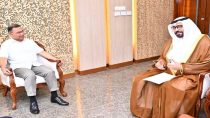
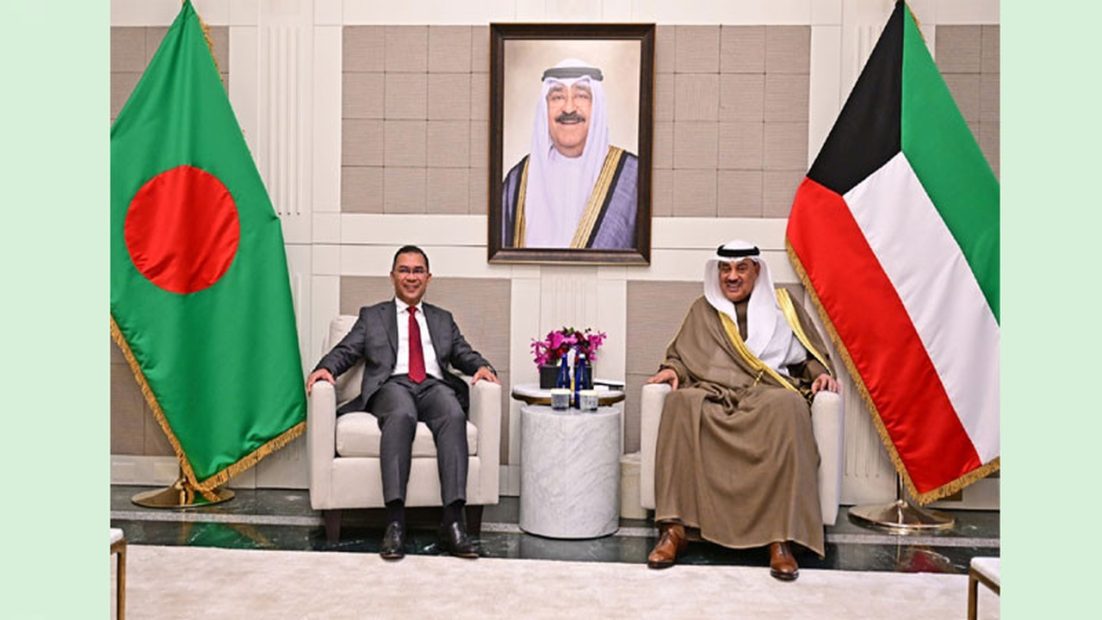
The prime minister also held meetings with leaders from the Middle East, including Kuwait Crown Prince Sheikh Sabah Al-Khalid, Saudi Foreign Minister Prince Faisal bin Farhan and UAE Deputy Prime Minister and Foreign Minister Sheikh Abdullah bin Zayed Al Nahyan. Foreign direct investment, energy security and expanding labour-market opportunities for Bangladeshi workers were among the issues discussed.
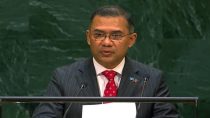
At the UN General Assembly, the prime minister delivered a speech in Bangla and announced a “3-R strategy”—recovery, rehabilitation and reconstruction—for rebuilding the country and ensuring sustainable progress. He also called for greater climate financing and environmental justice for countries most vulnerable to climate change.
The visit also focused on the Rohingya crisis. Meetings with UN Secretary-General Antonio Guterres, UN High Commissioner for Human Rights Volker Türk and UNHCR Commissioner Barham Salih included discussions on finding a lasting solution to the crisis involving more than 1.2 million Rohingyas in Bangladesh. The government renewed its call for the safe, voluntary and dignified repatriation of Rohingyas to Myanmar.
Foreign Affairs State Minister Humayun Kabir said, “Prime Minister Tarique Rahman’s timely message at the United Nations and his economic and humanitarian roadmap, based on peace, non-violence, human rights and environmental balance, will play a special role in opening new possibilities for just international cooperation.” In discussions with business leaders, the prime minister called for deeper economic relations with the United States, new economic arrangements with Japan and South Korea, a new partnership with the European Union and stronger economic ties with China. He said Bangladesh wanted long-term partnerships that would create value for both sides rather than short-term transactions.
Meanwhile, Spanish businesses and entrepreneurs expressed interest in investment opportunities in Bangladesh during the prime minister’s US visit. They identified textiles, pharmaceuticals, infrastructure, renewable energy, agribusiness, information technology, logistics and consumer goods as promising sectors.
At a seminar organised with the Federation of Bangladesh Chambers of Commerce and Industry (FBCCI), Madrid Chamber of Commerce President Angel Asensio described Bangladesh as one of Asia’s emerging markets. He said there were opportunities for around $172 billion in green investment in Bangladesh between 2018 and 2030, particularly in green buildings, transport, agriculture, infrastructure and waste management.
However, he identified export diversification as both a major challenge and an opportunity for Bangladesh. FBCCI Administrator Md Fazlul Haque said the current government was encouraging foreign investment. He said plans were being considered to offer major incentives, including free land, particularly for investment in renewable energy, logistics and infrastructure. Although Bangladesh faces some business challenges, he said the country offers significant opportunities for profitable investment.