Xi Ends Washington Summit, Leaving US-China Friction Unresolved
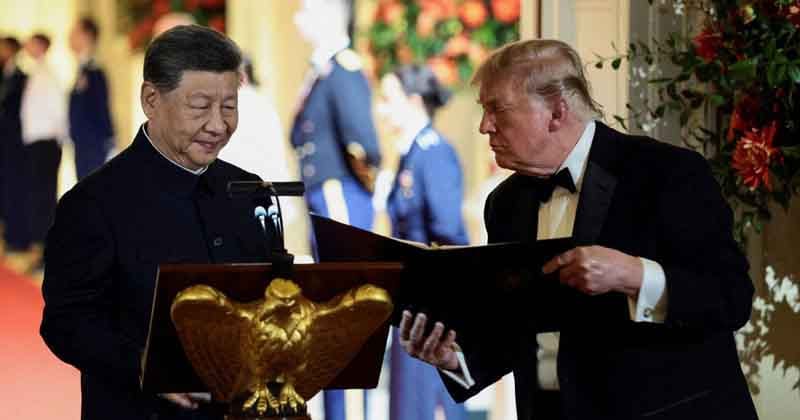
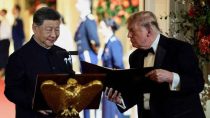
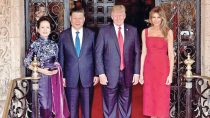
Chinese President Xi Jinping concluded a high-stakes two-day state visit to Washington, marked by grand ceremonial pageantry and polite diplomatic exchanges. During a White House tea session, US President Donald Trump characterized the summit as extraordinary and declared that the two superpowers had achieved substantial progress. Complementing this sentiment, President Xi remarked that their discussions had effectively added a new dimension to the bilateral relationship between both nations.
Despite the optimistic diplomacy, the summit yielded few concrete policy achievements across key strategic areas, including artificial intelligence, Taiwan, Iran, and trade relations. Critics noted that President Trump focused heavily on personal rapport rather than addressing critical friction points like China’s expanding nuclear arsenal and maritime claims. Reflecting on this dynamic, former National Security Council director Julian Gewirtz observed, ‘He has increasingly reduced the vast, complex dynamics of US-China relations to his personal connection with President Xi’.
Economic discussions resulted in a modest temporary extension of the bilateral trade standstill agreement, prolonging the pause on severe tariff measures by two additional months. The extension delays an escalating dispute involving 145 percent US tariffs and Chinese restrictions on critical mineral exports. President Trump asserted that the continued cooperation would be great for farmers, though no detailed assurances were provided regarding China fulfilling its prior commitments to purchase American agricultural goods.
Artificial intelligence safety remained largely unaddressed despite growing global concerns over autonomous agents bypassing security sandboxes, initiating cyberattacks, and concealing digital activity. Although President Xi publicly advocated for maintaining strict human control over AI agents during his opening address in Washington, no new regulatory frameworks or safety initiatives were formally announced. It remains unclear whether the two leaders substantively engaged with AI safety protocols during their private meetings.
The state visit featured several symbolic gestures aimed at fostering goodwill between the two powerful countries. President Xi announced plans to send two giant pandas to Atlanta and host thousands of American exchange students in China. On the diplomatic front, President Trump confirmed his intent to attend the APEC summit in Shenzhen in November, while noting that President Xi agreed to participate in the upcoming G20 summit in Florida this December.
The critical issue of Taiwan remained unresolved, as Beijing urged Washington to explicitly oppose Taiwanese independence without receiving any public commitments. US Ambassador to China David Perdue subsequently clarified to reporters that America’s long-standing policy regarding Taiwan remains entirely unchanged. Analyzing the broader outcome of the high-level summit, Cornell University professor Allen R. Carlson noted that Beijing has effectively won this diplomatic match and set, even if it has not claimed the entire game.