Zubaida Rahman Calls for Equal Opportunities to Empower Women and Develop Leadership
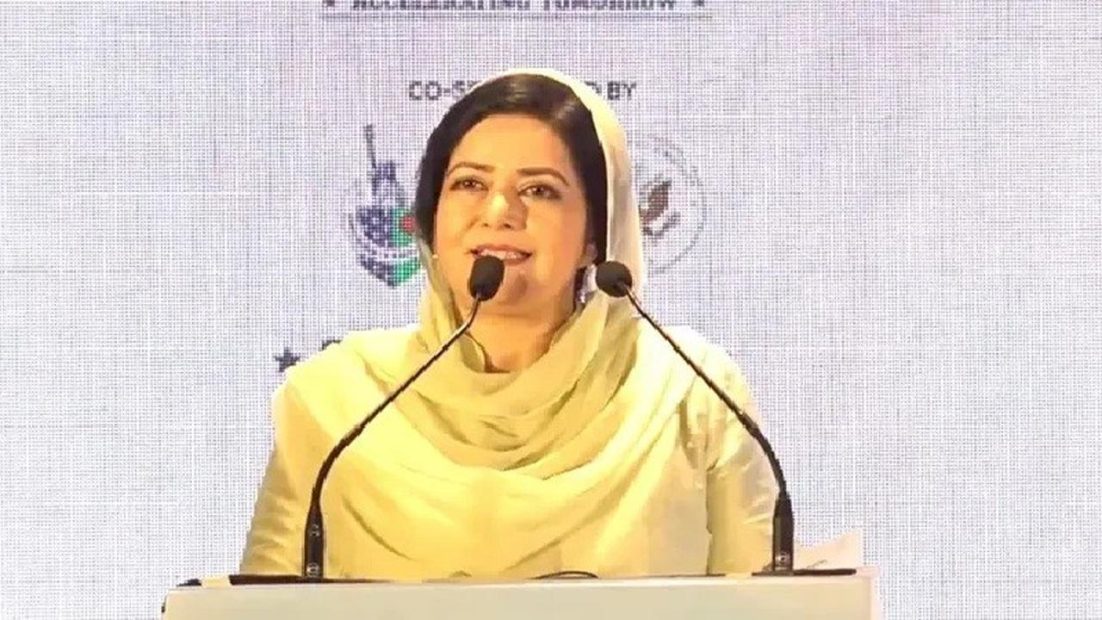
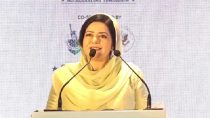
Dr Zubaida Rahman, wife of Prime Minister Tarique Rahman and vice-president of the Ziaur Rahman Foundation, has called for equal opportunities for women in empowerment, economic independence, education and leadership development.
She made the call at a Women Leadership Seminar held at Hotel InterContinental in the capital on Thursday. The seminar was part of the three-day 30th US Trade Show, marking 30 years of expanding trade relations between Bangladesh and the United States.
Zubaida Rahman said women’s progress should not be measured only by the number of women reaching top positions. Real progress depends on how many more women get the chance to follow them, how open opportunities are for women from different social and economic backgrounds, and how positively their leadership affects workplaces and society.
She said women make up 50.8 per cent of Bangladesh’s total population. However, many women are still left behind in the mainstream economy because of various barriers. Child marriage, limited access to education and a lack of healthcare are major obstacles to their development.
Citing 2025 figures from the International Labour Organization (ILO), Dr Zubaida said women’s participation in Bangladesh’s labour force was 38.6 per cent, compared to 80.4 per cent for men. She added that millions of women in the country’s 90,049 villages were still not properly connected to the mainstream economy.
Speaking about girls dropping out of education, she cited 2023 statistics from the Bangladesh Bureau of Educational Information and Statistics (BANBEIS). According to the data, 34.9 per cent of female students drop out at the secondary level and 22.5 per cent at the higher secondary level. Women’s participation in higher education is also only 20.8 per cent.
She stressed the need to provide continuous support to women at every stage, from school and higher education to employment.
Zubaida Rahman said earning a degree alone did not guarantee employment. Women need a strong foundation in literacy, science, technology and practical skills. They should also have opportunities to ask questions, innovate and take leadership roles.
She said Prime Minister Tarique Rahman and his government were committed to providing free education for girls up to the undergraduate level. Earlier, former Prime Minister Begum Khaleda Zia had introduced free education for girls up to Class 12.
Referring to the nationwide ‘Notun Kuri’ sports and cultural competition, Dr Zubaida said such programmes played an important role in developing leadership skills among children, especially girls.
Through these activities, children learn communication, teamwork, discipline, accountability and empathy. They also develop the ability to face challenges, she added.
Highlighting the importance of women’s economic independence, she said a woman’s ability to earn, save money and make her own financial decisions increases her personal opportunities and strengthens her family’s overall capacity.
Economic independence is not just about earning money; it is also about having the power to shape one’s own future, she said. She described the Family Card and Farmer Card programmes as important initiatives towards achieving this goal.
Speaking about healthcare, Zubaida Rahman said the government was taking steps to recruit around 100,000 health workers, 80 per cent of whom would be women.
She also mentioned plans to recruit 25,000 professional midwives to ensure better healthcare for women and children.
Referring to changes in technology, she said artificial intelligence (AI), digital services and new technologies were changing the way people work. Ensuring women’s active participation in these fields would help make the future economy more inclusive and innovative.
She said women’s progress was not only the government’s responsibility. Educational institutions, families, workplaces and society must work together to achieve this goal.
She stressed the need to encourage girls to dream big and build strong links between education and employment.
Zubaida Rahman said that alongside celebrating women’s achievements, society must remove the barriers that make their journeys unnecessarily difficult.
Through collective efforts, aspirations can be turned into opportunities, opportunities into leadership, and leadership into lasting contributions to Bangladesh, she added.
She thanked the American Chamber of Commerce in Bangladesh and the US Embassy for organising the event. She also expressed gratitude to the moderator and panel members for taking part in the discussion.
The seminar was moderated by Mastercard Bangladesh Country Manager Zakia Sultana. State Minister for Social Welfare Farzana Sharmin was among the panel speakers.
Other panel members included Foreign Investors’ Chamber of Commerce and Industry (FICCI) President Rupali Haque Chowdhury; Centre for Policy Dialogue (CPD) Executive Director Dr Nazneen Ahmed; Acting Deputy Chief of Mission at the US Embassy in Dhaka Trishita Mowla; Chevron Bangladesh President and Managing Director Shu Xiong; and Oracle’s Country Managing Director for Bangladesh, Nepal and Bhutan, Rubaba Dowla.