Who Is Protecting Awami League Terrorists?
Hindutva-Driven India Determined to Sabotage Bangladesh’s Development and Progress
India has been desperate to obstruct Bangladesh’s development and progress since August 5, 2024. Delhi had apparently paused its efforts, expecting that the new government, despite publicly opposing India, would adopt a conciliatory diplomatic approach after the 13th parliamentary election. However, Delhi was disappointed after Mr. Tarique Rahman took office as prime minister and adopted the ‘Bangladesh First’ policy.
Ignoring repeated requests from Delhi, Mr. Tarique Rahman chose Malaysia and China for his first foreign visit. He later visited several other countries, but Indian policymakers failed to persuade him to visit India.
Having failed to influence Dhaka through ministers, state ministers and bureaucrats considered favourable to Delhi, India is now allegedly attempting to create instability to discourage foreign investment in Bangladesh. Besides China, the United States, Türkiye, Japan and several Middle Eastern countries have expressed interest in investing in Bangladesh. Allegations have emerged that India’s South Block is working behind the scenes to prevent these investments.
The latest attempt to create unrest in the garment sector reportedly failed after Prime Minister Mr. Tarique Rahman quickly formed a wage board for workers. Now, a campaign suggesting that Sheikh Hasina will return to Bangladesh in December is allegedly being used to create instability. In the past 24 hours, bomb explosions have occurred at 33 locations across the country, including 20 in Dhaka. Police recorded 31 crude bomb explosions at 20 locations in the capital.
Delhi had kept Sheikh Hasina in power as a puppet, allegedly treating Bangladesh as its sphere of influence. From the 2007 political changeover until August 5, 2024, the governments of Fakhruddin Ahmed, Moeen Uddin Ahmed and Sheikh Hasina prioritised Delhi’s interests over those of Dhaka. The July uprising was therefore something India’s South Block could not accept. Since then, it has allegedly tried to destabilise Bangladesh’s political environment in different ways.
Nearly two years and three months after fleeing to India, Sheikh Hasina has not appeared in public. Although a controversial press conference was reportedly held virtually on August 5, no video of her has been released. Rumours have also circulated about her health. Yet, claims that she will return in December are being used to create tension in Bangladesh.
There are allegations that those carrying out violence, bomb explosions and sabotage in support of Hasina are escaping without facing consequences. Some also allege that a section within the government is sheltering Awami League activists and helping implement Delhi’s agenda. This group is reportedly attempting to sideline established BNP leaders by circulating allegations of misconduct, extortion and tender manipulation against them.
Questions have also been raised over the resignation of Ferdousi Ahmed Misty, a BNP leader and sister of Nasir Uddin Ahmed Pintu, following the Radda incident. Ishraq Hossain, son of former Dhaka mayor Sadeque Hossain Khoka, also reportedly had to resign from the cabinet following an anti-drug operation. Meanwhile, the police chief faced no consequences despite reportedly expressing an intention to conduct crossfire operations against those opposing government policy.
After nearly 20 years, National Revolution and Solidarity Day was observed on November 7. Prime Minister Mr. Tarique Rahman walked seven kilometres during the BNP rally, mingling with ordinary people. His speech on the occasion also reflected his commitment to the country. Yet, just two days later, bomb explosions were reported at 33 locations. What does this indicate?
According to Indian media reports, Sheikh Hasina is staying in Delhi. India has declined to comment on her reported application for a new passport and travel pass. However, reports in domestic and international media have widely circulated claims that she intends to return in December. On November 9, she reportedly applied for a new passport and sought a travel pass.
Despite the political circumstances, a death sentence and security concerns, there are doubts about whether Hasina will actually return. Nevertheless, the reported return plan has coincided with 33 crude bomb explosions and 13 vehicle arson incidents across the country within 24 hours. Reports have also claimed that former Awami League lawmakers and leaders who fled abroad have gathered in Kolkata ahead of her possible return.
Former Awami League MP and lawyer Ranjit Sarkar reportedly entered Bangladesh from abroad, held a rally in Sunamganj and then returned overseas without obstruction. This raises questions about who is sheltering those carrying out bomb attacks and violence in Hasina’s name. Without protection from influential quarters, could the activists of the ousted party operate so freely?
Political analysts believe such incidents would not be possible without the support of influential people within or close to the government. Earlier, attempts were made to create unrest in the garment sector. Citing police information, Home Minister Salahuddin Ahmed himself said that several former Awami League ministers, state ministers and lawmakers, along with some garment factory owners, were behind attempts to destabilise the sector.
The National Board of Revenue (NBR) has reportedly ordered the freezing of 204 bank accounts linked to around 100 individuals and 125 organisations over allegations of financing and supporting unrest in the garment sector.
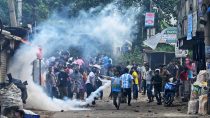
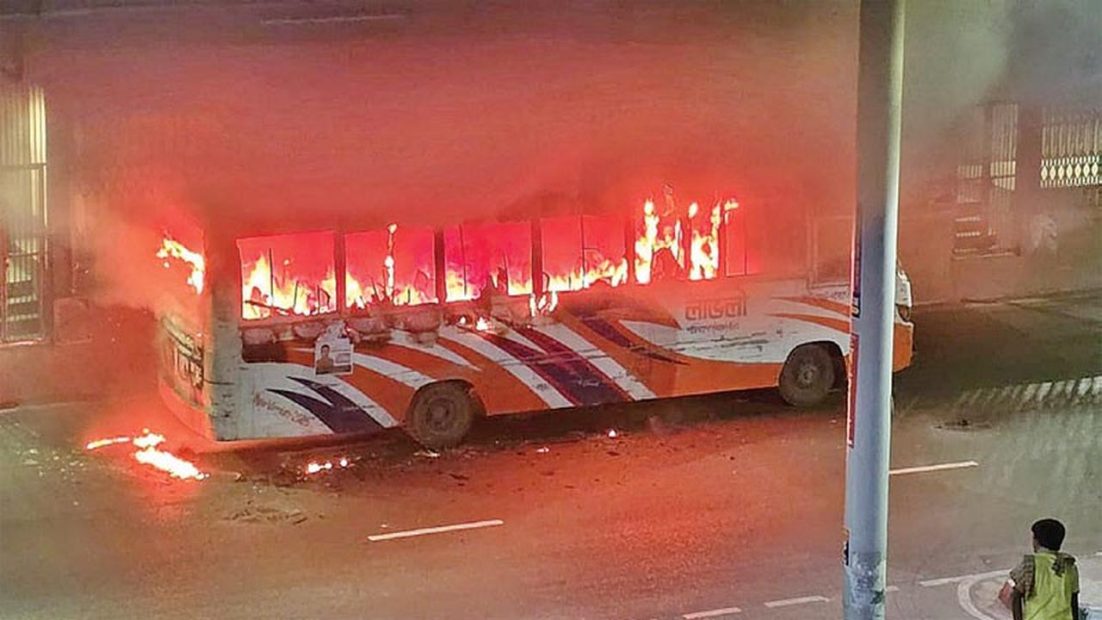
Despite these developments, crude bomb explosions have been reported at Dhaka University, BUET, Jagannath University, Titumir College, Uttara University and Milestone College. Incidents have also occurred in Farmgate, Dhanmondi, Mirpur, Mohammadpur and Mahakhali. Outside Dhaka, explosions were reported in Chattogram, Manikganj and Patuakhali, while public transport vehicles were set on fire in Gazipur, Kishoreganj and Netrokona.
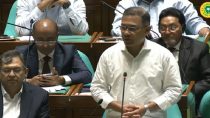
Despite the incidents, Home Minister Mr. Salahuddin Ahmed told Parliament that the law and order situation had improved. The question is how many more simultaneous bomb explosions and arson attacks must take place before the situation is considered to have deteriorated.
Mr. Salahuddin Ahmed said the ousted political force was setting fire to abandoned or driverless vehicles at night and detonating crude bombs at different establishments to destabilise the country. He added that law enforcement agencies were working to suppress those responsible and that intelligence surveillance had been strengthened at important intersections.
At a time when Prime Minister Mr. Tarique Rahman is trying to restore stability, attract foreign investment and revive the struggling economy, attempts are allegedly being made to create unrest and discourage investors. The campaign surrounding Hasina’s possible return is also reportedly intended to encourage fugitive Awami League activists and spread fear among the public.
Labour unrest in the garment sector, eviction of street hawkers, restrictions on battery-powered rickshaws and legitimate demands by different professional groups and jobseekers are allegedly being exploited to create disorder. There are also claims of deliberate provocation, crude bomb explosions and arson attacks aimed at creating an artificial crisis.
Questions remain over how a former Awami League MP could enter Bangladesh from abroad, hold a rally in Sunamganj and leave without being stopped by law enforcement agencies. Have supporters of Sheikh Hasina remained within the administration, like a hidden enemy within the ranks? Similar concerns have been raised about the civil administration.
Recently, protests over demands for higher wages reportedly led to vandalism and arson in the garment sector. Garment leaders Taslima Akter and Nazma Akter have said that genuine garment workers would not vandalise their own factories. This raises questions about the identity of those who took to the streets and created disorder.
Intelligence sources reportedly indicate that many battery-powered rickshaw drivers in Dhaka are activists of the Awami League, banned Chhatra League, Sramik League and Jubo League who came from rural areas. Allegations suggest that some are using their identities as rickshaw drivers as cover to carry out political activities. They could reportedly join protests under the banners of garment workers or professional organisations whenever needed.
Unrest has also been reported in garment hubs in Mirpur, Savar, Ashulia, Gazipur and Narayanganj. Besides Awami League leaders, followers of local BNP lawmaker Dewan Salahuddin Ahmed in Savar and the son of former Gazipur mayor MA Mannan were also reportedly involved in street protests that turned disorderly.
After killing 1,400 students and members of the public, Sheikh Hasina’s government was ousted. The Awami League is now largely isolated from mainstream politics. Yet, Hasina and her party continue to dominate political discussions. Why is a party that has become irrelevant to the people of Bangladesh repeatedly being brought back into the political spotlight?