73% of Awami League Terrorists Released from Prison After Arrests, Who Is Accountable for the Anarchy in the Country?
The warning signs were already there. Given any pretext, the banned Awami League would re-emerge in its familiar form. And that is exactly what has happened. Questions had been raised about the BNP’s preparedness to confront the banned party on the streets. Within a week, those fears became reality.
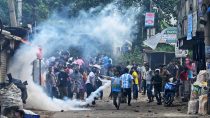
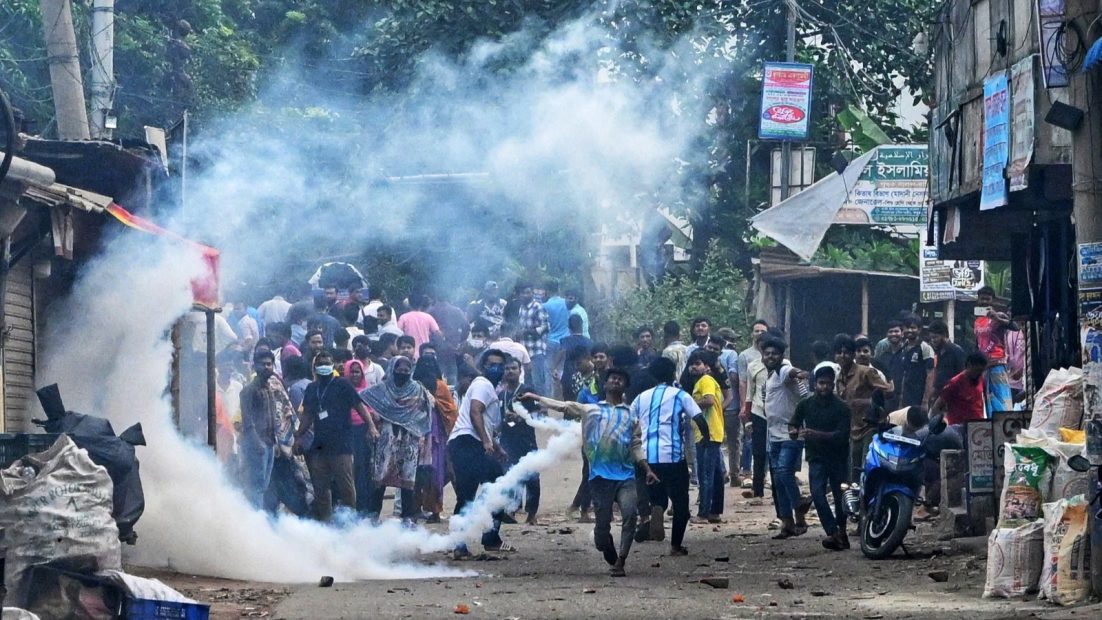
The Awami League began its activities under the guise of garment workers, creating unrest in the name of wage and benefit increases. Although the government has formed a wage commission, attempts are still being made to prolong the unrest. However, these attempts at violence have faced resistance from national unity.
The incidents were not isolated. After a week of unrest in the garment sector, covert attacks, crude bomb explosions and arson attacks on parked buses began.
Between November 7 and 10, several buses were set on fire in the capital and elsewhere. The affected vehicles included buses of Labbaik Paribahan in Farmgate, Bihanga Paribahan in Mirpur-11 and Alif Paribahan in Kafrul.
Buses of SB Link Paribahan and Savar Paribahan were torched along the Dhaka-Aricha Highway. In Dhamrai, at least four buses were set on fire within five days. In Faridpur, a parked bus was set ablaze, killing its sleeping driver from smoke inhalation. Three buses of Azmeri Paribahan were also torched near a filling station in Kaliakair.
Other incidents involved a minibus in Manikganj, a bus in Barguna, a BRTC student bus in Bajitpur, Kishoreganj, and two parked buses in Rupganj, Narayanganj.
These incidents suggest that the arson campaign has only begun. The question of who is behind the attacks is hardly difficult to answer, the article argues, linking them to attempts to draw attention to Sheikh Hasina’s possible return in December.
Covert attacks and sudden marches, however, are not signs of political strength. A single matchstick can destroy property worth thousands of crores of taka. The banned Awami League is like that matchstick, capable of causing damage from the shadows rather than through open confrontation.
Daily Inqilab has been warning about this for months. Former Prime Minister Begum Khaleda Zia understood that the Awami League could not be trusted. Does the current leadership understand the same?
Even before the 13th parliamentary election, several ministers and BNP leaders appeared sympathetic towards the Awami League. Some publicly expressed willingness to take responsibility for its leaders and activists. Many banned Awami League activists also joined the BNP after switching political allegiance.
Despite the Awami League’s warnings that millions would be killed if the BNP came to power, the BNP did not carry out such reprisals after the July Uprising of 2024. Instead, it showed considerable tolerance. Subsequently, local BNP and Jamaat leaders were seen gathering at police stations to secure the release of arrested Awami League activists, seemingly forgetting years of political oppression, killings, enforced disappearances and imprisonment under the Hasina government.
During the interim government led by Dr Muhammad Yunus, several Awami League leaders who failed to flee were arrested. However, BNP-affiliated lawyers were quick to secure bail for many of them. Some even represented Awami League leaders accused in murder cases. In one case involving alleged embezzlement of hundreds of crores of taka through Customs password fraud, lawyers representing a Jubo League leader were seen confronting the judge.
Even now, BNP-affiliated lawyers are reportedly making efforts to secure bail for Awami League leaders accused in murder cases, as well as alleged bank looters and other offenders. The question is whether financial gain has taken precedence over political commitments and justice.
According to figures from August this year, only 107 banned Awami League leaders were held in the country’s 69 prisons. Meanwhile, 239 people were arrested in law enforcement operations over the past two weeks, including 84 Awami League leaders and activists. Special drives also led to arrests in Cumilla, Dhaka, Netrokona, Chuadanga, Chattogram, Bogura, Brahmanbaria and Sirajganj.
But arrests alone are not enough. The real question is how long the accused remain behind bars. Arrests receive extensive media coverage, while bail releases often go unnoticed. The identities of the lawyers securing their release are also rarely disclosed.
If those accused of sabotage are released on bail, what is the point of arresting them? Which lawyers are facilitating their release, and do they bear any responsibility for the current arson attacks?
The country has 84 bar associations, including the Supreme Court Bar Association. BNP-affiliated lawyers now hold influential positions in most of them. Following the political changeover, their influence has increased, and litigants from different political backgrounds are approaching them for bail.
According to figures cited by several media outlets, 44,472 banned Awami League leaders and activists were arrested nationwide in the first 13 months after fleeing to India following the mass killings. Of them, 32,371, or 73 per cent, have been released.
Former Narayanganj City Corporation Mayor Selina Hayat Ivy and former Awami League MP from Barishal-5 Zebunnesa Afroz were among those released. Six Awami League leaders were also released from Sylhet Central Jail in 2024, while three were released from Barishal District Jail.
In June 2025, 105 former Awami League ministers and MPs were in custody, seven of whom had already secured bail. Deutsche Welle reported that seven former ministers and MPs of the banned party had been released by November this year. Most secured bail from the higher courts.
Several intelligence sources claim that released Awami League activists are secretly reorganising and carrying out arson attacks. They are allegedly using street children to spread fear among the public.
Who secured their bail, and which lawyers filed their petitions? Although bail is a constitutional right, questions remain about the political commitments of BNP- and Jamaat-affiliated lawyers. Have years of struggle against fascism and the July Uprising been compromised for financial gain?
Although the Awami League’s activities were banned by executive order after the July Uprising, the party is allegedly continuing its activities covertly. The article attributes the current unrest to the BNP and Jamaat’s leniency, the Awami League’s influence within the bureaucracy and police, and the negligence of law enforcement agencies.
Officially banned, the Awami League is allegedly operating behind the scenes, sometimes under the guise of garment workers, autorickshaw drivers and ride-sharing motorcycle riders. The article also alleges that the party maintains influence over social media.
Meanwhile, the BNP and its affiliated organisations are conspicuously absent from the streets. The committed BNP leaders who once faced persecution and spent nights in paddy fields are nowhere to be seen.
India is involved in efforts to destabilise Bangladesh. Continued unrest could discourage foreign investment, force local factories to close and increase unemployment. This could fuel public dissatisfaction with the current BNP government and revive the sentiment that ‘things were better before’.
India and the Awami League, the article argues, have a shared interest in destabilising Bangladesh. It questions why BNP leaders perceived as pro-India fail to recognise this.
Jamaat, often portrayed as strongly anti-India, has also remained silent. The party has neither organised a procession nor announced any programme against the alleged joint efforts of India and the Awami League to create unrest.
At a time when the country is concerned about instability, Jamaat’s silence has raised questions. The article concludes that the alleged campaign of violence is spreading fear and threatening investment in Bangladesh.