ADB Keen to Invest in Bangladesh’s IT, Agri-Entrepreneurship, and Industry-Academia Partnerships
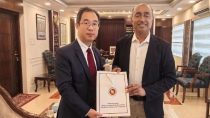
The Asian Development Bank (ADB) has expressed interest in providing investments and grants to support Bangladesh’s information technology, agricultural entrepreneurship development, and industry-academia partnerships. The organization also aims to assist in enhancing education quality, fostering research, and nurturing new entrepreneurs.
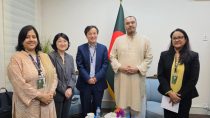
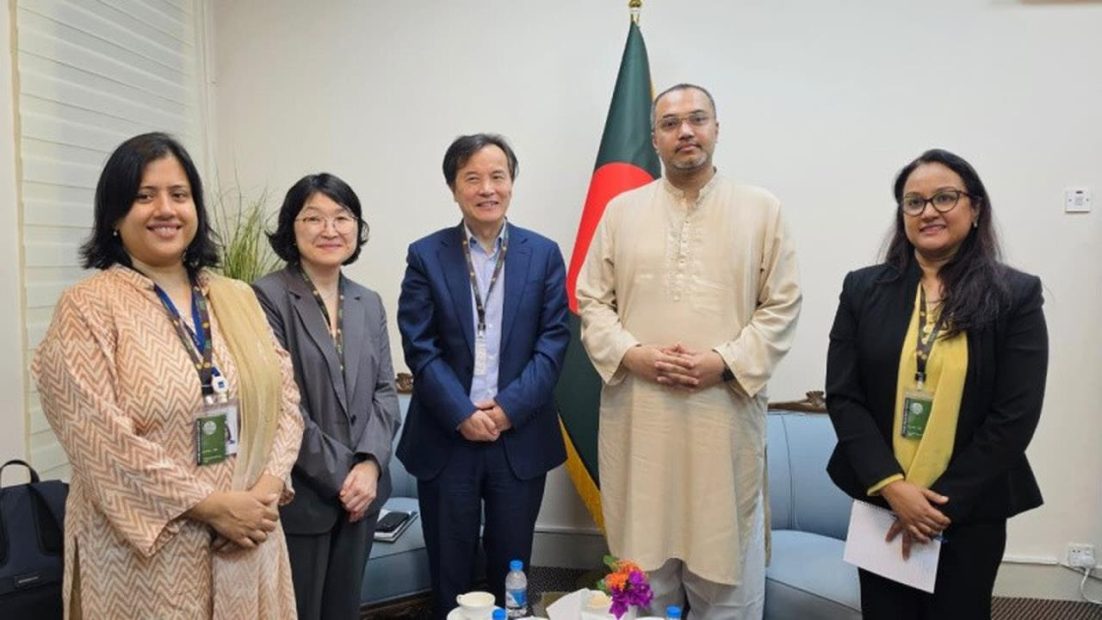
ADB Country Director for the Bangladesh Resident Mission, Hoe Yun Jeong, conveyed this during a meeting with Mahdi Amin, Special Assistant to the Chief Adviser on Education, Primary, and Mass Education, at the Chief Adviser’s Office in Tejgaon, Dhaka, on Thursday afternoon.
The ADB delegation also included Gi Soon Song, Director of the Human and Social Development Division; Faiza Ahad, Project Officer (Education); and Farin Islam, Program Officer. During the meeting, Hoe Yun Jeong noted that ADB plans to allocate investments and grants to strengthen higher education research and development capacity in computer science, information and communication technology (ICT), and software engineering. Additionally, ADB seeks to foster effective linkages between industrial enterprises and academic institutions, while supporting research-driven entrepreneurship in agricultural universities.
He also highlighted initiatives to enhance secondary and higher secondary teachers’ skills and integrate interactive learning tools and artificial intelligence (AI) to improve classroom instruction quality.
The ADB Country Director emphasized that a key objective of this program is to ensure university research goes beyond academic publications to address real-world industrial challenges.
Mahdi Amin outlined the government’s initiatives and future plans for modernizing the national education system. As part of major reforms to make learning engaging and participatory, mandatory subjects titled ‘Sports’ and ‘Culture’ are being introduced in Grade 4 this academic year, expanding to Grade 5 next year, with plans to make them compulsory across all grade levels incrementally.
Reaffirming the government’s commitment to female education, he noted that building upon the legacy of former Prime Minister Begum Khaleda Zia, who made female education tuition-free up to Grade 12, the current government has announced tuition-free education for female students up to the undergraduate level, with medium-term plans to extend this to the postgraduate level within two to three years.
He added that mid-day meal programs are currently operational for primary students in 150 government primary schools, with plans for nationwide expansion across all government primary schools.
Regarding classroom environment improvements, Mahdi Amin mentioned that alongside providing free school uniforms and meals, traditional classroom benches in government primary schools are gradually being replaced with individual chairs and tables for students.
To foster mental development and joyful learning, learning toys are being introduced into government primary schools, alongside outdoor sports equipment such as sliders on school premises.