Livestock in Sherpur Threatened by Grazing Land and Feed Shortages
Sherpur once had grazing land for cattle and goats across the district. In the border upazilas, grass grew on dried-up wetlands and lowlands. Much of this land has now been illegally occupied by land grabbers using forged documents, causing the grazing areas to disappear.
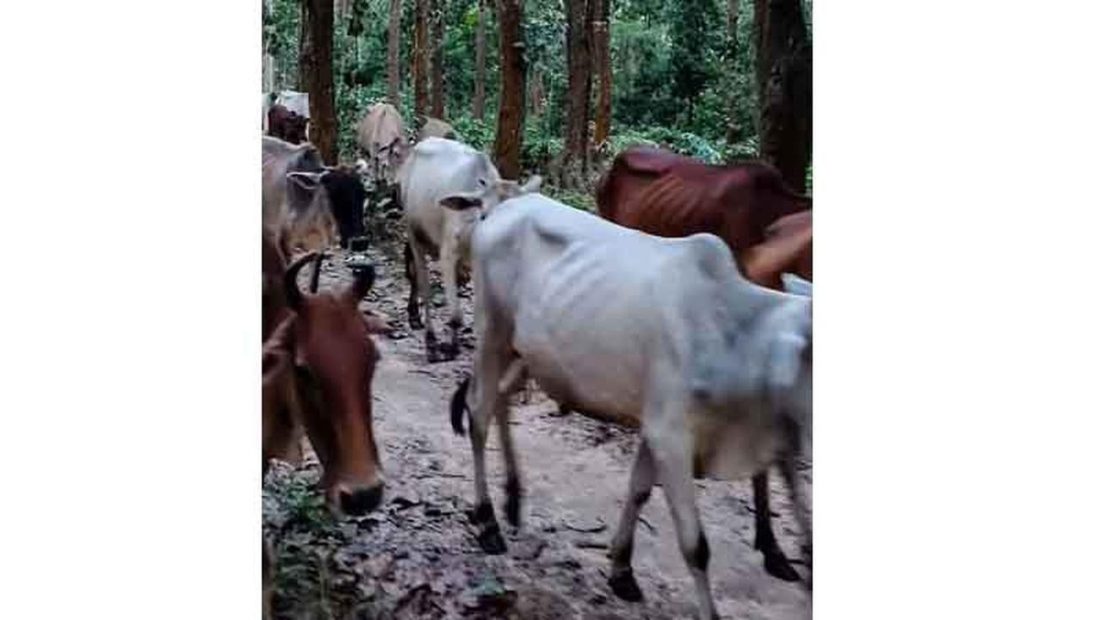
With these grazing lands gone, livestock farmers now mainly depend on grass growing along both sides of unpaved roads and the Garo Hills in the border areas. As a result, livestock farming in Sherpur is facing a serious shortage of grazing land and feed.
For farmers in the Garo Hill areas, the hills have become the last remaining option for grazing cattle, goats and buffaloes. In the three Garo Hill upazilas—Jhenaigati, Sreebardi and Nalitabari—the hills are now the main grazing area for livestock raised by marginal farmers.
For generations, marginal farmers have relied on cattle, goats and buffaloes as a major source of income alongside agriculture. They sell livestock to meet large household expenses and support their livelihoods. However, the declining availability of grazing land and growing feed shortages have caused the number of cattle, buffaloes and goats to fall steadily.
In the past, large herds of cattle, buffaloes and goats were commonly seen in the area. The newly emerged land in dried-up wetlands was widely used as grazing land. But most of these wetlands have now dried up and been converted into farmland. In some areas, houses have also been built on the land. This has reduced grazing space and contributed to the decline in livestock numbers.
Despite the difficulties, many farmers continue to raise cattle, goats and buffaloes. In the rural areas, it is still common for households to keep at least two to four local cattle or goats. Herds of more than a hundred cattle and goats can still be seen grazing on grass in the Garo Hills, with one herder often assigned to look after the animals. The animals are brought back to the farmers’ homes before evening.
Herders in Jhenaigati, Sreebardi and Nalitabari said, “We have been raising cattle and goats since the time of our forefathers.” Farmers said that in the past, they could use the open land in the wetlands for grazing. Selling one or two animals from their herds helped them meet major financial needs. Wealthier households also kept selected animals for sacrifice during Eid-ul-Azha.
Many families used income from livestock sales to build houses, arrange their children’s marriages and cover other major expenses. But as the dried-up wetlands have been converted into farmland and residential areas, grazing space has sharply declined. Farmers also face restrictions when they take their livestock into forest areas and hills managed by the Forest Department.
As a result, livestock farming is now facing a severe grazing-land crisis. Farmers in the three upazilas are increasingly relying on the hilly areas as their last remaining option for raising cattle, buffaloes and goats. Several herder-farmers, speaking on condition of anonymity, said, “We are all marginal farmers. We have been raising cattle and goats, more or less, since ancient times. But even after repeated objections from the Forest Department to raising livestock in forest areas, the forest remains our only last resort for raising animals.”
They appealed to the Forest Department and the administration for support in resolving the problem. Jhenaigati Upazila Nirbahi Officer (UNO) Md Al Amin told Dainik Inqilab, “We will discuss the matter with the Forest Department and try to resolve the problem.”