Bangladesh Sets Its Sights on Becoming a New Hub of the Global Economy
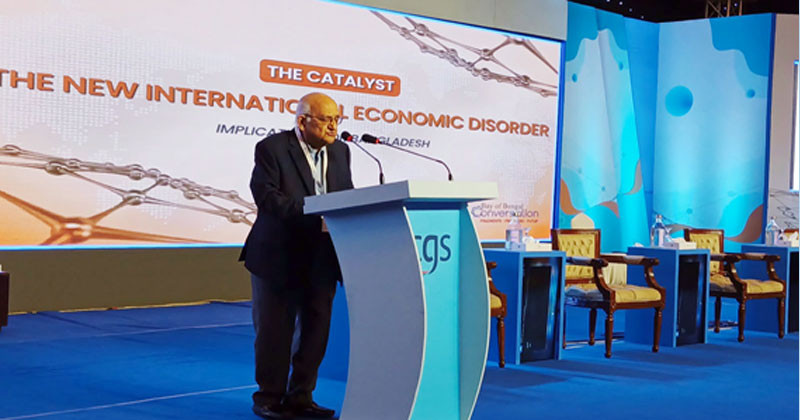
As the centre of the world economy shifts from the West to Asia, Dhaka hosted the three days long international conference Bay of Bengal Conversation 2026. The conference aimed to shape economic geopolitics, sustainable growth and future trade plans for Bangladesh and the Bay of Bengal region. Top policymakers, economists and diplomats from Bangladesh and abroad gave important speeches and guidance on macroeconomic reforms, regional supply chains and global trade partnerships. The talks made it clear that Bangladesh is not only an emerging economy. It will become a strong and influential centre of the world economy in the next decade.
On the first day, Prime Minister Mr. Tarique Rahman unveiled the new economic roadmap of the country in his opening speech. He said the elected government has moved from promises to direct action. The main goal of the government is to turn Bangladesh into a trusted hub for manufacturing and investment. The government’s five years action plan gives top priority to protecting national interest, keeping policies steady and ensuring economic stability through good governance. He asked regional partners to work together and use the sea routes, ports, and coastal fishing and tourism resources of the Bay of Bengal to gain shared prosperity. His speech gave a clear direction for the economic future of Bangladesh.
Noted economist and CPD Chairman Mr. Rehman Sobhan explained the place of Bangladesh in the global setting. He said the centre of the world economy is now moving from the West to Asia, especially towards China and India. Bangladesh sits between these two powers, so its location gives it a strong strategic advantage. To use this chance fully, Bangladesh must connect more closely with the supply chains and markets of Asia. He urged the country to move past old failures and make full economic use of its geography. His analysis showed that Bangladesh is becoming an important centre of the new economic structure of Asia, not only a South Asian state.
The European Union Ambassador to Bangladesh, Mr. Michael Miller, painted a positive picture of the economic potential of the country. He said Bangladesh will become one of the top 30 economies in the world by 2030 if it keeps up the right reforms. He called Bangladesh a country of high ambition and maturity. To make growth last, he asked for more variety in exports and for good governance through independent oversight. He also urged the country to give everyone an equal chance in its market to attract European investment. His words sent a strong message to the international community about the economic potential of Bangladesh.
Information Minister Barrister Andalib Rahman Partha stressed social and environmental fairness along with growth. He supported an inclusive economic model where the benefits of growth reach ordinary people and do not stay in the hands of a small group. In line with the Three Zeros idea of Dr. Yunus, he called for zero carbon emissions, zero unemployment and zero economic inequality through social business. His speech showed the need to build a moral and lasting base for the economic development of Bangladesh.
UK High Commissioner Ms. Sarah Cook spoke about lasting development built on partnership. She said regional and international partners must work together more to cut climate risks and reach steady economic growth. She gave a positive message that Bangladesh can keep its duty free access under the UK Developing Countries Trading Scheme even after it leaves the LDC group. This will help keep the economy of Bangladesh stable. Her words may open new doors for Bangladesh in international trade and climate finance.
Canadian High Commissioner Mr. Ajit Singh said Canada sees Bangladesh as an important partner in building a better and inclusive international system, not only as a trade destination. He said the two countries have built a deep and close bond over more than five decades. Even in the current hard times for Bangladesh, trade between the two countries has grown by more than 25 percent and has passed 4 billion Canadian dollars. He said both sides can take cooperation much further in agriculture, food security, energy, climate, technology, aerospace, education and skills, digital technology, innovation and investment. In his view, this bond is no longer limited to donor and receiver. It is becoming a partnership for shared prosperity and inclusive growth.
State Minister for Foreign Affairs Mr. Humayun Kabir presented four core principles of the foreign policy of Bangladesh at the conference. He said national interest will be the guide, strategic autonomy will be the strength, partnership will create new chances and peace will remain the final goal. He said that in today’s world, we cannot look at foreign policy, economy and security separately. To protect national interest and widen economic chances, the diplomacy of Bangladesh must focus more on the economy. He said Bangladesh missions abroad must work harder to find new markets, attract investment, promote Bangladeshi products and create new economic chances for the people. He also stressed making the Bay of Bengal a place of peace, stability and cooperation.
Experts at the conference said that adding artificial intelligence to weak systems will not solve the crisis. They said the country must first reform its systems, ensure local and quality data, and make data use open and accountable before using AI. Mr. Faiyaz Yasin, Executive Director of Accountability Lab Pakistan, said there is already a big trust gap between the government and the people. He said the key question now is whether AI will speed up problem solving or become an excuse to leave problems unsolved for another 10 to 15 years. Economist and AI researcher Mr. Shimelse Mekonnen spoke about the importance of local reality and data in AI use. Solshare Chief Executive and cofounder Mr. Sebastian Groh said it is hard to build trust in algorithms without involving people.
Mr. Narayan Adhikari, South Asia Director of Accountability Lab Nepal, said the key point is whether technology meets the daily needs of people. Associate Professor Mr. Marko Skoric of the City University of Hong Kong said too much sorting by algorithms makes people see the same kind of content again and again. This reduces their chance to meet people with different views.
CGS Executive Director Mr. Pervez Karim Abbasi stressed sustainable economic growth and democratic governance for Bangladesh. He said that in the changed global setting, Bangladesh must give priority to the Sustainable Development Goals to keep its economy going. It must also build the strength to face any international economic shock by making its trade more varied. BRAC Business School Associate Professor Dr. Sebastian Groh stressed making the growth of the Bay of Bengal region safe for the environment. He warned that if industry grows without control and carbon emissions do not fall, climate risks will push the economic structure of the region into a deep crisis in the long run. So he called for growth through a green governance model.
Economists and geopolitical analysts say three main directions for the economy of Bangladesh came out of Bay of Bengal Conversation 2026. First, institutional reform: Bangladesh must reform its domestic market and ensure equal legal rules to attract foreign investment. Second, regional connection: Bangladesh must take a bigger part in the supply chains of South and Southeast Asia. Third, sustainable development: Bangladesh must build an economy without discrimination by cutting carbon emissions and training young people to become entrepreneurs. Bangladesh is no longer only an emerging economy. It is about to become a strong and influential centre of the world economy in the next decade.