Election Commission Faces a Tough Challenge
Rafiq Muhammad
The Union Parishad (UP) election is near. The Election Commission (EC) says it will announce the dates and schedule on 12 October. The EC had earlier announced dates in several phases for the whole country. State Minister Mr. Mir Shahe Alam objected, so the EC is now setting the dates again.
This time the EC has finished its preparation after thinking about Ramadan and student exams. At its meeting on 12 October, it will decide when the polls begin and how many phases they will have. Election Commissioner Brigadier General (Retd.) Abul Fazal Md. Sanaullah shared this. The EC wants to finish all UP polls across the country by 6 June next year. After the announcement, it will hold talks with the registered political parties.
This will be the first election under the current government, so many people watch it closely. The past fascist government took away the right to vote. It held polls on party symbols and forced its own leaders to win. Ordinary people could not go to the polling centers and vote for their chosen candidates. That rule lasted 17 years, and now the first election under the elected government is coming.
The current EC won praise for holding the last national election in a fair and peaceful way. Now it will run a local election under a party government. The polls will also be held without party symbols. So experts and many others ask how fair and how peaceful this election will be.
The opposition already doubts that the EC can hold a fair election. Mr. Mia Golam Parwar, Secretary General of Bangladesh Jamaat e Islami, says the EC is not fully independent. He says it often follows government orders. He says the EC had to change its roadmap after a state minister objected. He also says the government placed officers in local offices on party grounds, which raises fear about fairness. He says the EC must get a free space to decide, and that space is not visible yet.
Past elections in many districts brought deaths and bloody clashes. This time the polls are without party symbols, so one party can have many candidates. Experts fear more clashes because of party feuds, inner disputes and many candidates. The law and order situation is already weak. Experts say every usual cause of election violence exists today.
These causes include many candidates from ruling parties, inner groups, rule breaking and outsiders with muscle power. On 4 October, two sides clashed and fired shots in Teknaf, Cox’s Bazar, over candidacy. Banners and posters of rival candidates from the same party now cover many areas. They campaign freely and ignore the EC’s code of conduct.
Many leaders and workers of the banned Awami League have become active around this election. In some places the ruling BNP gives them room for its own gain. In other areas Jamaat does the same. There are also claims that some groups hire known criminals to gain strength.
Mr. Badiul Alam Majumder is a local election expert and Central Secretary of Shushashoner Jonno Nagorik (Sujan). He says many unwanted people have entered the election field. He says plainly that many criminals have entered it. He says politics itself is also polluted, and political shelter protects every wrong. He believes it is a big challenge for the EC to keep the polls peaceful.
The law enforcement forces also fear violence. They say they are getting ready to handle it. IGP Mr. Ali Hossain Fakir spoke at the opening of an election training for police officers at Rajarbagh Police Lines. He said all parties wanted a fair national election, and that helped. He said the local election will be different because both the ruling and opposition parties want to win.
He said the police are preparing sincerely for their duty. After the schedule is announced, the forces will collect licensed arms on the EC’s order. They will also watch closely and increase patrols. Many people still doubt the police. Officers themselves say their strength has fallen by 20 percent since the July uprising.
Police headquarters says 1,074 police vehicles suffered damage in July 2024. Attackers burned 455 cars and motorcycles and broke 620 cars. In 2025, another 1,369 police vehicles became useless. The police have not replaced them yet, and their morale has not returned.
Many experts say the army must be on the ground for a fair election. Political analyst and rights activist Mr. Nur Khan Liton says the police are not fully active since the uprising. He says the army must be present to keep the polls peaceful.
Chief Election Commissioner Mr. A M M Nasir Uddin also admits the risk of violence is high. He says past local polls saw more violence. Many candidates run, and even one family can field several. This leads to fights in villages and neighborhoods.
He says the EC prepares with this risk in mind. He says no single body can run a successful election. It needs joint effort from state bodies, the administration, the forces and all stakeholders. The EC will use more CCTV cameras, body worn cameras and digital monitoring.
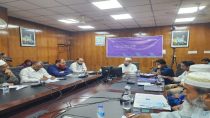
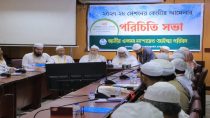
The EC also fears that outsiders may interfere. It will find risky areas and plan using intelligence reports. It recently met 26 ministries, divisions and agencies. The meeting told them to prepare intelligence based security plans for risky areas. At the meeting, outsiders meant powerful people from outside the voting area and the leaders and workers of the banned Awami League.
State Minister for Local Government, Rural Development and Cooperatives Mr. Mir Shahe Alam says the government fought for the people’s right to vote. He says it is firm in protecting that right. He says the government will deploy the army if that makes the polls fully acceptable to all. He says people must be able to choose their own representatives by direct vote.