‘Everyone Hates the Police’: France’s Protests Expose Deep Divisions
Student protests have spread across France over teacher shortages, deteriorating school buildings and declining educational conditions. However, the movement has grown beyond education, with clashes between protesters and police, allegations of excessive force and growing anger among young people exposing deeper social and political divisions.
According to a BBC report, the protests began over shortages of teachers and support staff, overcrowded classrooms, dilapidated buildings and unequal access to education. Students say some schools lack adequate desks and chairs, while classrooms and toilets are in poor condition. They have also criticised long school days and university admission procedures, demanding effective government action.
Protests resumed in several French cities on Thursday (October 8). According to the Interior Ministry, around 71,500 people demonstrated nationwide, including approximately 24,500 in Paris. Authorities said 504 people were detained and 48 police officers were injured during the protests.
In response, the government has moved to recruit more than 3,000 substitute teachers. Education Minister Édouard Geffray said substitute teachers were being assigned to schools facing staff shortages. Prime Minister Sébastien Lecornu has promised specific measures to address protesters’ demands by the end of October. However, some student and teacher organisations say temporary recruitment alone will not resolve the crisis. They are also calling for better school infrastructure, adequate funding and long-term solutions to teacher shortages.
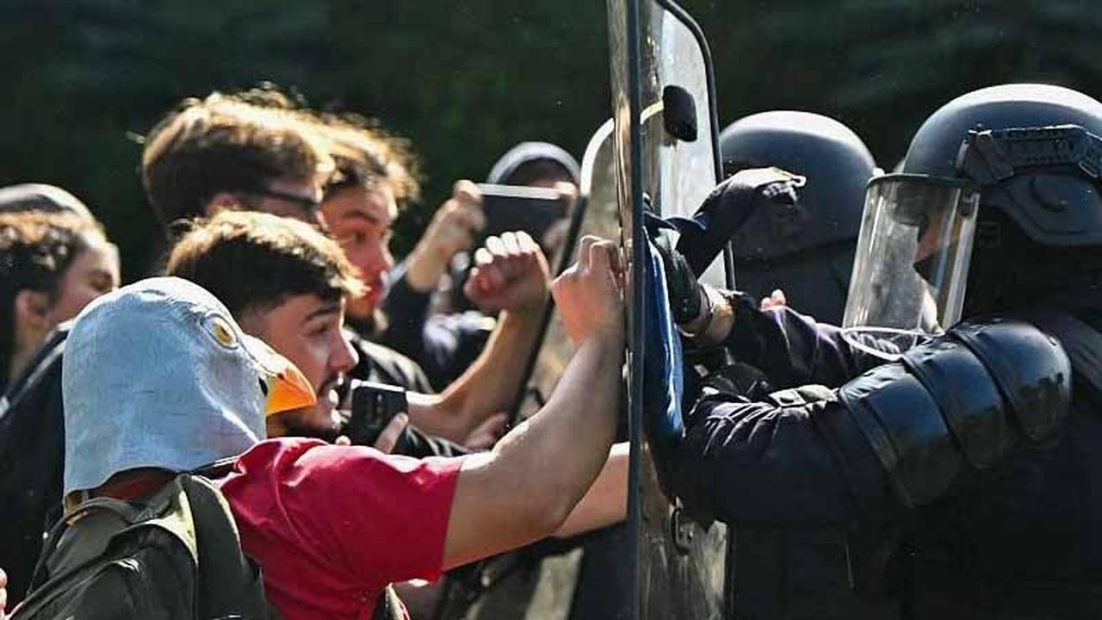
Police conduct has become another major source of controversy. Officers have used tear gas and clashed with protesters in several locations. Human rights activists and student organisations allege that excessive force was used against minors in some incidents. Authorities, however, say some demonstrations turned violent, with reports of vandalism at educational institutions and government buildings.
Particular attention has focused on an incident in Lens, northern France, where a 15-year-old boy lost a hand. Allegations have linked the injury to a stun grenade fired by police. However, accounts from police-linked sources and eyewitnesses differ over how the boy was injured. Following the incident, authorities suspended the use of stun grenades to disperse protests. The incident has renewed concerns over the limits of police force and the safety of minors during demonstrations.
The BBC report also highlighted the slogan “Everyone hates the police” chanted by protesters in Lille. The slogan should not be taken as reflecting the views of all French people. Rather, it expresses the anger and distrust of some young people participating in the movement. Discontent over education and controversy surrounding police conduct have brought broader social issues to the forefront.
Political divisions have also become increasingly visible. Far-right leader Marine Le Pen has criticised damage to schools and public property during the protests. Left-wing leader Jean-Luc Mélenchon, meanwhile, has supported the students’ demands and criticised police conduct. With next year’s presidential election approaching, debates over education, public spending and law and order are also influencing the political landscape.
Student and teacher organisations have called for another round of protests on October 13. Although the government has promised additional teachers and reforms, protesters are demanding swift, concrete action. The dispute over France’s education system is therefore likely to continue alongside wider debates over policing and growing youth anger.
Source: BBC