Barguna’s Primary School in Decline: Students Drop Out, Teachers Stay Away
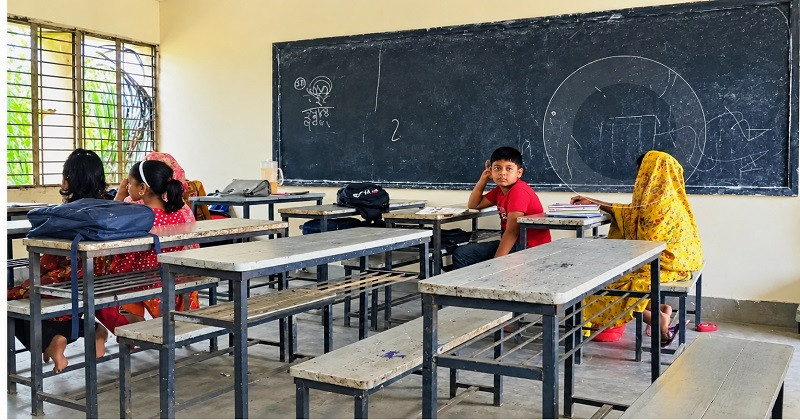
A severe crisis of teacher absenteeism, ghost attendance, and dwindling student enrollment has engulfed government primary schools in Barguna district. Despite having well-maintained infrastructure and sanctioned teaching posts across 799 government primary schools serving around 81,900 students, institutions are struggling to retain pupils. Recent visits revealed nearly deserted classrooms, early departures, and combined-grade teaching. Consequently, parents are increasingly losing trust in the public education system and turning toward private kindergartens and madrasas.
At Madhya Patakata Government Primary School in Barguna Sadar Upazila, only two students were present alongside three out of five assigned teachers, with both the headmaster and acting headmaster missing. A similar scene unfolded at nearby Charpara Government Primary School, where two female teachers attended to just five students while the headmaster was absent. Explaining the situation, Kamrun Nahar, an assistant teacher at Madhya Patakata Government Primary School, noted that poor local transport links prevent many students from attending regularly, while newly established schools have split the student population.
Conditions were equally alarming at Purba Hosnabad Government Primary School in Betagi Upazila, where only two of four assigned teachers were present. The acting headmistress was found sleeping on a bench in an empty classroom despite all four teachers having signed the attendance register. In another room, a single teacher was conducting combined lessons for five students across grades three to five. Mst. Parveen, an assistant teacher at Charpara School, mentioned that despite low attendance, teachers are required to remain on campus for the entire duration, even as schools grapple with staff shortages.
The trend of empty classrooms during official school hours continued across other institutions in the district. Around 2:30 PM, Uttardesantar Khati Government Primary School had no students present and only one teacher on duty. An identical scenario was observed at the neighboring Chanmia Government Primary School. Residents and parents expressed deep frustration over these early desertions, demanding immediate administrative investigations into whether empty classrooms during crucial learning hours have become a routine occurrence.
Teachers across the district attribute the decline in student numbers to poor transport networks, the expansion of local madrasas, and growing parental preference for kindergartens offering early English education. Furthermore, state-run schools face a negative public perception as institutions serving only low-income families. Conversely, parents blame school administrations, citing irregular teacher attendance, poor instructional quality, early departures, and a total lack of administrative oversight for eroding public confidence.
To secure better educational opportunities, many parents are spending extra money to send their children to distant private kindergartens every day. Parents firmly believe that if quality education and strict accountability were ensured in government schools, this enrollment drop could be reversed. With 5,047 sanctioned teaching positions across Barguna’s government primary schools, public funds are being underutilized due to systemic negligence and inadequate field-level monitoring.
Concerned citizens emphasize that improving infrastructure alone will not solve this crisis. Authorities must enforce strict teacher attendance, eliminate combined-grade instruction, fill vacant posts, and publicly disclose school-by-school attendance and academic progress data. Because government primary schools remain the primary educational foundation for children from low-income families, swift administrative reforms are urgently required to restore educational quality and rebuild public trust.