Lalmonirhat Potters Struggle to Preserve Ancestral Craft and Tradition
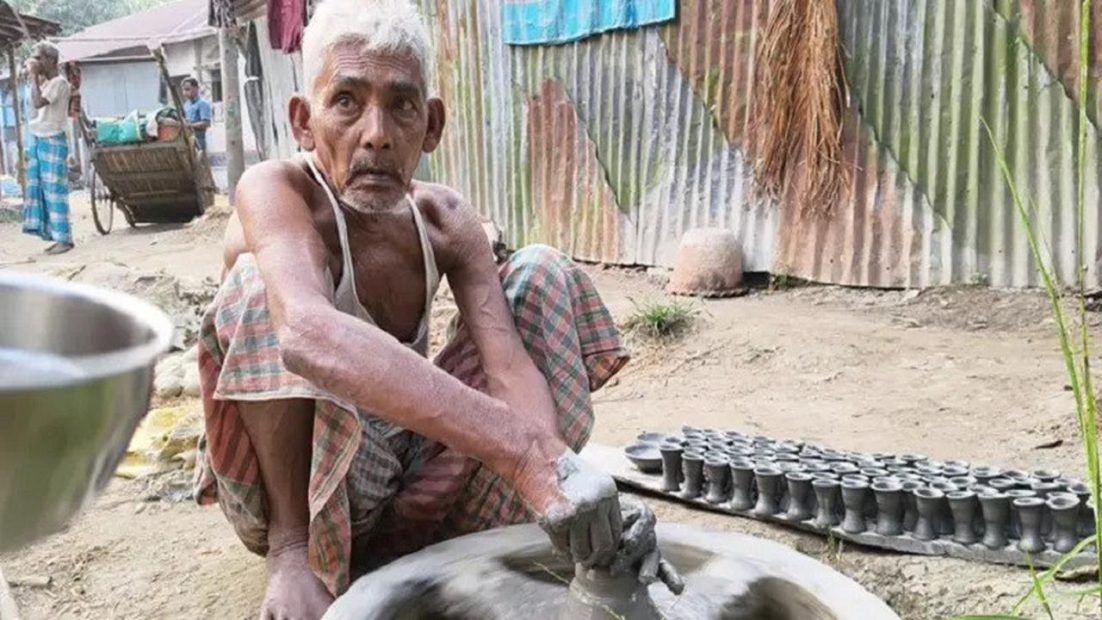
Around 20 families in Kismat Chongadara village of Lalmonirhat depend entirely on pottery for their livelihood. Although they have continued their ancestral profession for nearly 100 years, shortages of suitable clay, rising production costs and competition from plastic products have made it increasingly difficult to survive. Their workload increases during religious festivals, but the income is not enough to meet their household needs. Faced with losses and debt, many have abandoned the profession and moved to Dhaka. The remaining families continue to struggle to preserve their traditional craft.
About 100 people live in the 20 pottery-making families in Kismat Chongadara village under Harati Union of Lalmonirhat Sadar Upazila. Pottery is their only source of income. As festivals approach, the households become busy with work. Elderly artisans carefully turn their pottery wheels, children help their families, and women paint and decorate the clay products. Their collective efforts reflect a traditional picture of rural life in Bangladesh.
However, behind the busy festival season lies the hardship faced by these artisans. Demand for earthenware has declined, and the special clay needed to make the products is not readily available in Lalmonirhat. They have to buy it at high prices from Shyampur in Rangpur. From purchasing clay to making and selling the products, costs often become so high that artisans struggle even to recover their investment. As a result, these Hindu families find it increasingly difficult to support themselves on their limited earnings.
Supen Roy, a 67-year-old potter, described how the profession has changed. “I have been doing this work since the time of my father and grandfather. I have been involved in this work since I gained awareness. However, with the arrival of plastic products in the market, demand for our products has fallen sharply. Earthenware was once popular in hotels, restaurants and various shops, but now plastic products have taken over. As sales have declined, the income from this work is barely enough for us to survive.”
Potter Arati Rani also expressed her frustration. She said, “It has become very difficult to run a household with pottery work. When there is no clay, our work stops, and now it is difficult to find this clay. We do not know what the coming days will bring. We work together mainly during festivals. We must preserve this tradition, so we want to continue working this way for as long as we can.”
In the past, fairs were held near temples in rural areas during religious festivals. Artisans displayed earthen pots, cooking utensils, clay money banks and toys for sale. Today, these fairs have lost much of their former appeal. Cheap, modern plastic toys have also pushed demand for clay products to a low level. Unable to bear the losses, many artisans have left their century-old family profession and moved to Dhaka.
Another senior potter, Ms. Manisha, said she learned the craft after joining the family through marriage. “We used to be very busy in the past. Now, it is no longer possible to work as much as before. Many families’ children have left this work and moved to Dhaka. There is little demand in the market, and clay is not available properly. We borrow money from NGOs to buy clay and work during the festival season.”
Potter Mr. Paresh described the losses they have suffered in recent years. He said they had been unable to hold fairs properly over the past two years. To resume production, they must buy clay and paint, often using borrowed money. He added that potters in other parts of the district faced similar difficulties.
Mr. Paresh said that although the government has several departments responsible for providing support, assistance has not reached them. Meeting their children’s education costs, paying for medical treatment and securing food have become major challenges. He urged the government to pay attention to the artisans and their traditional industry.
Despite these hardships, the remaining families are determined to preserve their ancestors’ legacy and traditional craft. Every year, they resume work with renewed effort as the festival season approaches. However, without timely financial assistance and institutional support, this centuries-old pottery tradition could eventually disappear.
Lalmonirhat Deputy Commissioner Md. Rashedul Haque Pradhan acknowledged the artisans’ financial difficulties. He said, “The idol makers of Lalmonirhat are indeed spending their days in poverty. We have visited the area and seen their situation. We have learned that they are facing financial hardship. We will raise the issue with the government so that they can receive financial assistance in the future and live better lives.”