IMF Forecasts 10.9% Inflation, 3.2% GDP Growth for Bangladesh
Bangladesh Seeks Additional $10 Billion in World Bank Financing
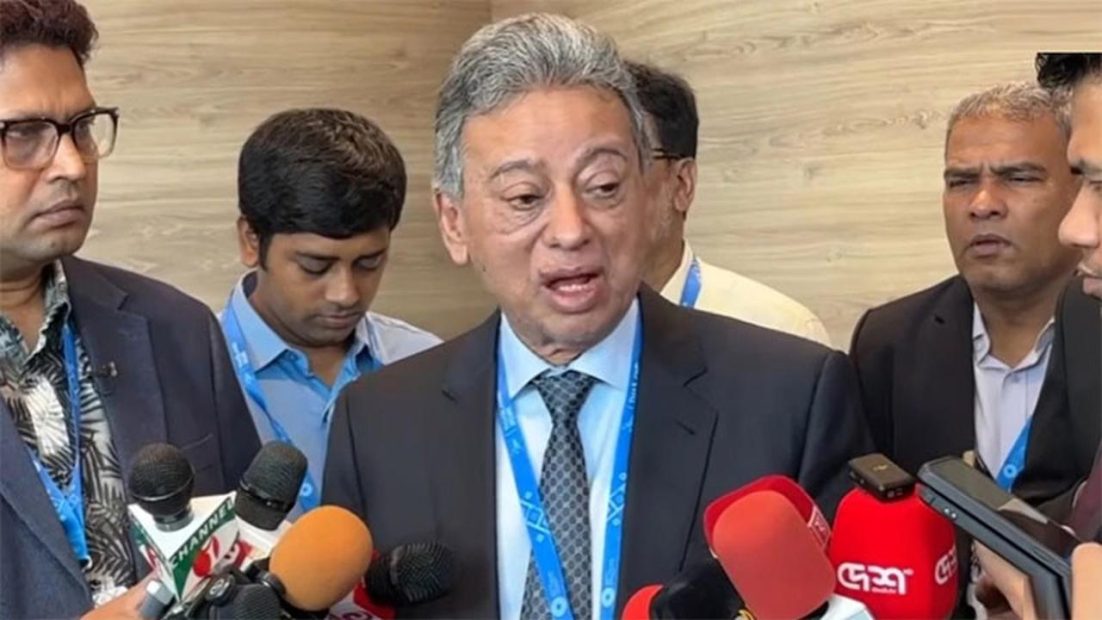
Finance Minister Amir Khosru Mahmud Chowdhury has said no final decision has been made on Bangladesh’s proposal for an additional $10 billion in World Bank financing. Discussions are ongoing, and the process could take several more months.
He said the World Bank shared the government’s approach to stabilising the economy, addressing current economic challenges and implementing medium- and long-term development plans. The bank was willing to provide the necessary support, he added.
The finance minister made the remarks while responding to journalists after meeting the World Bank’s managing director in Bangkok on Tuesday.
“No decision is being made at this stage. These are discussions, and further steps will follow. The process may continue for the next few months,” Amir Khosru said.
He said the discussions were helping both sides identify their next steps and establish a basis for future decisions. Talks would also continue in Dhaka.
The minister expressed satisfaction with the progress, saying the World Bank understood Bangladesh’s economic policies, programmes and development plans. He said the bank also supported the government’s efforts to restore economic stability and address the country’s current difficulties.
Amir Khosru said the government had inherited an economy facing a crisis, along with existing financial liabilities and the economic fallout from ongoing global conflicts. The World Bank understood these challenges and was keen to support Bangladesh, he added.
He said discussions were also underway on a framework for the country’s partnership with the World Bank. Bangladesh had submitted a written proposal, while the bank had provided recommendations. Both sides had presented their respective positions, he added.
Asked about the World Bank’s and Asian Development Bank’s (ADB) economic forecasts, Amir Khosru said the government did not intend to dispute their projections, which were based on the institutions’ own calculations and analyses.
He said the government was working to meet the economic targets set in the national budget.
IMF Cuts Bangladesh’s Growth Forecast
The International Monetary Fund (IMF) has lowered its economic growth forecast for Bangladesh to 3.2% for the current fiscal year, FY2026-27. The projection is down from 4.3% in the IMF’s April forecast.
The ADB has projected growth of 4%, while the World Bank has forecast 3.4%.
The IMF also expects Bangladesh’s average inflation to rise to 10.9% in FY2026-27, putting further pressure on household budgets, particularly those of low-income families.
Responding to the projections, Amir Khosru said the government would continue its work and that economic performance would become clearer over time.
The forecasts were released at the annual meetings of the IMF and World Bank Group in Bangkok on Tuesday.
The IMF’s latest World Economic Outlook report said the global economy had remained resilient, but sustaining that resilience was becoming increasingly difficult.
Global economic growth is projected at 3.1% in 2026 and 3.4% in 2027. Higher energy and food prices linked to conflicts in the Middle East are weighing on economic activity, while investment in artificial intelligence (AI) is helping support growth.
Global inflation is projected to reach 4.7% in 2026 before easing to 4.1% in 2027.
The IMF warned that the outlook remained uncertain. An escalation of conflicts in the Middle East or a reassessment of expectations surrounding AI could weaken growth. On the other hand, sustained AI investment, faster productivity growth, improved trade and greater investment in energy security could support the global economy.
The fund identified several policy priorities, including restoring public finances, strengthening energy security, preparing for AI adoption and keeping trade and international cooperation channels open.
It also warned that countries affected by conflicts, including Ukraine and some Gulf states hit by Iranian attacks, could face slower growth.
A prolonged rise in food and energy prices could keep inflation high, increase poverty and threaten economic stability, the IMF said.
The fund also raised concerns about rising public debt, saying global public debt had reached its highest level since World War II. It could exceed 100% of global GDP before 2030.
The United States has a high debt-to-GDP ratio, while emerging and low-income economies face their own debt-related risks. High US interest rates could trigger capital outflows from these countries.
Climate-related risks and constraints on investment in artificial intelligence could further weaken their economic capacity, the IMF warned.
Bangladesh, Thailand Explore Joint Industrialisation
Bangladesh wants to draw on Thailand’s experience in attracting foreign investment and explore opportunities for joint production and industrialisation.
Prime Minister’s Adviser on Finance and Planning Rashed Al Mahmud Titumir said there was considerable scope to expand trade between the two countries. He said the government wanted not only to reduce the trade deficit but also to create jobs and increase exports by linking production and supply chains.
Speaking about a meeting with the Thai Chamber of Commerce, Titumir said several promising sectors in Bangladesh had been highlighted. Thai investors had expressed interest in agricultural products and halal food processing, where opportunities existed for production, processing and value addition.
He said the two countries could develop joint production networks in which raw materials were produced in Bangladesh, intermediate goods were manufactured in Thailand, and finished products were exported to international markets.
Under other arrangements, Thailand could supply raw materials or intermediate goods, while final production would take place in Bangladesh.
Such networks could help industries in both countries complement one another, boost investment and trade, and strengthen Bangladesh’s participation in regional supply chains.
IMF Stresses Transparency and Risk Management
The IMF has called for stronger financial resilience, greater transparency, reduced reliance on excessive borrowing and better preparation for future economic shocks.
The fund warned that current market stability did not mean the financial system was free of risks. Weaknesses in different parts of the financial sector could interact during a major shock and deepen a crisis.
Identifying risks early and strengthening risk management at financial institutions are therefore essential to maintaining global financial stability, it said.