Tarique Rahman Focuses on Rebuilding Fragile Economy and Nation as Party Workers Seek to Share Ground Realities
Faruk Hossain
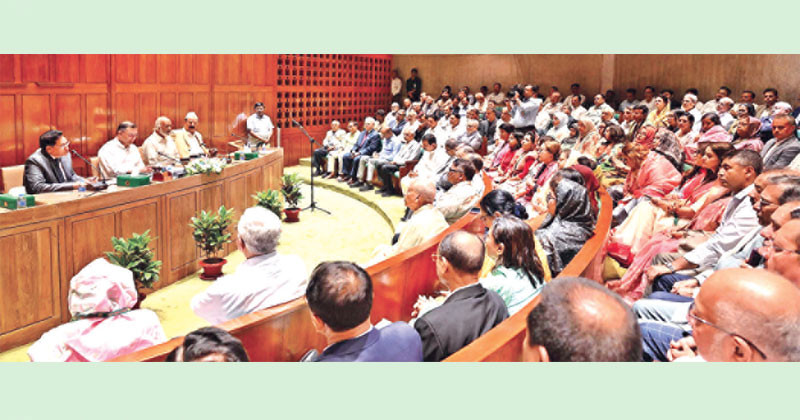
Prime Minister Mr. Tarique Rahman recently held a meeting of the parliamentary party. At the meeting, party lawmakers told him about problems in their own areas, problems in running the government, and many problems of the ruling party. They spoke in particular about extortion in the name of the party, land grabbing, immoral acts by party workers, the law and order situation, the fuel crisis, and irregularities in taking government benefits. Mr. Tarique Rahman listened to them carefully and gave the needed directions, and people are praising him for it.
The lawmakers are happy that they could speak openly before the Prime Minister about their problems and worries. Ms. Sanjida Yasmin Tuli, a reserved seat MP of the party, said that ruling party MPs often cannot say many things in Parliament even if they want to. At the parliamentary party meeting, many spoke freely, raised the problems, and suggested what to do. Another MP, Mr. S M Jahangir, said the MPs shared various problems and the Prime Minister also gave them directions. He called this very important and said such meetings should be held from time to time.
Political analysts say the Prime Minister should also listen to the grassroots leaders and workers of the party, along with the MPs, to know the real picture of the whole country. This would energize the party workers and strengthen the party. It would also let him see a different picture, through different eyes, apart from what the MPs show him.
However, party leaders and workers say their contact with BNP Chairman Mr. Tarique Rahman has weakened compared with the time of the movement against the autocrat. They accept that he is busy with the real duties of taking charge as Prime Minister and running the country. Still, they want a chance to speak with him from time to time.
Advocate Mr. Syed Moazzem Hossain Alal, a member of the BNP Chairman’s advisory council, said Prime Minister Mr. Tarique Rahman took charge during the most broken political and economic crisis since independence. A big duty has fallen on his shoulders to face many plots at home and abroad, rebuild the economy, and make the country stable. He understands this, so he is saving money in many ways. He is taking one step after another to make the country and its people economically self reliant. The leaders and workers must understand this reality too.
Mr. Alal also showed respect for the feelings of the leaders and workers. He said every leader and worker of the party feels deep emotion for Chairman and Prime Minister Mr. Tarique Rahman. They want to have him as before and want to talk to him, and this is natural. But they must also understand the reality. The party can take a step here too. It can give several people the duty to listen to the leaders and workers. They would sit with them and present their words to the Chairman as a report. The party has done this kind of work before.
During the long movement against fascism, countless BNP leaders and workers suffered enforced disappearance, killing, attacks, and false cases. Many went to jail again and again and faced inhuman torture. At that time, Mr. Tarique Rahman, then the Acting Chairman, kept close contact with these leaders and workers from the party center to the grassroots. Under his leadership, the party kept its leaders strong, checked on victims of torture and abuse, and built the movement. He stayed in close touch with every level of the party.
The leaders and workers also knew that any trouble or advice of theirs could reach Mr. Tarique Rahman directly. So even after brutal torture, they forgot their terrible pain once they got the chance to speak with him. After they were released and recovered, they came back to the streets again. Leading that movement against fascism from faraway London, Mr. Tarique Rahman became the guide of the party workers. After the fall of the fascist government, the Bangladesh Nationalist Party BNP returned to power through the votes of the people. The government was formed under the leadership of Prime Minister Mr. Tarique Rahman, the party’s long time guide.
Since he became Prime Minister, Mr. Tarique Rahman’s workload has grown sky high. Reviving the fragile economy, improving law and order, strengthening international relations, and reforming state institutions are now his daily routine. With the heavy duty of making state policy, rebuilding the economy, handling diplomacy, and keeping order in administration, it has become truly hard to keep the same direct and constant contact with party workers as before. That contact has broken. Many cannot accept this distance from their dear guardian.
Some people also use this gap. A part of the party, including a greedy and opportunist group, has got involved in extortion, land grabbing, and other immoral acts. Strict party and legal action is taken against those involved as soon as they come to notice. But the large number of loyal leaders and workers who sacrificed for the party cannot accept the damage that a few people cause to the good name of the party and government. The pain of being unable to tell the Prime Minister about the wrongs they see with their own eyes also burns them. So they want a chance to put their anger, sadness, and pain, and also the challenges facing the government and party, before Prime Minister Mr. Tarique Rahman.
Several leaders of the BNP and its associate bodies said that the Prime Minister recently listened to the MPs at the parliamentary party meeting. If he sits with the BNP and its associate bodies in the same way from time to time and listens to them, the party and its workers will stay energized. They said the party and the country would benefit from this.
Meanwhile, after more than one and a half decades, the Bangladesh Nationalist Party BNP has returned to power through the votes of the people. Prime Minister Mr. Tarique Rahman, the party’s long time guide, had to face a fragile economy, the effects of the global crisis, the allies left behind by the fled fascist Awami government, and many plots and challenges from home and abroad as soon as he took charge. Even so, through his work he has presented himself to the people as an unusual Prime Minister. He does not take government benefits (in some cases he takes less), cuts down protocol to mix with ordinary people, and has taken many welfare steps for the country and its people. This has put him at the top of popularity.
On the other hand, the good name of the BNP government is fading because of extortion, land grabbing, and other immoral acts by a greedy and opportunist group in the party. The party and the government act quickly wherever such incidents happen. Even so, the loyal leaders and workers of many years are angry at these acts of the opportunists. The Prime Minister himself has also shown his displeasure. At the latest meeting of the party’s parliamentary committee, he warned that no one would be spared if they get involved in extortion, land grabbing, or any other irregularity. He said strict action would be taken against them.
BNP leaders and workers complain that a negative image of the BNP is forming among ordinary people because of an opportunist part of the party. At the same time, a large part of the loyal leaders and workers still spend their days in money trouble and sorrow, as before. Yet this picture is not reaching Prime Minister Mr. Tarique Rahman at all. Even those who stayed on the streets in the movement and struggle for 17 long years cannot meet the Prime Minister now, and cannot tell him about their pain. So frustration is spreading among these leaders and workers, and many are becoming inactive. This is good for neither the party nor the government.
They allege that Prime Minister Mr. Tarique Rahman is being pushed away from them by clever moves. To end this distance, they demand that he sit with the party leaders and workers from time to time and listen to them.
Mr. Mamun Khan, former Vice President of Chhatra Dal, was tortured, attacked, sued in false cases, and arrested countless times during the movement against fascism. Yesterday he drew the Prime Minister’s attention through a post on social media. He wrote: Honorable Prime Minister, if you ask even my enemy to make a short list of the oppressed of the past 15 years, my name will be on that list. The other comrades whose names will be on that list and I have not drunk even a glass of water from the BNP government so far. Extortion and scheming come much later. Even if you investigate with the sharpest teams of all your state intelligence agencies, no one can put a red mark on our record. We do not suffer over getting or not getting anything. We suffer because a government that came to power over our blood is killing us slowly every day.
He also wrote: Under the killer Hasina, we were hurt only in our bodies. When we lay in pain in hospital, we got well just because Bhaiya (Tarique Rahman) called to ask about us. After serving jail for months and years, we forgot all the pain of the police station, the lockup, remand, and jail just by greeting Bhaiya on the phone. Now the same people suffer every day. It is not just pain. Looking at it from every side, social, family, and political, we are tossing in a terrible political agony like the pain of death. God forbid, but before the suicide note of any of these oppressed people reaches your table, let the news of their bad condition reach you. Let them be able to tell their Bhaiya, even once, that you are Prime Minister today, but our Bhaiya is still our guardian.
Mr. Mamun Khan wrote: I want to tell you clearly, 95% of the true street leaders and workers are not well. This cannot go on. If it goes on like this, you will lose a huge army of soldiers. For 15 to 20 years, they fed and clothed themselves, gave their blood, sweat, sacrifice, and labor, and built themselves slowly into brave fighters. The decision is yours. If we are not well, the BNP government will not be well. If the BNP government is not well, the country will not be well. If you do not take my words seriously, the whole government will regret it one day, and then there will be no time.
Mr. Golam Sarwar, former Senior Vice President of Swechchhasebak Dal, said BNP Chairman Mr. Tarique Rahman is now the Prime Minister. In the hardest and darkest times, they used to speak with him. After getting his instructions, they risked their lives. But now many are very far from him. The loyal leaders and workers do not ask anything from Prime Minister Mr. Tarique Rahman. They only want to tell him what is in their hearts and what hurts them. Even that chance is not coming. As a result, many are becoming inactive. This is good for neither the party, the country, nor the nation.
Advocate Mr. Abul Kalam Shahin, General Secretary of Barishal South BNP, said the Prime Minister now has to think not only about the party but also about the country. He has to think about the country’s problems and the many plots against it. Because of this reality, contact with leaders and workers may have dropped. Even so, he always thinks about them. The leaders and workers also love him deeply. They want to meet Prime Minister Mr. Tarique Rahman and talk to him. He has already started sitting with various units. Mr. Shahin said they hope he will sit with the leaders of all units across the country in a regular way and listen to them. If this happens, the party will be strong and the leaders and workers will be energized.
Mr. Gayeshwar Chandra Roy MP, a member of the BNP Standing Committee, said the leaders and workers have growing, unexpected wishes toward Prime Minister and BNP Chairman Mr. Tarique Rahman. He said it is natural that they want to share their sorrow and pain and want to meet him. The BNP has formed the government, but it could not do anything for those who stayed in the movement and struggle for a long time and lost everything. Some opportunists have also entered the party, which frustrates the loyal ones. Because of this frustration, many are moving away, and anger is building.
Mr. Roy said they themselves are responsible for this. They must increase contact with the party leaders and workers. If they can speak and sit with them, the workers will get a chance to speak. For example, they sat with the parliamentary party recently, and many spoke openly there and raised many problems. There is no other place to say such things. If this chance is created, everyone will be able to speak, and the Prime Minister will learn about problems from different corners of the country. He will know the real picture and take the needed steps.