Bangladesh’s Largest Overseas Labour Market in Saudi Arabia Under Threat

Shamsul Islam
The manpower export sector is in decline. More than 2.5 million Bangladeshi women and men work hard in various sectors of Saudi Arabia, the biggest market for manpower export, and send large amounts of remittance home. These migrant Bangladeshis make a special contribution to the overall development of both countries. Recently, the Iran supported Houthis have kept attacking Saudi Arabia, and people have been killed and hurt. This puts the country’s labor market under threat.
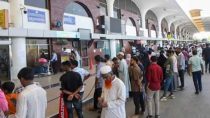
Flights to Riyadh are closed, so thousands of workers who want to go to Saudi Arabia are waiting at Hazrat Shahjalal (R.) International Airport, at relatives’ homes in Dhaka, and in hotels. Fear is growing among them in many ways. Some of these stranded passengers are running out of visa time. No one can say when flights to the country will return to normal.
Saudia Airlines has taken steps to take the stranded workers to their workplaces in Saudi Arabia by alternative routes. This brings some relief to the waiting passengers. Experts fear that if the conflict in Saudi Arabia goes on for long, the labor market of Bangladesh will face a bigger impact. They say the government must take proper steps in advance for the protection, social security, and safe migration of Bangladeshi workers who want to go to Saudi Arabia.
The Civil Aviation Authority learns about the overall condition of Saudi airports every day and announces the suspension of all Saudi bound flights in a briefing. It has told the airlines to look after their stranded Saudi passengers and to give them snacks and meals. Many workers sold their homestead land and gold, and took loans at high interest, to raise the money for migration. They then left their homes to go to Saudi Arabia. If these waiting workers cannot reach the country in time, many of them will face the risk of losing their jobs.
Many relatives of the workers cannot pay the loan installments taken for going abroad, so they are hiding from their homes. The flight cancellations bring trouble not only in travel for Bangladeshis who work in Saudi Arabia. They also bring worry about keeping their jobs. The stranded workers say they may lose their jobs if they cannot join work on time. They also fear visa problems and failure to meet the conditions of their employers.
A few days ago, a terrible Houthi attack at King Khalid International Airport in Riyadh, Saudi Arabia, killed 12 people, including 2 Bangladeshi citizens, and injured more than 300. The Bangladesh government must take some urgent diplomatic and security steps after this. But right now, the migration sector of the country is not facing any major long term risk. Migration analyst and manpower exporter Mr. Mohiuddin said this to Inqilab yesterday, Tuesday. He then listed what the Bangladesh government should do in this sudden crisis, and how he sees the future of the migration sector.
What the Bangladesh government should do right now: First, it must give quick help to the dead and the injured. Through the Bangladesh Embassy and mission in Riyadh, it should arrange to bring the bodies of the dead Bangladeshis home quickly. It should also stay in constant touch with Saudi authorities to ensure better treatment for the injured.
Second, it must start emergency travel and helpline services. The airport is closed for now, so many flights on the Dhaka to Riyadh and Dhaka to Dammam routes are cancelled. Thousands of passengers are stuck at airports or have suffered losses. The government should make it a priority to open a special helpline for these affected migrants and to arrange other transit routes or flights.
Third, it should advise the more than 3 million Bangladeshi migrants in Saudi Arabia not to panic and to follow the safety directions of the local administration. The embassy should issue an urgent notice telling them to stay away from certain sensitive areas. The Bangladesh government has already strongly condemned this attack on civilian sites. It should keep pressing in international forums to solve the crisis through talks and to keep peace and stability in the Middle East.
Mr. Mohiuddin said the migration or labor market of Saudi Arabia is not facing any major long term fear. He gave these main reasons. The first is modernizing the air defense system. Saudi Arabia is strengthening air defense for its key airports and civilian sites with help from international allies, including the United Kingdom, France, Pakistan, and Egypt. The country has taken a short term hit, but it is restoring its security system fast.
The second reason is economic and development mega projects. Saudi Arabia still needs millions of foreign workers for hosting the World Cup, for Vision 2030, and for its large construction projects. Because of this huge need for infrastructure, the country will not shut out any single nation or the whole migration sector. So even though the present tension creates a big geopolitical crisis, it will not leave any lasting negative effect on the Saudi labor market or on Bangladeshi migration.
He said a large share of Bangladesh’s remittance comes from Saudi Arabia. Families run on the money that migrant workers send from their sweat and labor, and the country’s foreign currency reserve grows. According to Bangladesh Bank, remittance of 5.85 billion dollars came from Saudi Arabia in the 2025 to 2026 fiscal year. In the first three months of the current 2026 to 2027 fiscal year, 1.63 billion dollars came from the country in total. Of this, Saudi migrants sent 580 million dollars in July, 550 million in August, and 500 million in September.
Because of the conflict in Saudi Arabia, about 65 flights were cancelled until last night. This hurt the Saudi travel of about 10,000 passengers. Operations at Riyadh and Jeddah airports are limited or closed, and only a few flights run to Dammam. So the manpower export sector has taken a big hit. Hundreds of passengers were to return to Riyadh after their holidays. They had bought tickets early and reached the airport on time with their family members. But there they learned that their flights were cancelled, and they got no sure news about when the next flight would leave.
Rafiqul, a passenger bound for Saudi Arabia, spoke with worry outside the departure terminal of the airport. He said the sudden flight cancellation put him in trouble, and he has to go to Saudi Arabia at any cost. He said he cannot save his job if he fails to go on time, and everything will fall into uncertainty. Thousands of passengers like Rafiqul are now in uncertainty. Because Saudi airports have limited operations, the schedules of direct and transit flights from Hazrat Shahjalal International Airport in Dhaka have taken a big hit.
According to airport authority information, the cancelled direct flights include flights of Biman Bangladesh Airlines, US-Bangla Airlines, Saudia Airlines, and Riyadh Air. Among transit flights, the schedules of IndiGo, Emirates, Qatar Airways, flydubai, SalamAir, and EgyptAir are affected. Riyadh airport is closed, so Biman Bangladesh Airlines has suspended all flights from Dhaka to Riyadh until October 17. US-Bangla Airlines has cancelled all its Riyadh bound flights until October 21.
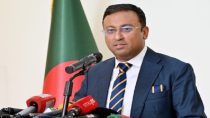
To reduce passenger trouble, Saudia Airlines planned to carry passengers on the Dhaka to Dammam route from Tuesday. After reaching Dammam airport, passengers can go to their workplaces by road. At a press briefing at the Secretariat, Minister of Civil Aviation and Tourism Mr. M Rashiduzzaman Millat said the government is making other arrangements using the Saudi airports where flights can run. He said the government is taking seriously the cases of people whose visas are about to end and who cannot return to work. He said Biman Bangladesh Airlines has also received the needed directions for this.
Several manpower exporters say remittance may take a hit if workers lose jobs because of the conflict in Saudi Arabia. The same may happen if working hours fall, or if hiring of new workers stops or becomes limited. If jobs shrink in a big labor market like Saudi Arabia, the effect will fall on the income of a huge number of migrant families in Bangladesh.
The Chattogram Bureau reports that Riyadh’s King Khalid International Airport is closed, so Saudia Airlines is taking stranded passengers in Bangladesh to their destinations in Saudi Arabia through a special arrangement. To take Umrah pilgrims and Saudi migrants safely to their destinations, it has started special flights from Dhaka to Dammam and Jeddah airports in Saudi Arabia. The airline does not charge passengers any extra fee on the special flights. It also issues tickets on other airlines, on its own initiative, for transit passengers who used to travel through Riyadh to places like Europe, America, and Africa.
Saudia Airlines took this step at a time when 62 passenger flights from Dhaka to Saudi Arabia have been hit or cancelled in various ways. Thousands of passengers worried about this crowded airports and airline offices. They fear they may not reach their Saudi workplaces before their visas end. The step has reduced the trouble of Saudia passengers going from Dhaka to Saudi Arabia. If other airlines used the same method, the worry would end and the trouble would shrink for Umrah pilgrims, migrant Bangladeshis, and those waiting to go to Saudi Arabia for new jobs.
Saudia Airlines, the state airline of Saudi Arabia, runs the most flights from Bangladesh to Saudi Arabia. It flies directly from Dhaka to Riyadh, Jeddah, and Madinah every week. With 27 flights a week, its passenger capacity is about 11,000. Saudia Airlines does not normally fly the Dhaka to Dammam route. To reduce passenger worry, it is now taking stranded passengers to Dammam on special flights. Outside the regular schedule, it also takes passengers to Jeddah on special flights.
Mr. Mohammad Rafiqul Islam, General Manager (Business Support) of Saudia Airlines, told journalists that they ran two special flights to take the stranded passengers to Saudi Arabia after the closure of Riyadh airport. He said more special flights will run as passengers need. He said their regular flights still go directly to Jeddah and Madinah. He said Riyadh airport will stay closed until October 18, and they are taking steps so that no passenger suffers until then.
Mr. Rafiqul Islam said they have many transit passengers. He said they are issuing tickets on other Star Alliance airlines at their own cost for these passengers. He said that if seats are empty on scheduled flights, they are arranging for passengers to go on those too. He said passengers on special flights pay no extra fee. He said passenger satisfaction is their top priority. Because operations are disrupted at various Saudi airports, 62 direct and transit flights from Bangladesh have been affected. As a result, 9,674 passengers have suffered.