Environmental Pollution Drives Rising Economic Losses and Deaths
Harun ar Rashid, Daily Inqilab
Climate experts say the whole Himalayan region of South Asia will see the terrible face of climate change within the next 15 to 20 years. Glaciers across several thousand kilometres of the Himalayas have melted recently, and the situation has turned dangerous. About 1.4 billion people in South Asia now face the risk of an environmental disaster.
A World Bank report on South Asia’s environment in 2018 gave two figures for Bangladesh. Pollution kills 80,000 people in Bangladesh each year, and it costs the economy Tk 53,000 crore a year. Bangladesh ranks first in South Asia for environmental pollution.
Dhaka’s population grows fast, and about 200,000 people live in each square kilometre. Pollution killed 18,000 people in Dhaka in 2015. It also took away 578,000 working hours from the lives of Dhaka residents. In that one year, pollution cost Dhaka alone 1.44 billion US dollars. That equals Tk 11,232 crore, or 0.7 percent of the country’s total GDP.
One million poor people in Dhaka face the risk of lead pollution. It harms the intelligence (IQ) of children. It also raises the risk of miscarriage and stillbirth for pregnant women. Dhaka has lost about 75 percent of its wetlands in the past 40 years. Unplanned city growth hurts small towns the most. Pabna lost half of its wetlands by 1990, and the Ichamati river that flows through the district is almost dead.
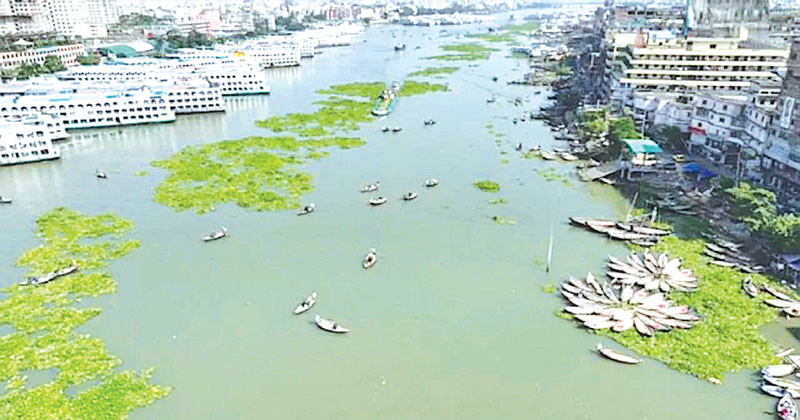
You can see the problem clearly beside the Buriganga and Turag rivers. Many kinds of pollution have hit both rivers. For people who live near them, air and water are the two things life needs most. Now both do them terrible harm. A report from the World Health Organization says air pollution kills 37,449 people in Bangladesh each year.
That means 103 deaths every day, or 24 deaths for every 100,000 people. The source of this figure is “Enhancing Opportunities for Clean and Resilient Growth in Urban Bangladesh”, 2018. We talk a lot about technology, but the offices in charge seem to give it little thought. The private sector made 80 percent of the progress Bangladesh has made in 56 years.
A solar panel of just 65 watts can run a television, a few lights and a washing machine. Modern technology makes this very easy, but many people may not know it. The Bondhu Chula, a clean cooking stove, is also very important. It makes no smoke, cooks fast, uses very little fuel and costs much less. A WHO statistic says more than one billion people in the world must breathe air worse than the WHO standard.
Air pollution kills 800,000 people in the world’s cities every year. Health costs from air pollution keep rising for individuals and for governments, and people lose working days. In our country, black smoke from vehicles, factories and brick kilns pollutes the air all the time. Dust from construction work adds to it. One statistic says air pollution links to 15 percent of diseases in developing countries.
In developed countries, it links to 2.6 percent of all diseases. In our country, mothers and children face the highest risk from air pollution. Nature and life are friends of each other. A healthy life is impossible without clean nature. We must keep Allah’s creation as beautiful as He made it at the start of creation.
In our rush to build cities, we have turned them into slums of brick and stone. Nobody can deny this. Unplanned building everywhere has hit city people with health problems, money loss and wasted time. Our river water has been unfit for use for many years. Every day, 90,000 cubic metres of waste from factories falls into five rivers. The Department of Environment’s figures show the Bangshi river had zero milligrams of dissolved oxygen in 2013.
The environment law says water needs at least five milligrams of dissolved oxygen (DO) in each litre to keep living things alive. So pollution now stops oxygen from forming in the water. More than 50 percent of Bangladesh’s pollution comes from waste carried by the Buriganga and Bangshi rivers. Nobody can cut pollution in any Dhaka river without controlling this waste.
Many government bodies deal with the rivers in some way. They include the district administration, the Ministry of Shipping, the Water Development Board, WASA, the city corporations, the Department of Environment and the Ministry of Industries and Commerce. They do not work together, and they blame one another instead. Mr. Golam Rabbani, former Director General of the Department of Environment, admits this lack of teamwork. He says nobody holds the duty where everybody shares it. This is our condition.
Old vehicles cause more air pollution. Owners must repair and maintain vehicles with the right parts at the right time. Adulterated and poor quality octane, petrol and diesel cause more pollution, and so does diesel with a high level of sulphur. The authorities, vehicle owners and drivers must stay alert on this. One statistic says air pollution links to 15 to 20 percent of diseases in developing countries.
In developed countries, it links to two to four percent of all diseases. Air pollution causes early deaths among people with asthma, heart disease, brain disease or lung disease. For these reasons, health and economic costs of the environmental crisis rise very fast, and the number of deaths rises too.