India’s Supreme Court Rules Scheduled Caste Hindus Converting To Islam Lose Reservation Benefits
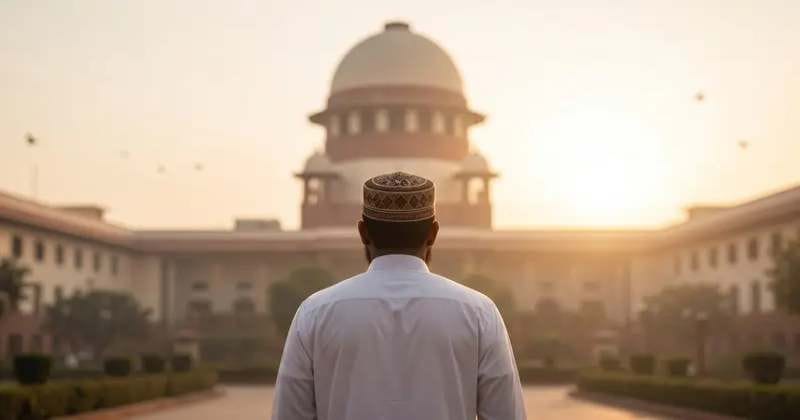
In a significant judgment, the Supreme Court of India ruled that individuals converting to Islam from Hindu Backward Classes, Most Backward Classes, or Scheduled Caste communities cannot automatically claim reservation benefits as a ‘Backward Class’. A bench comprising Justice Prashant Kumar Mishra and Justice Shree Chandrashekhar upheld the Madras High Court’s June 25 verdict, which had previously set aside a Tamil Nadu government order. The apex court explicitly highlighted that an individual’s prior social or caste identity cannot be automatically transferred or recognized upon adopting a new faith.
Emphasizing the legal boundaries of religious conversion, the Supreme Court clearly stated, ‘The backwardness suffered in the previous social setup does not automatically confer the status of a backward class in the new religion merely by virtue of conversion.’ The court noted that simply embracing Islam does not grant membership in any of the seven listed Backward Muslim communities in Tamil Nadu. It firmly declared that constitutional and legal prerequisites for availing reservation benefits cannot be bypassed or overridden through arbitrary administrative orders or certificates.
The dispute centered on a Tamil Nadu government notification issued on March 9, 2024, which allowed Hindu Backward Class converts to receive community certificates under designated Backward Muslim groups. While the state government argued under Article 25 that converts should not lose benefits for exercising religious freedom, the court found the order created an artificial route without genuine socio-legal links. Aligning with the High Court, the Supreme Court reiterated that under Article 16(4), reservation benefits cannot be claimed solely by leveraging pre-conversion backwardness.
Addressing Scheduled Caste status, the court cited Paragraph 3 of the Constitution (Scheduled Castes) Order, reaffirming that non-Hindus, non-Sikhs, and non-Buddhists cannot be classified as Scheduled Castes. The bench further clarified that individuals who reconvert to Hinduism will not automatically regain former caste privileges. Instead, competent authorities must independently investigate whether their previous social identity has been truly revived and verify if all relevant legal conditions are fully met before granting any benefits.
This legal battle was triggered by Sameer Ahmed, formerly a Hindu named Paramasivam, who converted to Islam in 2015 and sought a Labbai community certificate. When his application was rejected, he challenged the decision using the state’s 2024 directive. The Madras High Court struck down the state order, prompting the Tamil Nadu government to appeal to the Supreme Court. The apex court dismissed the state’s plea, upholding the High Court verdict and setting a firm precedent regarding conversion and reservation rights.