Coal Mines: Bangladesh’s Untapped Economic Goldmine
- Country holds 780 crore tons in reserve: Move for energy security and fewer imports
- Locals feel reassured by the Prime Minister’s announcement to use local resources
- Local ministers, MPs and leaders stay silent, confusing residents
- Many who joined the anti mining protests are now poor, while the leaders gained
- Open bid method could raise coal extraction by 80 percent
- More jobs, saved foreign currency, and better living for landowners through compensation
Mahfuzul Haque Anar and Md. Zahidul Islam
Middle Eastern countries are rich today because they use their natural resources well. Because of the wealth under their soil, powerful countries like the United States respect them. Bangladesh is not behind in natural resources either. Great chances for economic growth lie under the soil and under the sea. The country only needs patriotic and right decisions to bring these resources up.
Bangladesh has about 780 crore tons of coal in its five coal mines. At 136 dollars per ton, based on the current price of Barapukuria coal, this coal is worth 106,080 crore dollars. In Bangladeshi money, that is about Tk 130 lakh crore. Experts say that at current demand, this reserve can meet the country’s fuel needs for 200 to 300 years. Bringing this coal up would also make the economy and the GDP bigger.
Energy experts have long advised the country to depend less on foreigners and use its own minerals. But without firm political will, bureaucrats loyal to Delhi delayed the work with their tricks. Prime Minister Mr. Tarique Rahman’s government came to power with the slogan “Bangladesh first.” If it breaks that wall of bureaucrats and acts to extract these resources, the direction of the economy will change.
Mr. Iqbal Hasan Mahmud Tuku, Minister for Power, Energy and Mineral Resources, told Inqilab that it makes no sense to leave coal underground and spend foreign currency on imports. He called this very sad. He said it is now very important to give top priority to local coal. He said the government has already taken steps, and the faster coal comes up, the more pressure on the economy will ease and the more people will benefit.
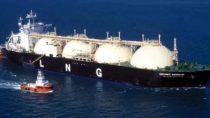
The government spends billions of dollars on coal imports even though huge coal lies underground. The National Board of Revenue (NBR) says the country spent a total of 10.19 billion dollars on fuel imports last fiscal year. Of this, coal cost 1.85 billion dollars, diesel 3.31 billion, LNG 2.70 billion, LPG 1.20 billion and crude oil 1.13 billion dollars. The fascist Awami League government’s anti country policy and the wrong policy of the interim government made the country spend a lot of foreign currency on coal in the past one and a half decades.
The BNP government led by Mr. Tarique Rahman now stresses local coal. It wants to ensure energy security and cut imports by using the country’s own resources. The government has put coal extraction from the Fulbari mine in Dinajpur on its early priority list. Mine officials say the mine can give 15 million tons, or one and a half crore tons, of coal a year. That would meet 75 percent of the imported coal demand of the country’s thermal power plants from local sources.
Energy experts say earlier studies must be reviewed before a final decision. They say the country must take the risk, even though extraction brings many hurdles and challenges. In the global situation, using its own coal has become necessary for energy security. The government has also made a long term plan to deal with the energy crisis, and its main focus is the coal of Fulbari in Dinajpur.
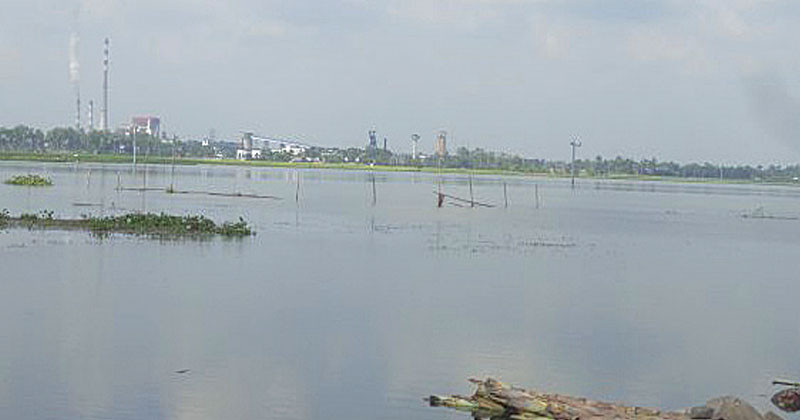
Next to Fulbari, in Parbatipur, a huge amount of coal lies unused, though this black gold is not being brought up. People involved say the current method at Barapukuria brings up only 18 percent of the coal, and the rest stays underground. They have advised using the much discussed open bid method to bring up most of the coal. Locals say they see frequent tremors from blasts underground, and wide areas are turning into wetlands.
Locals say that if they get enough and realistic compensation at once, they are ready to leave their homes and land for the open bid method. Earlier, a group from the left side raised sensitive issues like livelihood, environment and ancestral land and pushed locals to protest. That group stood against the open bid method. Three young lives were lost in that protest. About thirty years later, the situation has changed.
People of Fulbari now compare their own living standards with those of the protest leaders, and they look for their own good. Many put enough compensation and housing first. The protesters are trying again to start an anti mine movement as the government moves to decide. But local residents no longer respond as they did two decades ago. They want the government to protect Fulbari people’s interests, talk with stakeholders, and above all protect the national interest.
Locals now see their own interest clearly. They see that near them, partial coal extraction at Barapukuria has made many daily wage earners into millionaires. They got compensation for their land and now live comfortably in other areas. Their acquired land has sunk and turned into wetland, and that has added a new source of income. Meanwhile, the government is thinking about extracting its own minerals, and locals are positive.
But local ministers, MPs and BNP leaders are failing to carry the government’s message and work with locals. People involved say these leaders must talk with locals and explain the fair share of Fulbari people. They must make clear that homes, farmland, jobs and all other benefits for the locals and their children will be ensured. They must then carry this out step by step.
The Barapukuria coal mine is next to Fulbari. After independence, the Geological Survey of Bangladesh found Barapukuria in 1885, Khalashpir in Rangpur in 1989, and a multinational company found Fulbari in 1995 and 1997. Ignoring all plots from home and abroad, the then Prime Minister Ms. Khaleda Zia showed strong will and signed a management and production contract with the Chinese CMC XMC consortium. From 2005, Bangladesh entered the age of mineral resources and coal extraction began. The Barapukuria thermal power plant was built nearby on the basis of this coal.
The Barapukuria deal is not like the Fulbari deal. The Chinese company sells the coal to Petrobangla, and Petrobangla sells it to the power plants. So the country’s coal is used nationally, and the Chinese company gets only its extraction cost. The mine authority has bought homes and farmland of locals with proper compensation and keeps doing so in stages. It also pays for cracks in houses and sinking land caused by mining below. Affected people got jobs at Barapukuria.
Locals complain that jobs do not follow their fair share. They also say workers are laid off when extraction stops. The Barapukuria authority says this is an ongoing process, and the Chinese company hires workers when work runs. It says the mine authority can do nothing about this. The mine covers about 650 hectares and has three parts. Coal layers lie under 270 hectares in the north, 300 in the middle and 80 in the south, and all of it is local people’s land. The government buys it as needed.
Energy experts say the underground method lets the country bring up only 20 percent of the coal at Barapukuria. They say the open method can bring up more than 80 percent. To raise local coal use, the government is thinking of open extraction in the north and south parts. The Barapukuria Coal Mining Company Limited estimates that about 17 crore tons can come from these parts, enough for the next 30 years.
Before this plan goes ahead, Petrobangla wrote to the Energy and Mineral Resources Division a few months ago. It asked for policy approval and guidance to study the technical and economic side and to take local opinion. Resettling thousands of people, managing water and handling environmental effects will take 7 to 8 years before open work can start. A mine source confirmed that the Prime Minister has told the authority to extend the contract in 2027 and keep the current method running at Barapukuria in the meantime.
The source also notes that the current method brings up 12 to 18 percent of the underground coal, while the open method could bring up 90 percent. At the Fulbari mine in Dinajpur, coal lies only 500 to 850 feet deep. The coal may spread across 120 to 350 meters. About 572 tons of bituminous coal may be possible to bring up from this mine.
People involved say the loud role of opponents to the government’s move on open bid extraction at Fulbari deserves some praise. But they ask who the opponents are and what they have given the nation. They ask whether the opponents have said anything on open bid coal. Parliament is now in session, and they ask whether anyone has raised the matter there. Prime Minister Mr. Tarique Rahman dreams of moving ahead with the people. But people ask what local BNP leaders and workers are doing, and ordinary working people are watching.
The most emotional issue for opponents of open extraction was that people will not leave their ancestral homes. But many leaders of the protest do not own even 5 decimals of land in Fulbari. Some became rich after the protest. Locals feel angry and do not speak openly about this. The government must explain how much farmland will be hurt and how much yearly crop income will be lost. The government has the power and duty to buy land.
Giving land for roads, government offices and factories with proper compensation is not new, and this case should be no different. But it has been different. A leader linked to the anti mine protest, who did not want to be named, said the solution is for the government to sit with local stakeholders and field level leaders step by step. He said it is also very important to stop bureaucratic delay in paying compensation and corruption at the local level.
Reassured by the Prime Minister’s words, locals and real landowners ask what harm there is in using the resources under the ground for the state’s need if planned urban growth, jobs and housing are ensured. Some say those who own only three to four decimals of land in Fulbari became protest leaders and later held key posts in the state. They say some leaders want to stay at the center of power using the anti mine issue, but that chance is gone now. They also demand an inquiry into the income sources of protesters since 2006.
Many lower and middle ranking people who joined the protest ask what they got in 20 years. They say they got a share of their father’s property, and it is now split among their children. Many who followed the protest leaders in the name of ancestral land are now poor and have no place to live. They demand that the government include resettlement for the poor, not just for those who have land. They say that if this happens, most working people who joined the 2006 protest will stand against the protest leaders.
Energy expert Professor Mr. M. Tamim said a neutral study is needed before a final decision. He said a third party with no interest should check the whole coal extraction plan well. If they say the risk is limited and manageable, the country can go ahead. If they say the risk is too high, the country can drop the idea of local coal fully. He said engineering challenges should not be feared, because no big mega project in the world has been built without them.
Energy expert and geologist Professor Mr. Badrul Imam said that if coal must be brought up to use local resources, the country should use the underground method on a small or medium scale. He said cutting dependence on fuel imports is good. He said if the plan is to ease import pressure with local coal, then farmland, safe drinking water and environmental problems must get serious weight. He said all studies on the method must be considered.
Mr. Iqbal Hasan Mahmud Tuku, Minister for Power, Energy and Mineral Resources, told Inqilab that rising demand for power and fuel keeps adding pressure on the economy. He said the current global war situation has made the fuel picture more complex. He said using local resources fully is now the demand of the time. He said the country has plenty of coal by the grace of Allah, yet it must import coal from many countries every year at huge foreign currency cost, which is a big burden on the economy.