Being a Journalist in Modi’s India Has Become a Nightmare
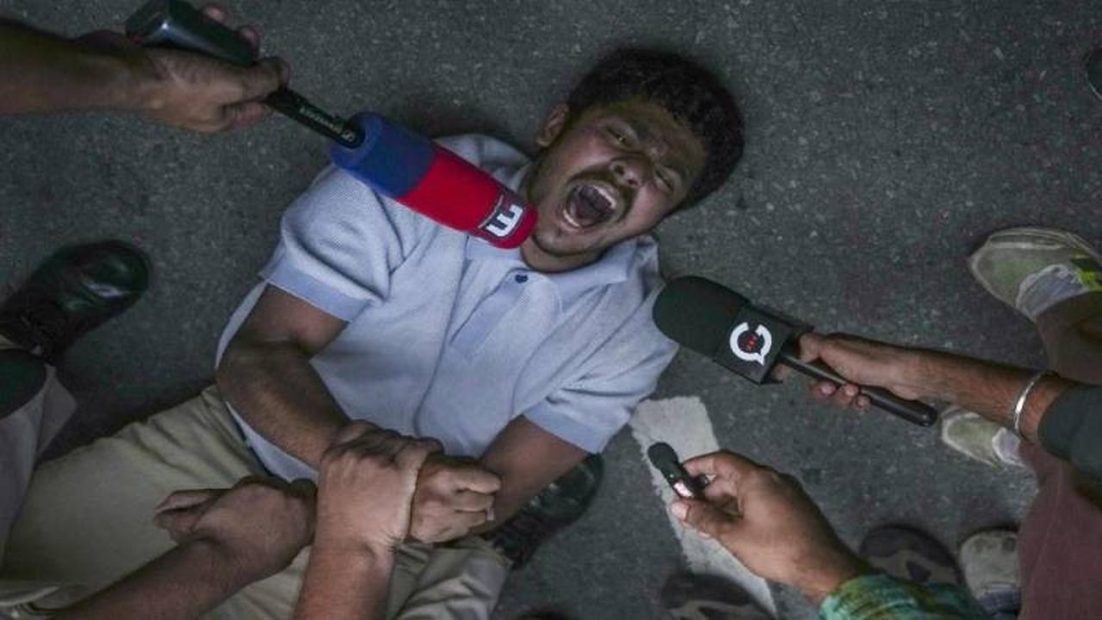
For years, researchers and observers have debated a troubling question about press freedom in India: Were Indian journalists worse off during Indira Gandhi’s 21-month declared “Emergency 1.0” in the mid-1970s, or is the undeclared “Emergency 2.0” under Narendra Modi’s government even more frightening and nightmarish, despite never being formally declared?
The horrors of the first Emergency are well known: knocks on doors late at night, administrative crackdowns on the media, detention and imprisonment without trial, and strict censorship at newspaper offices. Learning from that bitter experience, many professional journalists believed that such political repression of the media would never happen again in India. The journalistic community had learned that lesson the hard way.
One of the most important lessons was that journalists must stand together to preserve a free and independent media and work every day to defend that freedom. In the years immediately following the first Emergency, India witnessed a golden age of investigative journalism. Courageous reporting spread across the country. When police tortured 31 prisoners by pouring acid into their eyes at Bhagalpur Jail in Bihar, young journalists gradually exposed the brutal truth.
One journalist personally visited a market in Dholpur and “bought” an Adivasi woman to expose human trafficking in the heart of India. Three years before the deadly gas leak at the Union Carbide pesticide plant in Bhopal in December 1984, journalist Rajkumar Keswani repeatedly warned that the factory was a “ticking time bomb.”
These stories, along with countless other reports, demonstrate the immense value of journalism in a democracy. Today, however, journalists’ skills and work are being undermined, erased, criminalised and stripped of their significance. According to the Committee to Protect Journalists (CPJ), Delhi Police detained 43 media workers in a single incident. This made clear that India had entered an era in which the authorities faced no accountability and the only law that mattered was the order from above.
When journalists are dragged by their hair, beaten like ordinary criminals, stripped of their professional equipment and forced to show Press Information Bureau (PIB) cards simply to record an incident at a street corner, George Orwell’s fictional nightmare becomes reality. The country is dominated by displays of power and the influence of the Home Ministry’s “khaki uniform”, while the “Ministry of Truth” has convinced ordinary people that “Freedom is Slavery, and Ignorance is Strength.”
Awareness of the increasingly dangerous conditions facing journalists in India is growing. On October 16, when journalists gathered at the Press Club of India in Delhi, their main concern was how to protect themselves professionally from a government determined to destroy independent journalism.
The administrative tactics now used in the capital are familiar to those who have followed the situation in Kashmir: unchecked police power, surveillance and severe government censorship. But a new and toxic element has now been added to this old formula—sexual violence.
At least three women journalists have alleged that they were sexually assaulted or harassed by police and security personnel while covering recent protests. Instead of receiving justice, they have faced counterattacks. On October 3, while covering a protest at Jantar Mantar, an independent journalist named Rosie accused ACP Vivek Bhagwat of sexual harassment. The police officer, in turn, accused her of making caste-based slurs. As a result, the woman journalist now faces a First Information Report (FIR).
The impact of such incidents is immediate. In The Hindu, Lovepreet Kaur wrote in her October 16 article, “The Calculations Women Make”: “Last week, during the protest in Delhi demanding the resignation of the Chief Election Commissioner, I found myself in a familiar dilemma. As the situation grew tense, should I move towards the crowd to film an arrest, or step back and risk missing the moment?”
For a professional journalist, missing a crucial moment means admitting failure. This is precisely why senior advocate Indira Jaising’s decision to approach the Supreme Court on behalf of the Network of Women in Media, India (NWMI) and the Free Speech Collective over such sexual attacks was so important. It forced an indifferent administration to take notice. In the case, Chief Justice of India Surya Kant personally directed a senior Delhi Police officer to explain the conduct of the force’s personnel.
The roots of this administrative indifference run deep because siding with the powerful is the easiest option. The Press Council of India, established in 1978 to protect the print media, recently issued “guidelines” for covering protests. It advised journalists to maintain “professional neutrality” and “distinguish facts from allegations and opinions.”
At a time when journalism itself faces an existential crisis because of security agencies and political structures, the Press Council expressed no outrage over the mistreatment of journalists. Instead, it advised them to carry first-aid kits, medicines, drinking water, protein snacks, flashlights and towels. What a ridiculous farce an institution established to protect journalists has become!
Let us return to the question raised at the beginning: Were journalists worse off during Indira Gandhi’s declared Emergency 1.0, or is the current undeclared Emergency 2.0 under Modi even more frightening? The answer is clear: The administrative chains of today’s undeclared Emergency are sinking even more brutally into journalists’ flesh.
The biggest difference between the two periods is that journalists were far more united and professionally committed to one another in the past. One achievement of Mr. Modi’s undeclared Emergency has been the creation of a class of opportunistic, power-hungry journalists who remain completely indifferent and silent when their colleagues are persecuted. Who among them has the courage of Kuldeep Nayar?
In a chapter I wrote for the book 50 Years of the Indian Emergency: Lessons for Democracy, I noted that on June 29, just three days after the Emergency was declared on June 26, 1975, Kuldeep Nayar, then editor of Express News Service, called on journalists to gather at the Press Club in Delhi to discuss the Emergency.
The meeting adopted a resolution demanding the immediate release of detained journalists, including Jagat Narain of Punjab’s Hindi Samachar and M.R. Malkani of Motherland. Copies of the resolution were sent to the President, Prime Minister and Information Minister. A month later, Kuldeep Nayar himself was arrested.
International Outrage Over Police Crackdown in India
The brutal police assault on peaceful protesters in New Delhi last week, mass arrests, unlawful use of force, targeting of journalists and human rights defenders, and internet shutdowns have sparked widespread international concern.
International rights organisations, including Amnesty International, CIVICUS Monitor, Front Line Defenders and South Asians for Human Rights, have called on the Indian government to immediately release those unlawfully detained for exercising their rights to freedom of expression and peaceful assembly. They have also demanded accountability for abuses committed by security forces.
On October 10, 2026, protests began at the call of a youth organisation named the “Cockroach Janata Party” (CJP) and several student organisations, demanding the resignation of India’s Chief Election Commissioner. The protests followed a report on the Election Commission’s Special Intensive Revision (SIR) exercise, which reportedly found that nearly 130 million names had been removed from electoral rolls.
After the protest call, the authorities imposed Section 163 of the Bharatiya Nagarik Suraksha Sanhita, prohibiting gatherings of more than five people. More than 50,000 police officers and security personnel were deployed ahead of the October 10 demonstrations, many of them brought in from other states. Trains and buses bound for Delhi were cancelled, metro stations were shut, and the city’s borders were sealed. Riot-control vehicles equipped with tear gas were deployed at protest sites.
Before the demonstrations could begin, nearly 10,000 people across the country were reportedly detained unlawfully. CJP founder Abhijit Deep and other senior leaders were arrested. Thousands of ordinary protesters and numerous journalists covering the demonstrations were also detained.
Police conducted searches across the streets to prevent the protests before they began. Many demonstrators were wrapped in blankets or forcibly dragged into police vehicles and taken to temporary detention centres. Some police officers were not wearing identification badges or nameplates.
While in detention, numerous women protesters and women journalists accused security personnel of sexual harassment. Cadres of the ruling right-wing party were also seen intimidating and assaulting protesters and journalists. Some extremist activists even obstructed and harassed Muslim women journalists while they were carrying out their professional duties.
India’s Constitution protects the right to protest. Citizens are not supposed to require prior police permission to demonstrate. They may only be required to inform the relevant authorities about their planned activities. In present-day India, however, even this basic democratic right has been taken away.
Source: The Wire