Mosque and temple side by side for about 50 years, Kamaichhara in Bahubal sets a rare example of harmony
Habibur Rahman Noman, Bahubal (Habiganj)
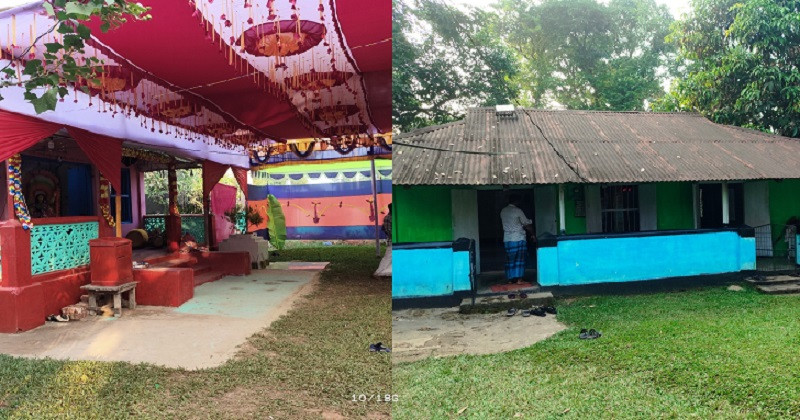
A mosque stands on one side and a temple on the other, only 10 feet apart. The call to prayer rises from one place while worship goes on in the other. The doors of the two places almost face each other. Still, there is no conflict and no communal divide.
People of both faiths have practiced their religions side by side for many years with respect, help and love. For the puja, they paint the boundary wall of the mosque. For Eid, they paint the boundary wall of the temple. The Kamaichhara Tea Garden Jame Mosque and the Durga Temple in Kamaichhara Bazar area of Bahubal upazila in Habiganj have set this rare example of harmony.
The Durga Temple was set up in 1959 beside the old Dhaka Sylhet highway. The Kamaichhara Tea Garden Jame Mosque followed about 19 years later, in 1978. Local worshippers, traders and Muslims from the tea garden built the mosque next to the temple. Both places have grown over time, and the respect between the two communities has stayed strong.
The two sides have an understanding so that neither disturbs the other’s worship. During Durga Puja, when it is time for prayer and the call to prayer, members of the puja committee pause their rituals for a while. They start again when the prayer ends. Both sides honor each other’s faith and feelings.
Their cooperation goes beyond timing. They also help each other keep the buildings beautiful. The mosque wall gets its paint from the puja side, and the temple wall gets its paint from the Eid side. This shows friendship and brotherhood along with religious harmony.
Mr. Maulana Abdur Rahim, the khatib of the mosque, said the mosque and the temple stand right next to each other, and their doors almost line up. He said, “For about 50 years, we have run our religious work by talking and working together with the puja committee. When prayer time comes during the puja, they stop their program for a while. They begin again after prayer. We have never had any conflict.” He added that people across the country should hear about this harmony.
Mr. Gopal Goala, president of the puja celebration committee of the Durga Temple, said Hindus and Muslims always live together in peace. He said no problem has ever happened there. “We respect each other’s religious events and help each other,” he said. He hopes the harmony will last in the future.
Mr. Gopal Goala also said the puja side paints the mosque boundary wall for the puja, and the Eid side paints the temple boundary wall at Eid time. He said this practice has made the bond between the two communities deeper.
Mr. Ujjal Roy, Upazila Nirbahi Officer of Bahubal, said the mosque and the temple have stood together for nearly 50 years and set a rare example of communal harmony. He said Muslims offer prayers on one side while Hindus hold their puja on the opposite side. In his view, this is a bright example of the long standing harmony between the two communities. He hopes Kamaichhara’s example will become a model for Bahubal and the whole country.
Mr. Mohammad Anwar Hossain, an ASI in charge of the Kamaichhara Police Camp, said the mosque and the temple stand next to the police camp. He said the people there live in very good harmony. Both communities follow their religions in peace. He said the police keep doing their duty to ensure safety in the area.
Locals say this harmony is more than the closeness of two buildings. They see it as the result of long practice of respect, tolerance and cooperation. During festivals, people care for each other’s comfort, adjust prayer times and help keep the buildings beautiful. In this way, they have turned harmony into daily life.
Kamaichhara’s mosque and temple prove that people of different faiths can live together in peace. The two places, only 10 feet apart, quietly carry a message of harmony, humanity and mutual respect. Locals hope this tradition will pass from one generation to the next. They also hope other areas of the country will follow the example of Kamaichhara.