Ishraque’s Unjust Resignation: Who Is Accountable for Drug Control?
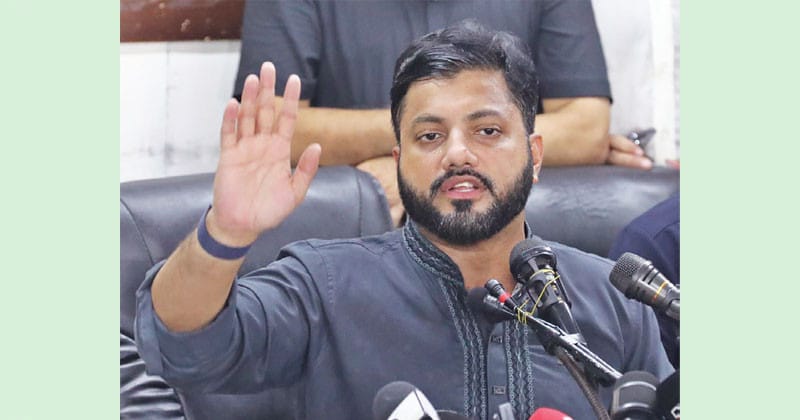
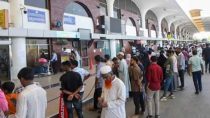
The recent resignation of Ishraque Hossain, the State Minister for Liberation War Affairs and Member of Parliament for Dhaka-6, has ignited a major political storm across the country. Mr. Ishraque announced his resignation at a press conference held at the National Press Club on October 19, stating that he had voluntarily requested release from his cabinet post to Prime Minister Tarique Rahman, who granted his request. The decision followed the viral circulation of a video showing him brandishing a personal firearm and shouting while chasing suspected drug dealers near the Gandaria railway station in his constituency.
The incident sparked intense public debate and polarising reactions throughout Bangladesh. While residents expressed relief and appreciation over his direct intervention against pervasive narcotics trafficking, a swift backlash emerged on social media and within political circles regarding the propriety of a sitting state minister leading an armed raid. Law enforcement agencies, specifically the Dhaka Metropolitan Police (DMP), promptly initiated an investigation into whether Mr. Ishraque committed any legal deviations during his operation, drawing scrutiny over their eager response compared to their historical struggle to curb the drug trade in the region.
Defending his actions as an exercise in social resistance, Mr. Ishraque clarified that he brandished his licensed weapon briefly for self-defence due to fear of an attack in the high-risk Ghuntyghar area. He emphasised that local police were notified before his arrival, but noted that law enforcement often faces resistance from fortified drug dens. Mr. Ishraque stated, ‘Starting today, I have voluntarily sought release from the post of State Minister from the Prime Minister, and she has granted that opportunity.’ He added, ‘I held a personal weapon for a short time purely for my own security; I went to eradicate drugs’.
Critics and political observers have raised questions regarding the underlying motives behind the pressure leading to Mr. Ishraque’s resignation. Some analysts suggest that an influential faction within the government utilised the excuse of government embarrassment to marginalise a politician belonging to a prominent traditional BNP family. This situation mirrors the recent forced resignation of reserved-seat MP Ferdousi Ahmed Misty following a centre vandalism incident. Furthermore, critics point to wider governance challenges, noting that the broader law and order situation remains volatile eight months after the elected government took office.
The National Citizens’ Party (NCP) voiced strong reactions to the controversy, targeting the leadership of the Ministry of Home Affairs. NCP Convener Nahid Islam questioned why Ishraq Hossain was made a scapegoat while Home Minister Salahuddin Ahmed faced no accountability for systemic failures in controlling narcotics. Mr. Nahid argued that the nation is watching to see when the Home Minister will resign for his institution’s shortcomings. He further criticised the government’s approach to constitutional reforms, labelling the current constitutional amendment committee as a departure from the reform promises outlined in the July Charter.
Echoing similar concerns, NCP Chief Coordinator Nasiruddin Patwary commented on the underlying political dynamics of the fallout. Mr. Patwary remarked that Mr. Ishraque had entered politics with good intentions to eliminate drugs but ultimately fell victim to the systemic shortcomings of the Home Ministry. He highlighted that while the failure fundamentally belonged to the Home Minister, Mr. Ishraque bore the political consequences. Similarly, NCP Chief Organiser (South) Hasnat Abdullah, MP, questioned why state institutions under the Ministry of Home Affairs and the Department of Narcotics Control (DNC) failed to perform their statutory duties effectively in the first place.
Following the public controversy and Ishraque’s resignation announcement, the Department of Narcotics Control launched a major anti-drug operation in the Gandaria Ghuntyghar and Munsirtek areas. DNC teams, alongside joint forces, detained at least 14 individuals during the drive. Anwar Hossain, Deputy Director of Dhaka Metro-South for the DNC, acknowledged the persistent difficulty of completely eradicating drug operations in the sector, explaining that transient dealers and users frequently return as soon as law enforcement operations conclude, despite regular mobile court drives and legal cases.
Concurrently, the Dhaka Metropolitan Police formally assigned the Deputy Commissioner of the Wari Division to conduct a thorough inquiry into the armed operation. Detective Branch Chief Shafiqul Islam confirmed during a press briefing at the DMP Media Centre that appropriate legal actions would follow if any statutory violations were discovered. This rapid law enforcement inquiry contrasted sharply with the ongoing public frustration over police inaction against long-established drug syndicates, prompting further questions regarding the administrative priorities surrounding the entire incident.
Before the resignation, anonymous government sources and BNP insiders had voiced discomfort to media outlets, arguing that a cabinet member leading an armed drive personally undermined institutional processes and embarrassed the administration. Media reports cited unnamed officials claiming the action blurred the line between public governance and private vigilance. However, the PM’s Political Assistant Rashed Khan offered a more balanced perspective, defending Mr. Ishraque’s core intentions as the son of freedom fighter Sadeq Hossain Khoka, while advising that public representatives should focus primarily on building social resistance through organised community awareness.
In summary, the resignation of State Minister Ishraque Hossain highlights a complex intersection of local anti-drug activism, institutional law enforcement failure, and high-level political fallout. While Mr. Ishraque maintained that he acted in good faith to protect his constituents from severe drug abuse, the controversy exposed deeper tensions within the administration and sparked widespread debate over accountability, governance reform, and the rule of law. The incident leaves open significant questions regarding how the government will address systemic narcotics issues while managing internal political dynamics moving forward.