Faulty Fire Safety Systems at Fertiliser Factories Raise Concerns
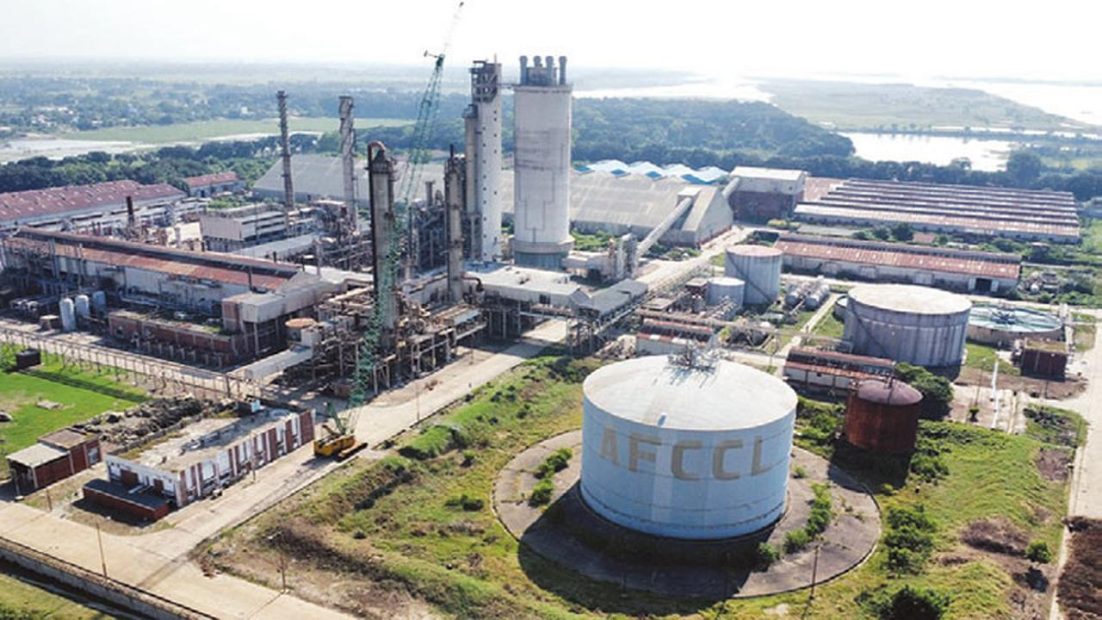
Project monitoring and technical consultancy firms have raised concerns over fire safety at major fertiliser plants in Bangladesh, including factories under the Bangladesh Chemical Industries Corporation (BCIC). They say the connection systems of firefighting equipment installed at these factories are incompatible with the technology used by the Bangladesh Fire Service and Civil Defence.
The firms have recommended upgrading the equipment and introducing modern, standardised systems compatible with the country’s fire service to improve safety and ensure an effective response to emergencies. Bangladesh has 15 fertiliser factories, including eight government-owned plants and seven privately owned or joint-venture facilities. Project monitoring and consultancy firms have expressed serious concerns about their fire safety systems and environmental standards.
The factories under scrutiny include Ghorashal Polash Fertiliser PLC in Narsingdi, the country’s largest urea fertiliser producer; Shahjalal Fertiliser Company Limited in Sylhet; Chittagong Urea Fertiliser Factory Limited; Jamuna Fertiliser Company Limited; Ashuganj Fertiliser and Chemical Company Limited; TSP Complex Limited; DAP Fertilizer Company Limited; and Karnaphuli Fertilizer Company Limited, among other major production units under BCIC.
According to the consultancy firms, the firefighting equipment connection systems at most of these plants are incompatible with those used by the Bangladesh Fire Service and Civil Defence. The recommendation was made by a joint venture of FON Engineering and Electronics and RJM. The firms warned that despite a combined daily production capacity of around 8,400 metric tonnes at operational BCIC fertiliser factories, technical incompatibilities and a lack of environmental modernisation leave many plants exposed to fire and pollution risks.
Earlier Investigation Shows Little Progress
On December 31, 2018, the Department of Fire Service and Civil Defence submitted an investigation report on the issue to BCIC’s 1,755th board meeting. However, nearly eight years after the decision was made, no significant visible progress has been reported.
Following the board meeting, instructions were issued to obtain the necessary clearance from the Fire Service and Civil Defence, prepare fire safety plans incorporating recommendations for fire prevention and public safety, and upgrade the existing fire safety systems at the factories under their respective managements.
Industry sources said operational fertiliser factories under BCIC have substantial capacity to produce urea, triple superphosphate (TSP) and diammonium phosphate (DAP). Thousands of employees work at these plants, which were built and are operated with significant public investment.
Although internal fire stations have been established at the factories, the connection systems of their firefighting equipment are not fully compatible with those used by the national fire service. This could create serious complications when responding to a fire emergency.
Incompatible Hose Connections Could Delay Emergency Response
According to observations by consultancy and technical teams, some fire hydrants, firefighting vehicles and water-carrying hoses at the factories use screw-thread connections. In contrast, the Bangladesh Fire Service and Civil Defence uses an instant-connection system known as instantaneous coupling.
The teams said screw-thread connections take comparatively longer to attach and require skilled, trained personnel to connect properly. In many cases, two people must work together. Careless use can also damage the threads.
Instantaneous couplings, by comparison, can be connected and disconnected quickly and require fewer personnel. They also make it easier to start water supplies immediately and connect multiple hoses during emergencies.
The use of screw-thread connections could also make it difficult to obtain compatible equipment from local markets and coordinate firefighting operations with other agencies. Standardising the connections with those used by the Fire Service would improve cooperation and help firefighters control fires more quickly.
Concerns Over Fire Service Access and Response Time
Questions have also been raised about the locations of the factories and their emergency response capabilities. Available information suggests that most fertiliser plants are located some distance from the nearest fire stations. Narrow roads and regular traffic congestion in surrounding areas could delay the arrival of firefighting vehicles after an incident is reported.
The assessment also noted that nearby fire stations lack sufficient modern equipment to deal with complex chemical fires and gas leaks. As a result, the effectiveness of the factories’ own fire stations and firefighting equipment is particularly important.
The consultancy firms said they had brought their observations about the equipment installed at the plants’ internal fire stations to the attention of project directors. However, they alleged that the contractors responsible for implementation had not fully resolved the problems.
The firms recommended using instantaneous couplings in firefighting vehicles, hoses, hydrants and related equipment at all factories in accordance with British Standard BS 336. They particularly recommended couplings made of gunmetal.
According to the firms, these couplings can withstand a maximum working pressure of 16 bar, or 232 pounds per square inch (psi), which they consider suitable for the factories’ requirements. The Fire Service has also stressed the need to keep access lanes clear for emergency vehicles near the factories and coordinate with traffic authorities to ensure rapid access to incident sites. However, it considers strengthening each factory’s own firefighting system essential to preventing an incident from escalating in its early stages.
Fire Safety Standards and Legal Requirements
Under the Bangladesh National Building Code 2020, fire safety arrangements must comply with building classifications and construction requirements. These include fire-resistant construction, fire doors and exits, fire protection systems, automatic sprinkler systems, fire detection and alarm systems, and fire hydrants.
Factories must also have portable fire extinguishers of the appropriate type and capacity for their operations. Special attention is required in chemical and electrical areas. Extinguishers must be maintained regularly and labelled with their expiry and inspection dates.
Fertiliser plants must follow specific safety protocols for storing raw materials in line with international standards and their internal safety codes. These measures may include water curtains, ventilation and drainage systems. Fire licences, fire drills and other legally required certifications must also be maintained and renewed annually where applicable.
Fire Service Calls for Stronger Enforcement
The Department of Fire Service and Civil Defence had previously raised concerns about the need to modernise fire safety systems at BCIC’s industrial facilities. After reviewing existing arrangements, it submitted an assessment report.
A subsequent BCIC board decision called for the relevant Fire Service officials and factory management teams to review the existing systems jointly and identify the necessary improvements. Mohammad Shahjahan Shikder, acting officer of the Bangladesh Fire Service media cell, said compliance with the law was essential to improving fire safety in industrial facilities.
He said factories must be constructed in accordance with the Bangladesh National Building Code and the Fire Service’s fire safety regulations. Citing the garment industry as an example, he said the sector had become a model for fire safety because factories followed international and national standards, fire safety laws, labour laws and the National Building Code.
As a result, fires in garment factories were comparatively easier to control, and the risk of accidents was lower. He said there had been no major fire incidents in the sector in recent years, while factories had been able to control a small number of minor incidents themselves.
Mr. Shikder stressed that safety must be considered from the very beginning of a facility’s construction. He compared establishing a facility without proper safety measures to a child being born with an illness that affects the rest of their life. He said safety systems must be incorporated during construction rather than added as an afterthought.
He also called for trained personnel to maintain firefighting equipment and manage safety systems continuously. According to him, 18 per cent of a facility’s total workforce should receive fire safety and risk management training under the Fire Service’s guidance.
He added that factories should appoint dedicated fire safety officers to ensure that installed machinery remains operational. Fire drills should be conducted at least once a month, with at least two exercises a year held in the presence of the nearest fire station. Equipment should be inspected during each drill to ensure it is functioning properly.
Factories that follow these procedures are less likely to suffer severe losses in an accident. He urged plants using outdated or non-standard firefighting equipment to replace it promptly with systems that meet the required standards.
Experts Call for Independent Technical Assessment
Experts say all fertiliser factories in the country need to undergo assessments of their firefighting equipment, connection systems, ability to handle chemical fires and access to emergency assistance from the Fire Service. An independent technical review is needed to determine which standards were followed when the existing systems were installed, whether equipment needs to be replaced, and whether the factories can conduct joint drills and rescue operations with the Fire Service.
They said identifying and addressing fire safety deficiencies at these major industrial facilities would help protect employees, valuable industrial assets and the country’s fertiliser production.