Bangladesh Plans to Phase Out 2G Services, Promote Low-Cost Smartphones
2G Shutdown Threatens Connectivity for 60 Million Feature Phone Users
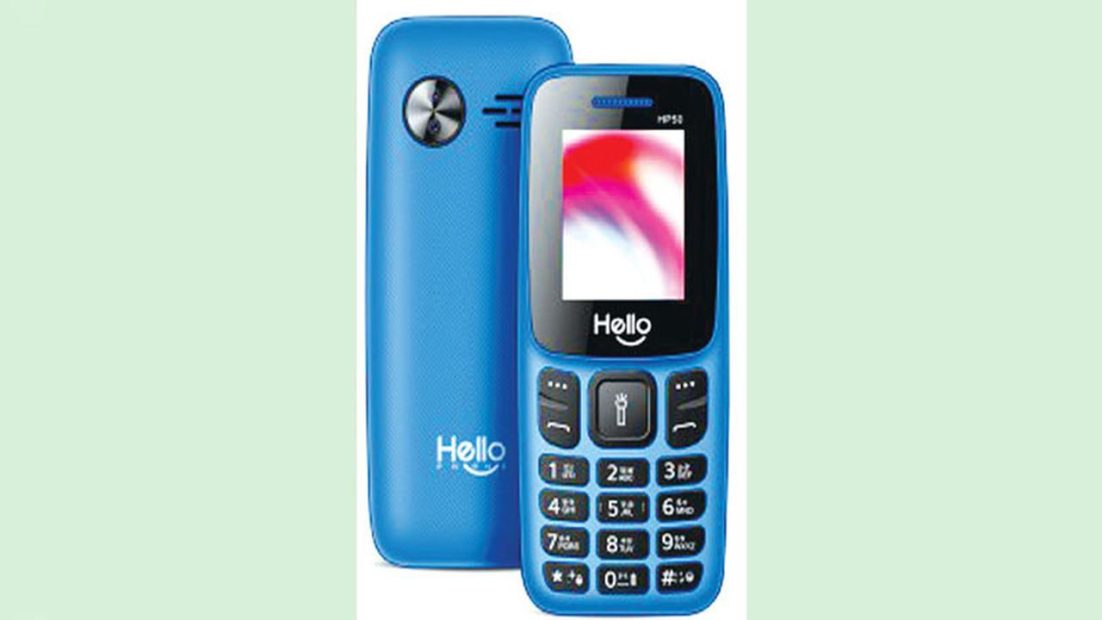
The Bangladesh Telecommunication Regulatory Commission (BTRC) has taken an initiative to completely phase out second-generation (2G) mobile networks as part of the country’s gradual transition to modern technology and changes in mobile handset usage. The process is scheduled to begin on December 31, 2029, but depending on implementation progress and market conditions, it could be extended until December 31, 2031 at the latest.
The information is contained in an internal BTRC roadmap outlining plans for the “2G sunset”, or the shutdown of 2G networks. The strategic framework for phasing out 2G services received in-principle approval at a BTRC commission meeting on September 29. In line with the plan, proposals have also been made to ban the import, assembly, local production and retail marketing of 2G handsets within specified deadlines. The proposed roadmap has already been sent to the Posts and Telecommunications Division for final approval.
According to BTRC statistics, around 65 million people in Bangladesh still rely on basic feature phones, or 2G button phones, out of more than 190 million active mobile connections in the country. Most of these users belong to marginalised, rural and low-income communities. Industry stakeholders warn that the sudden withdrawal of 2G phones from the market and the shutdown of the network could further widen the digital divide affecting these groups.
Although they welcome the government’s initiative, stakeholders have raised questions about its implementation. A substantial number of mobile users still rely on 2G handsets, and smartphones cost significantly more than button phones, putting them beyond the reach of many people. Bringing this large number of users into the modern technology ecosystem within the proposed timeframe is therefore seen as a major challenge.
Moreover, although mobile operators claim to have 4G coverage across the country, some users in remote areas still depend on 2G networks.
However, Rehan Asif Asad, adviser to the prime minister on posts, telecommunications and information technology, has said the government is taking steps to make smartphones available to consumers at affordable prices. After discussions with relevant stakeholders, the government has initiated efforts to produce smartphones priced between Tk 5,000 and Tk 5,500.
Several options are also being considered to help consumers purchase these devices, including loans, instalment facilities, the use of the Social Obligation Fund (SOF), and bundled offers from mobile operators.
BTRC sources said the commission held consultations with mobile handset manufacturers and representatives of mobile operators regarding the shutdown of 2G networks. Their opinions were sought on the proposed shutdown date, deadlines for ending the import and production of 2G-only handsets, migration from feature phones to smartphones, and measures to accelerate the transition.
They were also asked to identify potential risks and ways to mitigate them, propose a regulatory roadmap for phasing out 2G services, and develop plans for affordable smartphones and an industry action plan.
Both sides recommended a gradual, coordinated and consumer-friendly approach to phasing out 2G services. With 2029 considered the target timeline, they proposed gradually ending the import and production of 2G-only handsets, increasing the use of 4G technology and smartphones, ensuring the availability of affordable devices, and implementing customer migration programmes.
They also called for a clear schedule for ending the import and production of 2G handsets so that local manufacturers, importers, other market participants and consumers would have sufficient time to prepare. At the same time, they recommended encouraging the production and supply of 4G devices and smartphones.
Against this backdrop, a BTRC commission meeting decided that no original design manufacturer (ODM) would receive approval for new designs or production of 2G handsets after December 31 this year. After March 31, 2027, no approval would be granted for 2G phone motherboards or printed circuit board assemblies (PCBAs).
Imports of various 2G-dependent technical and wireless devices will be permitted until April 30, 2027. After that date, no further 2G telecommunications equipment will be allowed into the country. The imported equipment must be converted to 4G by June 2028.
Approval for the commercial production and fresh marketing of 2G handsets in Bangladesh will be completely suspended after June 30 next year.
The target is to complete the transition to 4G or more advanced technology across both networks and handsets by December 31, 2029. However, following a review of progress in December 2028, the timeline could be extended under a slower transition model until 2031 or 2032, if necessary.
BTRC Chairman Major General (retd) Md Emdad Ul Bari said the five-year strategy had been developed in line with the 2024 spectrum roadmap.
“2G networks must be shut down, and we will do so. However, specific deadlines have been set to ensure that local manufacturers and businesses do not suffer sudden losses,” he said.
He noted that a 2G phone typically has a lifespan of two to two-and-a-half years. The phase-out of production and marketing would therefore be implemented gradually, taking this period into account.
He added that the commission was also exploring alternatives to help 65 million low-income customers switch to modern devices at affordable prices.
Telecom experts say 2G is a circuit-switched technology dating back to the 1990s, designed primarily for voice calls and low-speed SMS messaging. In today’s data-driven economy, maintaining 2G networks is inefficient from both economic and technological perspectives.
According to BTRC’s own statistics, approximately 32.8 million mobile handsets were manufactured and assembled in Bangladesh in 2025. Of these, more than 21.2 million were 2G button phones, accounting for 64.69 per cent of total production.
During the first eight months of 2026, from January to August, 18.2 million handsets were produced, including 12 million 2G phones, which represented 66.23 per cent of the total.
Zakaria Shahid, president of the Mobile Phone Industry Owners Association of Bangladesh (MIOB), believes the realities facing the local industry require more thorough consideration when setting the timeline.
Although the initiative is appropriate, he said, implementing the proposed deadlines would be extremely difficult.
“Ordinary consumers in the country can buy a button phone for just Tk 800 to Tk 1,000. But a basic 4G-supported phone or even the cheapest smartphone costs between Tk 3,000 and Tk 6,000 in the market. The government must first determine how low-income customers will bridge this enormous price gap,” he said.
Mr. Shahid warned that if factories were prevented from producing 2G phones through policy measures without considering consumers’ purchasing power, they could face severe financial losses. He also cautioned that the market could be flooded with grey-market button phones sold through illegal channels.
Posts, Telecommunications and Information Technology Minister Fakir Mahbub Anam said the ministry would review the proposal submitted by BTRC and make a decision after considering consumer interests.