Another Oppressor Replaces the Previous One in Rakhine
Arakan Army Exploits Rohingya Through Forced Labour, Land Grabs
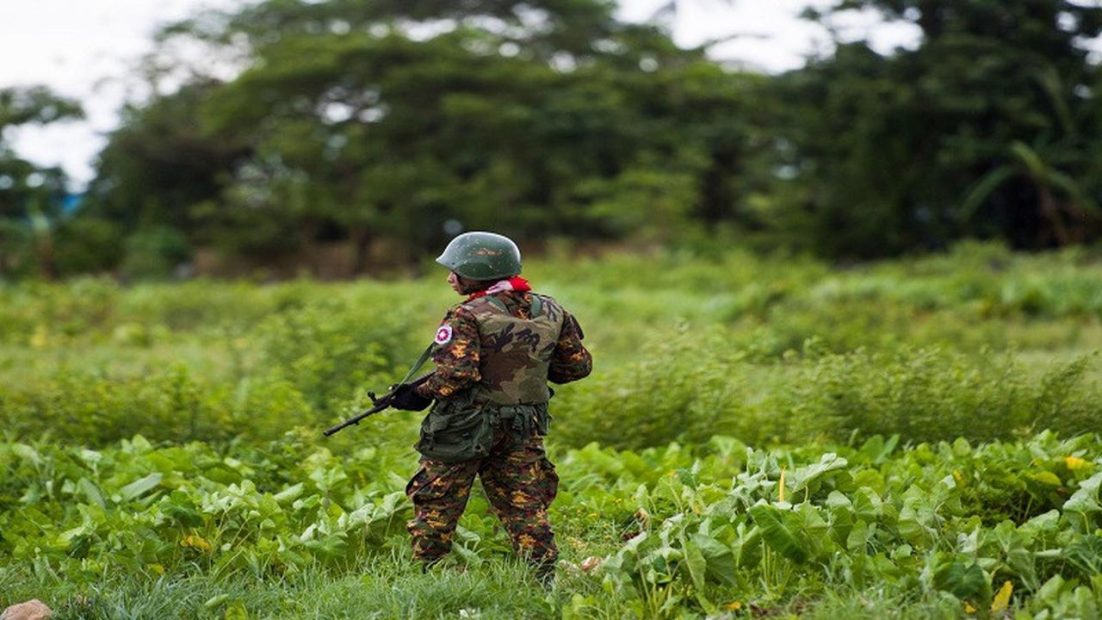
An article published in Opinio Juris by international human rights lawyer Ashley S. Kinseth alleges that the Arakan Army (AA) is subjecting Rohingya in Myanmar’s Rakhine State to forced labour, land seizures, movement restrictions and systematic persecution.
According to the article, the Arakan Army has emerged as a new oppressor following years of brutality by Myanmar’s military. The group is accused of exploiting Rohingya through forced labour, confiscating their land and forcing communities to leave their homes.
Movement restrictions and excessive taxes
Rohingya seeking to flee northern Rakhine for Bangladesh or elsewhere reportedly have to pay between $300 and $500 for permits. The money allegedly goes to smugglers, local village administrators or the Arakan Army.
Movement within the region is also restricted. A permit to visit a neighbouring village for one day reportedly costs around 5,000 kyats, or $2.40, and requires two separate signatures.
Rohingya residents also face taxes on houses, shops, boats, fishing nets, livestock and paddy fields.
The Office of the United Nations High Commissioner for Human Rights has described the measures as an unfair taxation system and systematic movement restrictions targeting Rohingya.
Before the Myanmar military launched its 2017 clearance operations, people needed military permission to travel. After the Arakan Army captured most of Rakhine State in 2024, its officials became among those responsible for granting such permits. The group has reportedly added forced labour quotas and land confiscations to the existing restrictions.
Allegations of systematic persecution
The article argues that the alleged abuses go beyond war crimes and may constitute crimes against humanity.
It says the Arakan Army is using administrative mechanisms, including tax registers, travel permits, compulsory labour rosters and land allocation, to target Rohingya.
The author argues that these measures are designed to discriminate against and persecute people because of their Rohingya identity.
Evidence cited in international reports
Hwayar Sisi killings and Nasawra Para camp
According to information attributed to Human Rights Watch in May 2024, more than 170 Rohingya, including at least 90 children, were killed or went missing in a shooting by the Arakan Army in Hwayar Sisi village.
In February 2025, survivors were reportedly confined to a camp called Nasawra Para. They allegedly cannot leave without permission and are forced to perform unpaid construction work and tend livestock seized during looting.
Land seizures and resettlement
An August 2026 report by the Independent Investigative Mechanism for Myanmar, as cited in the article, reportedly documented the clearance of Rohingya areas, the destruction of mosques and the seizure of around 2,000 acres of land for the resettlement of non-Rohingya communities.
New residents have reportedly been settled in at least 11 former Rohingya villages emptied in 2017. Efforts are also under way to change the names of Rohingya villages.
Forced labour involving children
A September 2026 UN report cited in the article reportedly documented compulsory labour quotas in northern Rakhine, requiring villages to supply workers every week or month.
Evidence of 2,353 such incidents was reportedly recorded in January 2026, including at least 75 cases involving children. Children as young as six are allegedly being forced to clear forests, construct buildings and perform domestic work for Rakhine families.
Why crimes against humanity?
The author argues that classifying the alleged abuses solely as war crimes fails to capture their full nature.
Article 7(1)(c) of the Rome Statute identifies enslavement as a crime against humanity when powers associated with ownership are exercised over a person. The author argues that forcing Rohingya to work under such conditions could fall within this definition.
Unlike war crimes, crimes against humanity do not require an ongoing armed conflict. Prosecutors must establish, among other legal requirements, that the acts formed part of a widespread or systematic attack against a civilian population.
Arakan Army’s administrative structure
The article also points to the Arakan Army’s own claims that it operates an administration called the Arakan People’s Revolutionary Government, overseeing eight districts, more than 10 departments and a three-tier judicial system.
Kinseth argues that this administrative structure could facilitate coordinated measures involving travel permits, labour quotas and land seizures against Rohingya.
Source: Opinio Juris