Locals seek effective steps to modernise Mongla Port, establish an economic zone, create jobs and resolve coastal problems Instructions issued to boost international trade capacity, speed up cargo handling and accelerate port modernisation
Prime Minister Directs Modernisation, Development During Sundarbans-to-Mongla Port Visit
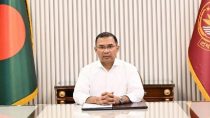
Prime Minister Tarique Rahman has seen the potential and challenges of Bangladesh’s southwestern region first-hand by observing the biodiversity of the Sundarbans and coastal conditions, inspecting Mongla Port and visiting a proposed economic zone.
His brief official visit to Dakope in Khulna and Mongla in Bagerhat on Thursday has raised new hopes among local residents, businesspeople and political leaders. They expect the visit to accelerate efforts to resolve long-standing coastal problems, expand port-based trade, attract investment and create employment.
During the visit, the prime minister instructed officials concerned to increase Mongla Port’s international trade capacity, speed up cargo clearance and accelerate modernisation work. Officials believe that improving the port’s infrastructure and operational capacity would strengthen its role in the country’s import and export trade while creating greater opportunities for industrialisation and investment in the southwestern region.
The prime minister left Tejgaon Airport by helicopter for the Sundarbans at around 9:00am on Thursday. At around 10:00am, he observed Hiron Point and nearby areas from the air. His helicopter later landed at the field of Nalian Secondary School in Dakope upazila of Khulna at around 10:30am.
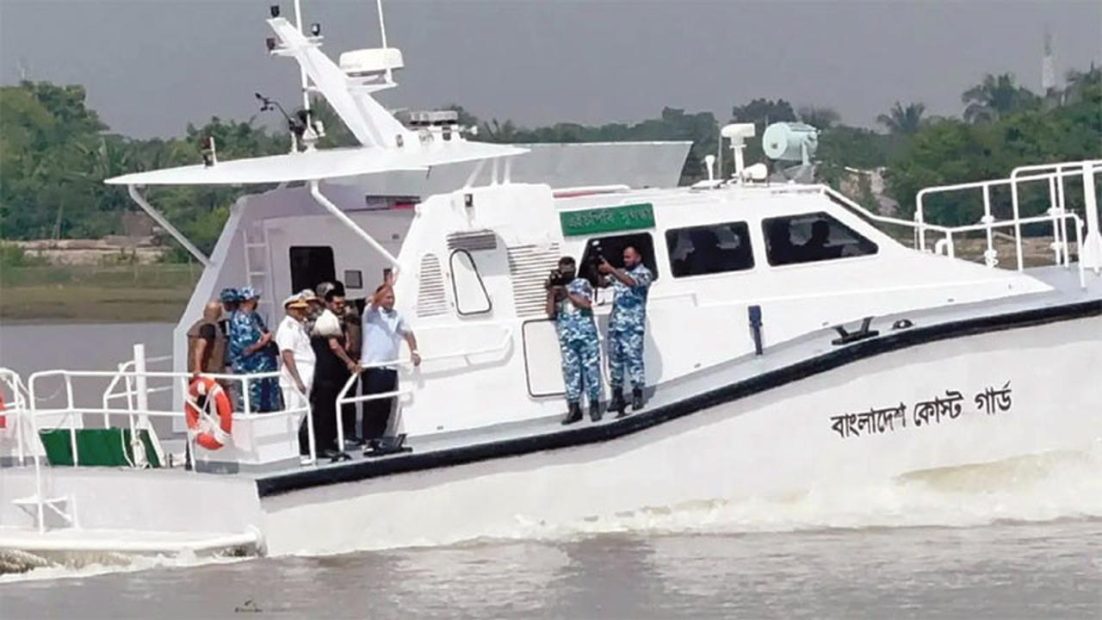
After arriving in Nalian, he exchanged greetings with local residents waiting to welcome him. He then travelled by boat from the Nalian launch terminal towards Mongla in Bagerhat with his entourage. At noon, he reached the naval base area in Mongla, where he took a break for lunch and attended scheduled meetings.
At around 3:00pm, the prime minister inspected the jetty of Mongla Port. At about 3:15pm, he left for the proposed economic zone of the Bangladesh Economic Zones Authority (BEZA). After visiting the site, he was scheduled to leave for Dhaka at around 4:00pm.
Mongla Port has long been important to the economic development of the southwestern region. As the country’s second-largest seaport, it has significant potential to support cargo transportation, imports and exports, industrial development and regional trade.
However, fully utilising this potential requires improvements in infrastructure, cargo handling facilities, transport networks and overall operational capacity. More efficient port operations could reduce transportation time and costs for businesses. They could also create jobs in industries using the port, transport, warehousing, logistics and related services.
Local businesspeople expect the government to prioritise the coordinated development of road, rail and waterway connections alongside port modernisation. Such improvements could make the southwestern region more attractive to domestic and foreign investors.
The proposed BEZA economic zone near Mongla was another key part of the prime minister’s visit. If implemented as planned, the zone could attract factories, increase production, expand exports and create more employment opportunities for local people.
However, its successful implementation will require land and infrastructure preparation, uninterrupted electricity and energy supplies, improved transport links, investment-friendly policies and a skilled workforce. Effective planning is also necessary to ensure that local communities benefit from the development. The possibility of establishing an LNG terminal at Akram Point in the Sundarbans has also become part of discussions about the region’s economic future.
Alongside the prospects for industrialisation and port-based trade, the hardships faced by people in coastal areas, including Dakope, have also drawn attention. Shortages of safe drinking water, river erosion, salinity, cyclones and tidal surges continue to make daily life difficult.
One of the main demands of local residents is a permanent solution to the drinking water crisis, along with the construction and repair of durable embankments in vulnerable areas. Experts and stakeholders emphasise that long-term coastal management, river erosion control, water conservation and disaster-resilient infrastructure are necessary beyond emergency repairs. Local people’s experiences and needs should also be considered in development plans.
The Sundarbans is a major source of natural resources and biodiversity and provides essential protection for the coastal region. As part of a UNESCO World Heritage site, the forest plays an important role in reducing the impact of cyclones and tidal surges. The livelihoods of communities dependent on the forest are also closely linked to its survival.
Meanwhile, Khulna BNP leaders welcomed the prime minister’s arrival in Nalian, Dakope. In a joint statement issued on Thursday, they described the visit as significant for the southwestern region.
They said the visit had raised hopes for resolving the drinking water crisis in disaster-prone coastal areas, building sustainable embankments, creating jobs and expanding economic activities. They expressed hope that the prime minister’s first-hand observations of the Sundarbans, coastal communities, Mongla Port and the region’s economic prospects would lead to effective measures to address long-standing problems.
The leaders also said that although the visit was not directly open to public participation, it remained important. They called for continued government initiatives to develop the southwestern region, expand port-based trade and improve the living standards of coastal communities.
Prime Minister stops convoy to meet ordinary people
Prime Minister Tarique Rahman left Mongla, Bagerhat, after a busy day of official engagements. He departed for Dhaka by helicopter from the Mongla helipad at 5:20pm on Thursday.
According to the schedule, the prime minister began his journey from Dhaka at 9:00am. During the visit, he inspected from the air the proposed site for an LNG terminal at Akram Point in the Sundarbans. He then travelled to Mongla to review the port’s development plans and visit the proposed special economic zone under BEZA.
On his way back, an emotional scene unfolded as thousands of local people gathered along both sides of the road to catch a glimpse of the prime minister. Responding to their enthusiasm, Tarique Rahman stopped his motorcade and got out of his vehicle. He shook hands with people and exchanged greetings with them. The residents were visibly excited to meet him at close quarters and shared their various demands.
Earlier in the afternoon, the prime minister arrived at the naval base in Digraj, Mongla, where he attended a special review meeting with senior officials from different departments in Khulna.
In the afternoon, he visited the main jetty of Mongla Port and observed cargo clearance operations. He also gave officials necessary instructions on port modernisation and structural development before visiting the proposed special economic zone.
As the visit was entirely official, the prime minister did not attend any political rallies or hold separate meetings with party leaders and activists.
Local businesspeople, port authorities and district administration officials said the visit could mark the beginning of a new phase in the economy of the southern region.
They expect the proposed special economic zone and port expansion projects to create around 60,000 new jobs if fully implemented. This could boost business and trade centred on Mongla and generate fresh economic activity throughout the coastal region.
The prime minister left Mongla before evening after completing his scheduled engagements. Tight security was maintained throughout the day at the port and surrounding areas.