3 Coastal Divisions, Seaports, Land Ports, Bhola to Be Connected to the Mainland by Direct Road Links to Save Fuel and Time
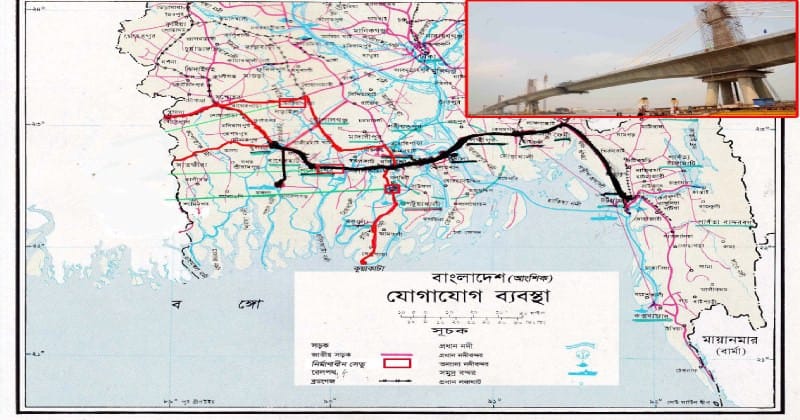
Following a visionary decision by PM Tarique Rahman, the Roads and Highways Department (RHD) has appointed two consulting firms to conduct a feasibility study and draft a comprehensive route alignment map to establish direct road connectivity among Bangladesh’s three coastal divisions, Khulna, Barishal, and Chattogram, while connecting the island district of Bhola to the mainland. The firms have already commenced work, with preliminary reports expected next month and the final Development Project Proposal (DPP) scheduled for submission by March. Informed quarters express strong optimism that the Barishal-Bhola Highway construction project will be included in the upcoming fiscal year’s Annual Development Programme (ADP).
The initiative centres on upgrading the existing 36-kilometre stretch from Rahmatpur to Hijla via Mirganj and Muladi to a width of 34 feet, alongside building three major bridges: a 1.5-kilometre bridge over the Arial Khan River at Mirganj, a 1,300-meter bridge between Hijla and Muladi, and an 1,100-meter bridge between Mehendiganj and Bhola. By routing through Rahmatpur, Muladi, Hijla, and Mehendiganj, this strategic alignment is projected to cut the initial BDT 21,000 crore cost estimate for a direct 8.5 km Bhola-Barishal bridge by half. Furthermore, it integrates three isolated upazilas of Barishal, Muladi, Hijla, and Mehendiganj, along with Bhola, into the national highway network.
Energy, transport, and economic experts believe that once implemented, this project will establish seamless links across all coastal districts, three major seaports (Mongla, Payra, and Chattogram), and two prominent land ports (Benapole and Bhomra). This transformation is expected to significantly reduce the heavy traffic burden on the high-density Dhaka-Chattogram and Dhaka-Khulna national highways while yielding substantial annual fuel savings. Prominent economists emphasise that integrating these previously isolated coastal regions will ultimately bring about a revolutionary transformation in the country’s overall socio-economic landscape and foster long-term regional development.
In addition to economic benefits, the approved alignment offers significant logistical advantages and crucial environmental protection for local aquatic life. Route planners note that traffic heading to Dhaka from Bhola can pass through Mehendiganj to connect with Shariatpur’s Gosairhat-Shivchar route, reaching the capital over a much shorter distance via the Padma Bridge without adding congestion to the Barishal-Faridpur National Highway. Fisheries scientists highlight that this alternative route avoids potential environmental hazards to the major sanctuary and movement path of Hilsa fish in the Tentulia River, which a long direct bridge would have threatened.
To fully realise the potential of this regional corridor, informed transportation circles emphasise the urgent necessity of introducing a sustainable and safe coastal ferry service across the turbulent 28-kilometre stretch of the Meghna River separating Bhola and Lakshmipur. Transport analysts state: ‘Ensuring safer, sustainable, and faster ferry crossings between Bhola and Lakshmipur via the proposed Barishal-Bhola Highway will establish rapid road links connecting Chattogram directly to the ten districts of Khulna Division and all districts of Barishal Division.’ This comprehensive network promises to permanently bridge the longstanding infrastructure gap in southern Bangladesh.
With physical infrastructure construction for the Mirganj bridge slated to begin this December, the initiative fulfils a long-standing public demand to replace unpredictable ferry wait times over the 10-kilometre-wide Tentulia River with dependable highway transport. RHD officials confirm that this integrated approach will not only link isolated island populations to the mainland but also create an unprecedented, continuous coastal road loop. By bringing together administrative divisions, maritime centres, and border checkposts, the project marks a historic turning point for southern infrastructure, regional mobility, and national economic productivity.