Why Is Israel’s Latest Attack on Hebron Extremely Serious for the Entire West Bank?
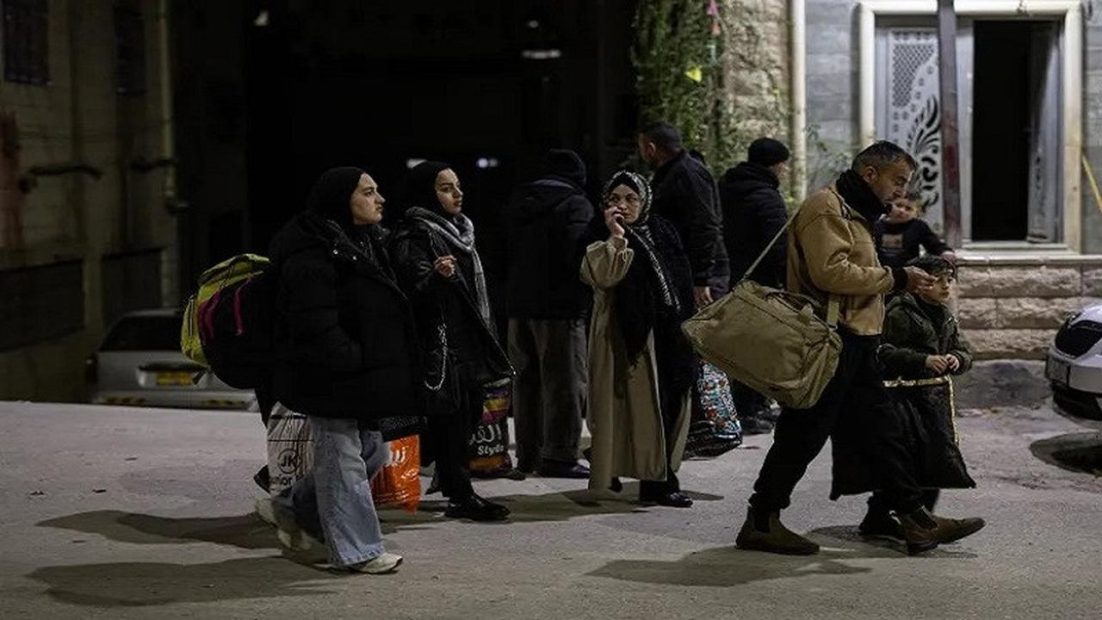
Palestinians have faced continued violence and forced displacement during Israel’s raids and military operations in Hebron, an occupied West Bank city. According to the Palestinian Prisoners’ Society, Israel imposed a lockdown on Palestinians in Hebron last Friday and arrested at least 47 Palestinians from different parts of the city.
Around 2,500 Palestinians have been forced to leave the city after Israeli forces seized several Palestinian homes and turned them into military bases and barracks. The operation began after two Israeli soldiers were killed in a shooting attack on Friday morning. Two Palestinian suspects in the attack were also killed during the operation.
The following are the key issues surrounding Israel’s latest assault on Hebron.
1. Widespread Forced Displacement
Around 900,000 Palestinian residents of Hebron have faced what has been described as extreme “collective punishment” by Israeli forces. A strict military lockdown was imposed across Hebron shortly after Friday’s shooting at a military checkpoint in the Farsh al-Hawa area. Israeli forces closed all entrances to the city and began demolishing dozens of Palestinian buildings.
Israeli soldiers carried out raids in the Ein Deir Baha neighbourhood, forcing dozens of families to flee their homes late at night without taking any personal belongings. According to Hebron Municipality, the displacement operation has affected an area of around 350 dunams (86 acres), forcing approximately 500 Palestinian families from their homes.
Human rights researcher Hisham al-Sharbati told Al Jazeera that the military operation was essentially “an operation to empty an entire residential area of Palestinians.” He said the events amounted to a form of ethnic cleansing and that imposing such collective punishment on the Palestinian population constituted a war crime.
Muammar Yusuf al-Abibi, a member of the Hebron Municipal Council, said the latest operation followed a series of measures aimed at displacing the Palestinian population. “This is a crime that violates all international laws and conventions, and it is collective punishment,” he said.
Human rights organisations have compared the current assault on Hebron with the tactics used during Israel’s “Iron Wall” operation in the Jenin and Nur Shams refugee camps in January 2025. That operation displaced more than 30,000 people and destroyed over half of the residential buildings in the camps.
2. An Attempt to Cripple the Economy
Hebron is a vital city for the Palestinian economy. However, the economy is already facing a severe crisis because of Israel’s devastating war in Gaza and attacks and military operations by Israeli forces and settlers across the West Bank. Around 40 per cent of Palestine’s total industrial output and 30 per cent of its exports come from Hebron. However, recent Israeli restrictions and attacks have severely disrupted the city’s economic activities.
Hebron has more military barriers and checkpoints than any other city in the West Bank. Around 40 per cent of the 89 main checkpoints across the occupied territory are located in areas of Hebron under strict Israeli control. Economic researcher Ahmed Abu Qamar said restrictions in Hebron would affect the entire region because of the city’s importance to the broader West Bank economy.
“Due to its vast industrial and commercial base, Hebron is a leading industrial city and one of the main pillars of the Palestinian economy. Any restrictions, road closures, movement restrictions or military operations in the city will therefore put pressure on the entire West Bank economy,” he said.
Disruptions to trade and business activities have hindered the movement of goods and people, increasing production costs and preventing businesses from completing work on time. According to Mr. Abu Qamar, disruptions that force factories and production facilities to shut down could compel many businesses to suspend operations entirely or reduce their working hours to a minimum.
3. Settler Harassment in the Old City
The presence of hundreds of Israeli settlers in Hebron’s Old City has severely disrupted the daily lives of ordinary Palestinians. Under the 1997 Hebron Protocol, the city was divided into two areas: H1, which was formally placed under the Palestinian Authority’s civil control, and H2, which covers 20 per cent of the city and remains under full Israeli military control. Around 7,000 Palestinians live in H2 under strict military restrictions.
Israeli authorities have continued to expand closed military zones around settlements in the city centre, in violation of international law. In early October, Israeli authorities installed three new iron gates within a 200-metre stretch of the Old City to restrict access to historic commercial routes. This has further isolated commercial areas such as the historic Shuhada Street, where more than 500 shops have been forcibly closed for years.
During winter, Palestinian residents are forced to use dark and dangerous paths through local cemeteries to avoid military blockades and checkpoints.
4. Rising Tensions Over Religious Sites
The historic Ibrahimi Mosque, located at the heart of the H2 zone, is a sacred site for both Muslims and Jews. Jews refer to it as the Tomb of the Patriarchs. The 14th-century site is part of a UNESCO World Heritage property but has repeatedly been targeted by Israeli settlers.
In 1994, a far-right American-Israeli settler entered the mosque and opened fire with an automatic rifle on Palestinians who were praying in prostration, killing 29 people. Following the massacre, the Israeli military permanently divided the holy site into two sections and imposed strict restrictions on Palestinian movement in the surrounding area.
Recently, Israeli Finance Minister Bezalel Smotrich announced plans to take control of all planning and construction powers concerning the Ibrahimi Mosque and the surrounding H2 area, removing them from the Palestinian municipal authorities. The move signals Mr. Smotrich’s intention to overturn key provisions of the 1997 Hebron Protocol, marking a significant step towards further entrenching and consolidating Israeli control over the city.