Govt does not support extrajudicial killings, enforced disappearances: Information Adviser
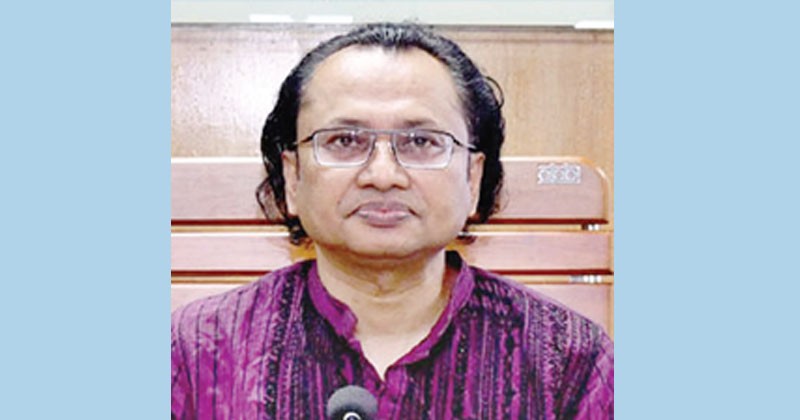
The Prime Minister’s Adviser on Information and Broadcasting Dr. Zahed Ur Rahman has said that if former Prime Minister Ms. Sheikh Hasina returns home, she will not face any mob or unlawful situation but will face justice. In reply to another question about Ms. Hasina’s autocratic rule and remarks, the adviser said it is not logical to call someone who held power by force without the people’s mandate a “former Prime Minister.” He said if she returns, she must face justice under the law. He said the government will ensure justice by keeping the full legal process.
He said a decision on the remark of Inspector General of Police (IGP) Mr. Md. Ali Hossain Fakir about “crossfire” will be made after the Prime Minister returns from his Japan visit. He also advised that if government offices do not give information, one should go to the Information Commission. He said these things yesterday in reply to various questions from reporters at the weekly press briefing held in the conference room of the Department of Information at the Secretariat. Chief Information Officer of the Department of Information Mr. Syed Abdal Ahmed and Joint Secretary of the Ministry of Information and Broadcasting Dr. Md. Alam Mostafa were present at the briefing.
Dr. Rahman said no democratic government can ever support extrajudicial killings and enforced disappearances. He said the present democratic government, elected by the people’s vote, does not support choosing such an unlawful path. He said a democratic state ensures punishment or legal action only through the judicial process, not through unlawful killings. He said that if a government kills people outside the law, the state is no longer a state and becomes a thug. He said those who were involved in such acts in the past turned the state into a thug.
He said the present government has no evil intent of holding power by staging a night time election. So the government will do nothing that harms the image of the state. He reminded government employees that they are not bound to follow any unlawful order even if it comes in writing.
Replying to a reporter’s question on the IGP’s remark, he said the IGP cleared up the misunderstanding by explaining his remark through Police Headquarters. He said the government’s next decision on this matter will be considered by the Prime Minister himself after he returns from his foreign visit. Citing some recent incidents, he said criminals were arrested as soon as they tried to take the law into their hands or provoke others. He said the government keeps sending the strict message that no one is above the law.
Replying to a question on the recommendations of the Media Reform Commission, he said the BNP government has its own policies and thoughts on how it wants to see the media and on new ownership and regulatory bodies for the media. He said it will decide these after talking with stakeholders. On the work of the Constitution Reform and Consensus Commission, he said work is going on on various amendments beyond the first discussions of the Consensus Commission. He said the government is determined to establish the country’s democratic path and good governance.
He stressed making the Information Commission more vibrant and active. He said getting information from any government office is a right of citizens. He said the reconstituted Information Commission is being made more active and dynamic to ensure this transparency. He said the new commission will play an effective role in this matter.
On complaints that licensed gun holders are not getting their weapons back and that information about missing weapons is not available from the relevant branch of the Home Ministry, Dr. Rahman said journalists have the chance to ask for information under the Right to Information Act. He said this law should be used to get information that is not highly sensitive for the state. He said the country had no Information Commission for a long time, and a commission has now been formed. He said if any government office does not want to give information, journalists can go to the commission. He said he has spoken with the people in charge of the commission, and they want to work actively. He said the commission’s role is important to ensure accountability and balance in government institutions.
On weapons, he said taking action against any illegal weapon is a normal part of police duty. He said journalists should ask what steps the police are taking in this matter.
Asked whether the IGP’s explanation is acceptable and whether the IGP should apologize, the Prime Minister’s Adviser on Information and Broadcasting said Police Headquarters later issued a statement. In it the IGP explained his remark. He said some people interpreted the remark to mean that he would carry out crossfire or extrajudicial killing, but later he made it clear why and for what purpose he said those words. He said the IGP surely did not mean it that way.
Dr. Rahman said the confusion created over this should end, because the IGP did not hold on to any of those remarks as his position and instead stepped back from them. He said that if the IGP had given no further explanation after the remark, the matter could have been discussed. But since he gave an explanation, he himself has understood that his remark was communicated wrongly.