Anti-Dam Protests Escalate in India’s Arunachal Pradesh, Hundreds of Security Personnel Deployed
Authorities have deployed hundreds of additional security personnel to India’s northeastern state of Arunachal Pradesh following violent protests against a proposed mega-hydroelectric dam near the Chinese border. The step aims to stabilize the region after clashes broke out between demonstrators and law enforcement last week.
State Police Chief S.D. Singh Jamwal told Reuters on Tuesday (October 27) that security forces are being deployed to key areas as needed to maintain order and prevent further deterioration of the law and order situation.
The violence erupted in the Siang Valley, bordering Tibet, where anti-dam protesters clashed with police. Officers fired tear gas and arrested at least 21 individuals. Officials reported that demonstrators threw stones and set fire to a police station as well as an office of the state-run National Hydroelectric Power Corporation (NHPC).
Protests against the proposed 11,200 MW Siang Upper Multipurpose Project, led by NHPC, have persisted for two years. Local indigenous communities fear the dam will submerge their ancestral villages.
Gegong Jijong, a member of the Siang Indigenous Farmers Forum, told Reuters that opposition will continue until the project is scrapped. He stated that the dam threatens to submerge 27 ancestral villages completely and adversely affect 40 to 50 others.
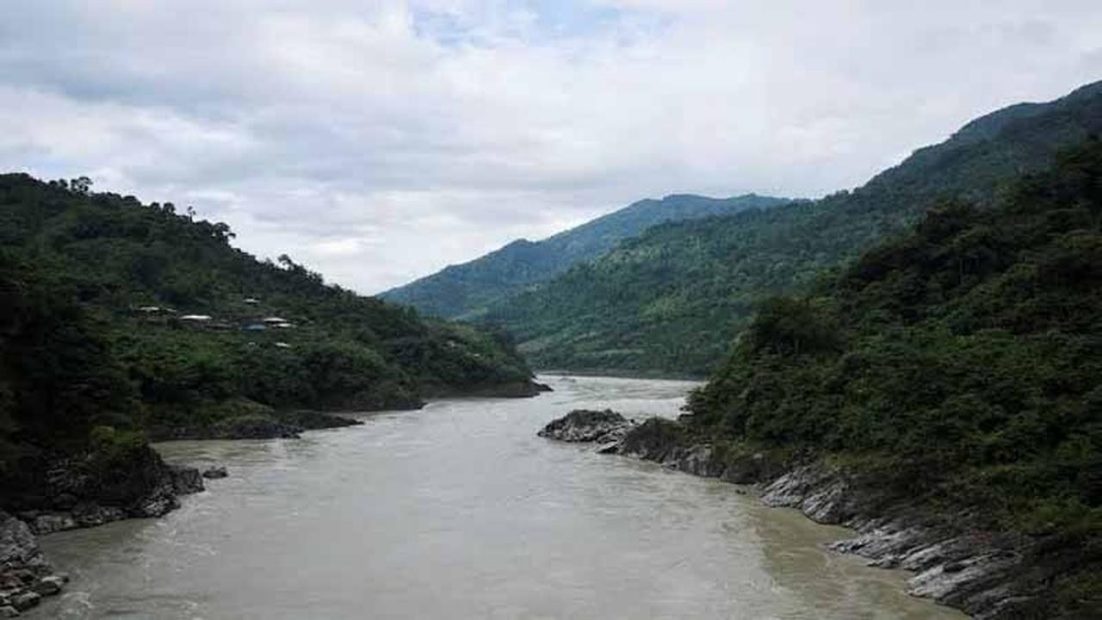
The Siang River flows from Tibet where it is known as the Yarlung Zangbo into Arunachal Pradesh. Following China’s December 2024 announcement to build the world’s largest hydroelectric dam upstream, Indian policymakers expressed concern over Beijing’s potential leverage over downstream water flows.
China claims Arunachal Pradesh as part of its territory, referring to it as “Zangnan,” while India maintains the region is an integral part of its sovereign territory. The state’s Chief minister, a member of the ruling Bharatiya Janata Party (BJP), termed the Chinese mega-dam an existential threat, assuring that the government will safeguard national interests while respecting the rights and aspirations of the local populace.
Source: Reuters