CPC International Department Minister Liu Haixing Arriving in Dhaka on November 3
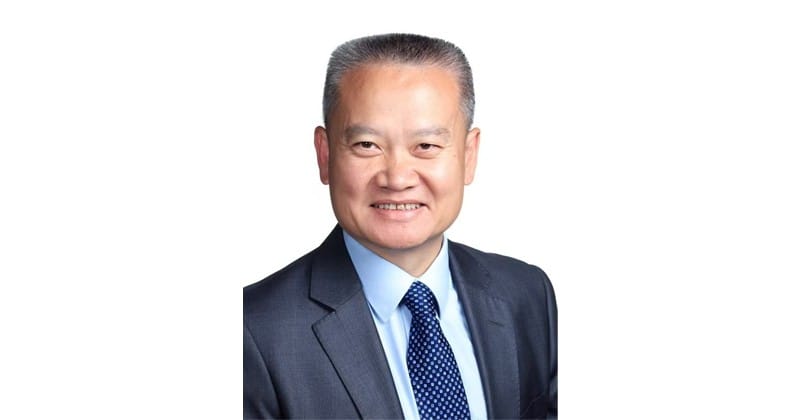
Liu Haixing, Minister of the International Department of the Central Committee of the Communist Party of China (CPC), is scheduled to arrive in Dhaka for a three-day official visit from November 3 to 5. The visit aims to deepen and diversify the longstanding friendly relations between Bangladesh and China. As a member of the Central Committee of China’s ruling party and a seasoned diplomat, his arrival is viewed as a pivotal step for bilateral political engagement, economic cooperation, and future development partnerships. During his stay, Minister Liu Haixing will meet with PM Tarique Rahman to advance high-level political dialogues.
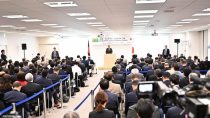
Notably, Mr. Liu Haixing shares an enduring familial connection with Bangladesh, as his father, Liu Shuqing, served as the Chinese Ambassador to Bangladesh in the 1980s and presented his credentials to then-President Ziaur Rahman in August 1980. Reflecting this historical lineage, Chinese Ambassador Yao Wen highlighted the familial bond during a farewell call on Minister of State for Foreign Affairs Humayun Kabir on September 20. Furthermore, as part of the official itinerary, a seminar titled “Where History Illuminates the Future: China-Bangladesh ‘Political Parties Plus’ Roundtable and Inauguration Ceremony of Bangladesh-China Center for Party and State Governance Studies” will take place on November 4 at InterContinental Dhaka.
The historical foundation of Bangladesh-China relations underscores the significance of this visit, building on formal diplomatic relations established on October 4, 1975, and elevated to a Strategic Partnership of Cooperation in 2016. Fresh momentum was injected into bilateral ties during PM Tarique Rahman’s official visit to China in June 2026, where he held bilateral meetings with Chinese President Xi Jinping, Premier Li Qiang, and Chairman Zhao Leji. During those high-level talks, both sides issued a joint statement reiterating their shared commitments to expand cooperation in trade, investment, industry, technology, and renewable energy, while resolving to build a community with a shared future in a new era.
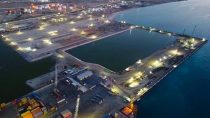
China’s standing as a global economic powerhouse further elevates the strategic importance of this partnership for Bangladesh. According to World Bank data for 2025, China’s Gross Domestic Product (GDP) reached approximately $19.5 trillion, making its economy more than four times the size of Japan’s $4.4 trillion GDP. Business leaders from a joint forum of BGMEA and the Overseas Chinese Association in Bangladesh highlighted that partnering with China could unlock crucial export opportunities for Bangladesh’s readymade garments, leather, and pharmaceuticals. Additionally, economists emphasize that key infrastructure projects, such as the Chinese Economic and Industrial Zone in Chattogram and the expansion of Mongla Port, are vital for boosting national transport and manufacturing capabilities.
The proactive interest of the Bangladesh government in broadening cooperation has been repeatedly emphasized by senior Cabinet members in recent high-level meetings. On September 24, speaking at an event in Dhaka marking the 77th anniversary of the founding of the People’s Republic of China, Bangladesh’s Minister for Local Government, Rural Development and Co-operatives, Dr. Abdul Moyeen Khan, highlighted the strong potential to expand bilateral ties across trade, investment, infrastructure, energy, and industry. Earlier on August 30, Minister of State for Foreign Affairs Humayun Kabir expressed deep satisfaction over the renewed momentum in bilateral relations during a meeting with Chinese Ambassador Yao Wen, explicitly describing China as a trusted friend and key strategic partner of Bangladesh.
Beyond economic initiatives, Mr. Liu Haixing’s visit focuses heavily on state governance exchange and institutional development through joint research. The establishment of the new Bangladesh-China Center for Party and State Governance Studies is expected to facilitate structured knowledge-sharing in development planning, administrative efficiency, poverty alleviation, industrialization, and local governance. Supported by a robust institutional framework, this initiative holds the potential to build enduring connections among government bodies, researchers, and policy architects from both nations. For Bangladesh, these administrative exchanges align with key national priorities, including narrowing the trade deficit, ensuring transparent project execution, and maximizing long-term economic gains from foreign direct investment.
According to geopolitical analysts, Mr. Liu Haixing’s visit to Dhaka serves as a promising platform to elevate Bangladesh-China relations to unprecedented heights. Translating high-level political goodwill into actionable economic cooperation will enable Bangladesh to secure sustainable growth across industrial capacity, technology transfer, and human capital development. Expanding bilateral cooperation grounded in mutual trust, equal partnership, and shared strategic interests remains the defining goal of this three-day diplomatic engagement.