Fatal Accidents Surge on Faridpur–Dhaka Highway as Blind Curves Turn into Death Traps
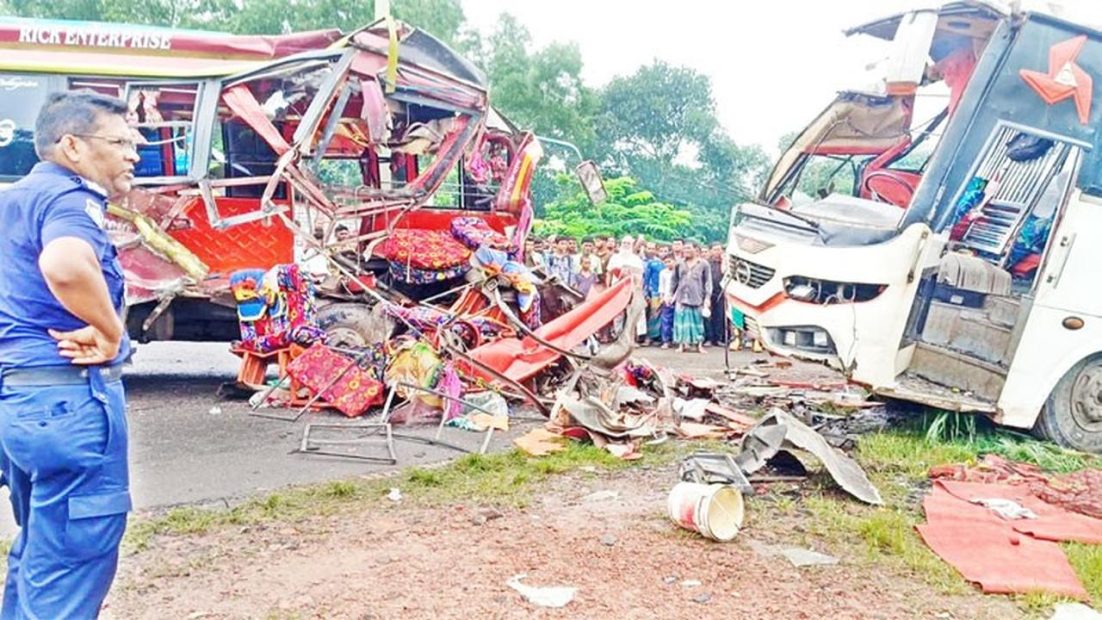
The Dhaka–Faridpur highway is a major route connecting the capital with the southwestern region of the country. Since the Padma Bridge opened, both traffic volume and vehicle speeds on the highway have increased significantly. However, behind the convenience of faster travel lies a series of road accidents and tragic deaths and injuries. Local residents say the highway has become a scene of repeated loss of life.
Mohammad Ibrahim Mia, an executive member of the Faridpur regional unit of the organisation Nirapad Sarak Chai (We Demand Safe Roads), said an analysis of data from the past three months, along with information from local rescue teams and highway police, showed a worrying rise in accidents on the highway and its connecting roads.
According to the fire service units in Bhanga and Shibchar upazilas, around 40–50 minor and major road accidents occurred on the Dhaka–Faridpur highway and its access roads over the past three months. At least 25–30 passengers and pedestrians lost their lives in these accidents.
Data from the Faridpur–Bhanga Highway Police Station and the Shibchar Highway Police Station show that more than 100 people were injured in road accidents during the same period. At least 15–20 of them suffered permanent disabilities and are now living in hospital beds or depending on their families for support.
Mohammad Saiful Akon, a resident of Pacchar Bazar in Madaripur, said, “Every day, when a family member leaves home, we remain worried. The journey from Faridpur to Bhanga or Dhaka has now become another name for fear.” He is a regular bus passenger on the route.
Ashik Daw, a resident of Milligram in Bhanga, said there were 22 “death traps” or dangerous bends on the route from Faridpur to the Padma Bridge. The nearly 50-kilometre highway from Faridpur to the Padma Bridge’s zero point has around 22 dangerous bends. Vehicles approaching these bends at high speeds can suddenly lose control. Straightening the bends is therefore essential.
One of the main problems is the lack of adequate traffic signals. The sharp bends also prevent drivers from seeing oncoming vehicles from a safe distance. There are insufficient warning signs and reflector lights before many bends, increasing the risk of accidents, particularly at night.
Unregulated connections to access roads create further hazards. Local feeder roads and access roads join the highway near several bends, allowing three-wheelers and smaller vehicles to enter the main road unexpectedly.
Hadi Howlader, a schoolteacher in Bhanga, said unlicensed and inexperienced drivers, along with reckless speeding, were major causes of road accidents. Investigations suggest that, alongside infrastructure problems, human error and serious negligence are among the leading causes.
Driver fatigue and drowsiness also contribute to fatal accidents. Driving for long periods without adequate rest can reduce alertness and cause drivers to lose control of their vehicles. The entry of unauthorised vehicles poses another serious threat. Slow-moving vehicles, including Nasimon, Karimon and easy-bikes, which are prohibited from using the highway, often enter the high-speed route. Buses and trucks may overturn or collide while braking suddenly to avoid them.
Drivers must be more cautious when using highways and expressways and must obey traffic laws and road signs. Local people are also calling for dangerous bends to be straightened or made safer, immediate geometric redesign of the 22 identified bends by the Roads and Highways Department, and the installation of adequate speed cameras and warning signs.
Although improved road links have made travel easier, development cannot achieve its full purpose if people’s lives remain at risk. Effective and immediate action is needed to stop the continuing loss of lives on the Faridpur–Dhaka highway.
Ahmed Humayun, superintendent of highway police in the Madaripur zone, said, “We are thinking more carefully about all these issues. To prevent accidents and restore discipline in vehicle movement, we are also considering installing cameras on the road. In addition, we will work in the future with a focus on reckless driving and compliance with all rules.”
There are around 22 bends within a 50-kilometre stretch of the Dhaka–Faridpur highway, from Faridpur towards the southern end of the Padma Bridge near the Jajira point. Asked about future plans to address the problem, executive engineers of the Roads and Highways Department in Faridpur and Madaripur said discussions were underway on how to make the bends safer and less sharp.