Government must identify political and social crises
Political instability and disorder have gradually emerged following the announcement by ousted former prime minister Sheikh Hasina, who fled to India after the mass uprising, that she would return to Bangladesh in December. The BNP government, which came to power with a two thirds majority, is yet to complete six months in office.
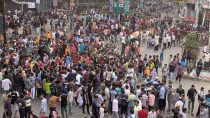
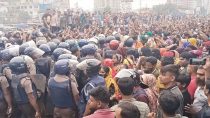
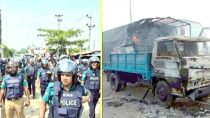
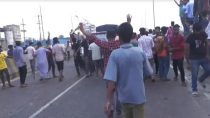
Following the announcement, sudden processions by leaders and activists of the banned Awami League have increased across the country. Meanwhile, garment workers have been protesting for the past one and a half to two months, demanding a minimum monthly wage of Tk 30,000. They have blocked roads and engaged in vandalism and arson in Dhaka, Gazipur, Narayanganj, Ashulia and Savar. Some have also attacked police. Auto rickshaw drivers and other professional groups have joined the protest movement.
Reports of road blockades, vandalism and clashes between workers and police have appeared prominently in national newspapers, including Daily Inqilab. Allegations have emerged that former ministers of the ousted government, some garment factory owners sympathetic to the Awami League and its activists are instigating the unrest. Awami League activists are allegedly infiltrating workers’ protests and using them to carry out vandalism and arson. There are also allegations that pro Awami League police officers are attacking workers and fuelling their discontent.
The government has already formed a wage board for garment workers. Yet the protests continue. The question is why the government has failed to resolve the unrest despite taking initiatives. Where does the real problem lie?
We have repeatedly said that political stability depends on ensuring a comfortable life for ordinary people. If the government can ease their hardships, opposition parties will have fewer issues to mobilise around, and people will be less likely to join their movements.
It remains unclear whether the government has recognised this reality. Opposition parties are organising marches, meetings and rallies, raising issues such as gas and electricity shortages, the energy crisis and rising prices of essential commodities. These problems cannot be denied. Many ordinary people may not actively participate in opposition programmes, but their silent support is understandable because the opposition is speaking about their everyday struggles.
Despite severe hardship, people are still hoping that the government will take action. However, if opposition parties offer them financial incentives, they may join the movements. This could seriously destabilise the political situation.
Garment workers were also among those who gave the BNP government its overwhelming electoral mandate. Yet allegations are growing that the party is failing to recognise leaders who endured years of repression, imprisonment, attacks and lawsuits while remaining active on the streets. Many dedicated leaders, including those at the grassroots level, have been sidelined and excluded from new committees. Their frustration has left them increasingly inactive.
As a result, they are no longer playing an effective role in preventing disorder, while activists of the ousted Awami League and opposition parties allegedly infiltrate various protests and create unrest. Maintaining public order cannot be the responsibility of law enforcement agencies alone. The government’s political strength is essential.
There are also concerns that the government is becoming increasingly dependent on the bureaucracy while distancing itself from its party. Some bureaucrats are alleged to remain loyal to Hasina and to be slowing down government activities in anticipation of her return. The government must explain how it intends to implement its plans while relying on such officials.
Another major concern is extortion and illegal occupation by a section of BNP activists and unscrupulous groups using the party’s name. The government and the party are bearing the consequences of these activities. Opposition parties have been using the issue in their political campaigns, and many ordinary people are beginning to believe their claims. The government must take visible action.
Meanwhile, mutual accusations between the government and opposition over the rehabilitation of the Awami League have intensified. The BNP has alleged that some people in important government positions previously spoke of “reconciliation” and even a “refined Awami League”. The opposition has used these remarks to accuse the government of trying to rehabilitate the party.
The BNP, in turn, has accused the opposition of courting Awami League leaders and activists before the last national election to secure their votes. It has also alleged that the opposition is offering them advantages to gain their support in the upcoming local elections. Observers warn that this blame game is creating opportunities for Awami League activists to become active again. Such a situation could have serious consequences for both the government and the opposition, and could ultimately threaten the country’s independence and sovereignty.
The government is now in its ninth month in office and faces an extremely fragile economy. A report published yesterday by New Age and The Daily Star said private sector credit growth had fallen to its lowest level in 23 years. Economists say weak credit growth reflects weak investment, while stagnant investment limits employment opportunities.
Investment remains low. Labour unrest and the global economic downturn have led to garment orders being cancelled or suspended. Many factories have closed, while hundreds remain shut. Other sectors are also struggling. Businesses are facing a severe slowdown, shops and markets are closing, and ordinary people are struggling to meet household expenses. Unemployment is rising, worsening family and social crises.
This situation is creating favourable conditions for anti government activities by the banned Awami League and opposition parties. It should serve as a serious warning to the government.
The government must identify the root causes of the crises and take urgent steps to address them. Treating a patient for heart disease when the actual illness is cancer offers little hope of recovery. The government must understand that the country is facing interconnected social, political, economic and administrative crises. Unless it addresses their underlying causes, moving forward will remain difficult.