Violent Workers’ Protests and Anarchy Persist; Zahed Ur Rahman Warns Unrest May Continue as Long as Hasina Remains Alive
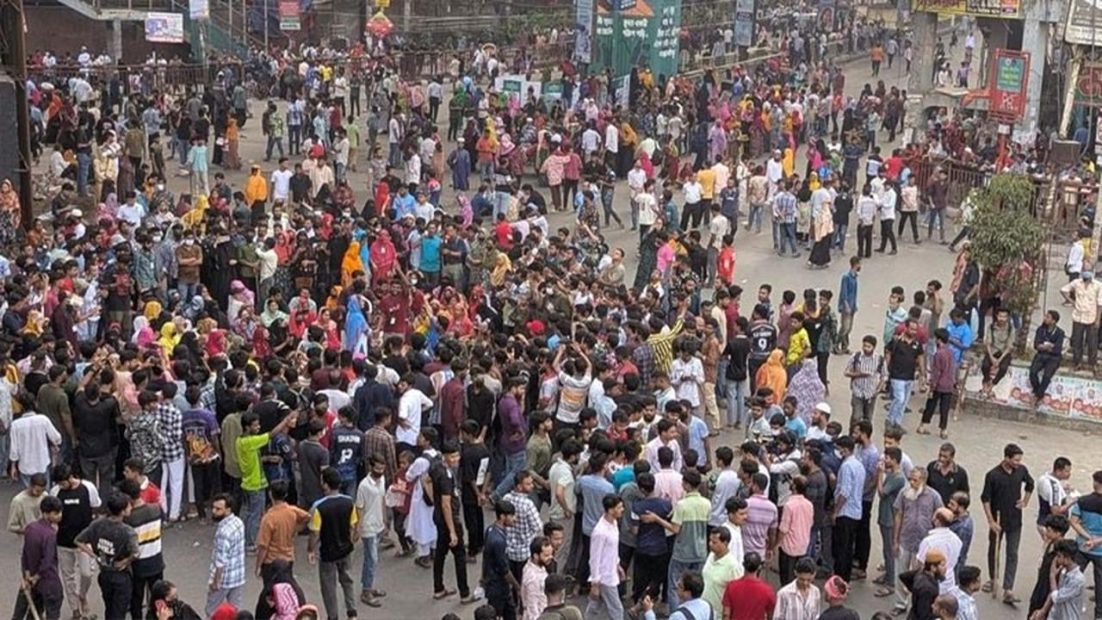
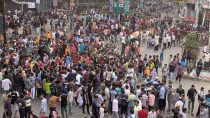
The garment workers’ movement demanding a minimum monthly wage of Tk 30,000 continued for the fourth consecutive day on Tuesday. Industrial areas in Dhaka, Savar, Ashulia and Gazipur remained tense as workers staged demonstrations, blocked roads and clashed with police.
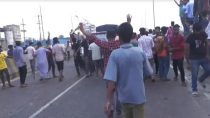
Several roads and highways were disrupted, while incidents of vandalism and arson caused panic among residents. In Mirpur’s Kalshi area, protesters clashed with police, prompting the closure of Mirpur-11 Metro Station.
The government formed a wage board on November 1 to consider increasing workers’ salaries. Discussions are also underway with labour leaders, who have urged workers not to be provoked and to return to work. While some workers have resumed their duties, protests continue in other areas.
The government and factory owners have alleged that vested interests are exploiting the movement.
State Minister for Fisheries and Livestock Mr. Sultan Salahuddin Tuku made the remarks after a meeting on garment sector unrest at Savar Upazila Parishad on Tuesday morning. He said workers had returned to their jobs following the formation of the wage board, but a vested group was trying to exploit the situation. Local MP Mr. Dewan Mohammad Salahuddin Babu was present.
Gazipur
Our Gazipur correspondent reports that several industrial areas remained tense as garment workers demonstrated, blocked highways and set fires in Naojor, Bhogra Bypass, Mouchak, Konabari, Telipara, Palli Bidyut and Chandra on Tuesday.
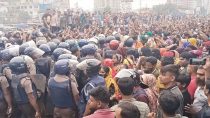
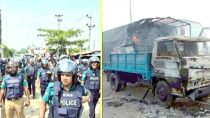
Police and BGB members used tear gas, sound grenades and batons to bring the situation under control. At least 30 people, including workers and police personnel, were reportedly injured.
Traffic on the Dhaka-Tangail and Dhaka-Mymensingh highways returned to normal around 1:15pm after hours of disruption. However, tension persisted in the industrial areas, and at least 60 factories declared general holidays.
Dhaka Range DIG Mr. Mustafizur Rahman said the government had formed a wage board promptly in response to workers’ demands. Police would ensure security for workers willing to return to their jobs, including at their workplaces, residences and along their routes. However, legal action would be taken against anyone involved in violence and attempts to create instability.
Around 9:30am, workers of Panacea Limited and Diganta Sweater blocked the Dhaka-Tangail Highway near the western side of the flyover in Naojor. They placed bamboo barricades and set fire to waste dumped beside the road, disrupting traffic between Joydebpur Chourasta and Naojor intersection.
Workers from several factories in Konabari, Mouchak and Telipara also stopped work and took to the streets. Around 10am, workers blocked the intersection of the Dhaka-Mymensingh Highway and Dhaka Bypass Expressway at Bhogra Bypass, setting fire to tyres and waste materials.
Police and BGB members initially tried to persuade the protesters to leave. However, after brick-throwing and clashes, law enforcers fired tear gas and sound grenades. Traffic gradually resumed after the protesters dispersed.
Eleven platoons of BGB and 25 executive magistrates were deployed in Gazipur to maintain order.
Gazipur City Corporation Administrator and Metropolitan BNP President Mr. Shawkat Hossain Sarkar visited several industrial areas with party activists. He said workers’ demand for higher wages was justified and urged them to return to work through dialogue.
Savar and Ashulia
Our Savar correspondent Selim Ahmed reports that allegations of political involvement and outside provocation have emerged amid the unrest in Savar and Ashulia.
Intelligence agencies and law enforcement authorities have claimed that activists of the ousted and banned Awami League and its affiliated organisations were encouraging and financing attempts to create disorder in the garment sector.
However, some workers’ representatives say rising living costs, low wages and wage disparities are the main reasons behind the protests.
According to various sources, outsiders were being used to disrupt production at factories in Savar, Ashulia and Hemayetpur. Some individuals wearing helmets and masks allegedly entered factories and took part in vandalism, brick-throwing and road blockades.
Dhaka District Police Superintendent Ms. Shamima Parveen said a group wearing burqas and helmets was provoking workers to destabilise the country. Police also had information about the sources of their funding, she added.
Meanwhile, BNP, Jubo Dal and Chhatra Dal activists took positions near important roads and factories in Savar and Ashulia, claiming they wanted to prevent sabotage and ensure workers’ safety.
DIG Mr. Mustafizur Rahman said 40 people had been arrested over attempts to create disorder surrounding the labour protests in Dhaka, Gazipur and Narayanganj. None of those arrested was a garment worker, he claimed. He urged workers to return to their jobs, assuring them of police protection.
Narayanganj and Tongi
Our Narayanganj correspondent reports that BGB has been deployed in the district amid the labour unrest, while police and BNP activists remain on alert.
Workers attempted to block the Dhaka-Narayanganj Link Road on Tuesday afternoon, but law enforcers prevented them from doing so. On Monday, workers had blocked the road near Shibu Market from noon until 4:30pm, setting fire to tyres and disrupting traffic.
Meanwhile, Tongi’s BSCIC industrial area remained calm despite unrest in other parts of Gazipur. BNP and its affiliated organisations’ activists took positions near factories and important intersections, while police remained alert to prevent violence.
Kaliakair
Our Kaliakair correspondent reports that traffic returned to normal on the Dhaka-Tangail Highway after authorities and local leaders took steps to disperse protesters on Tuesday afternoon.
Earlier, workers had blocked the highway near Chandra and Kaliakair over unpaid wages, salary increases and other demands. The blockade brought traffic to a standstill, leaving hundreds of long-distance buses, trucks and ambulances stranded for hours.
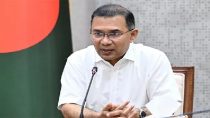
Meanwhile, adviser Mr. Zahed Ur Rahman said the government did not want to follow the previous government’s policy of repression in dealing with labour unrest.
He said law enforcement agencies must act within the law and use force proportionately. “Bangladesh’s police will never become like Hasina’s police again,” he said.
He expressed concern over incidents of disproportionate use of force shown on social media, adding that the government wanted to minimise public suffering while restoring order.
He hoped the workers’ movement would end soon, noting that some of their initial demands were justified and that the formation of the wage board would help address their concerns.
On rising fuel and cooking gas prices, including LPG and LNG, the adviser said international energy prices and LNG import costs had increased significantly. The government was providing record subsidies to the power and energy sectors, but pressure on the economy and foreign exchange reserves had made some difficult decisions necessary.
He said the government’s capacity to provide subsidies was declining and that decisions were being made with a view to the long-term welfare of the people and the country’s economic capacity.