The Capital Needs to Be Developed Aesthetically

The once prestigious residential areas of Dhaka North and South City Corporations are no longer purely residential. New housing projects continue to emerge, but they follow outdated development patterns, creating mounting urban problems. Around 80 per cent of these areas have reportedly turned into commercial zones. Neighbourhoods once known for their traditional character now suffer from severe traffic congestion, resembling areas such as Hazaribagh, Malibagh, Rampura, Siddheshwari, Mouchak, Khilgaon, Moghbazar, Chawkbazar, Rayar Bazar, Banglabazar, Sadarghat, Sutrapur, Bangshal, New Market and Kalabagan.
The beauty of vast areas, including Dhanmondi, Lalmatia, Gulshan, Banani, Uttara, Baridhara and Bashundhara, has also been severely damaged. Slums have emerged in these neighbourhoods, but successive governments have failed to take effective legal action against them, despite allegations of various illegal activities dating back to the 1980s.
Government Services
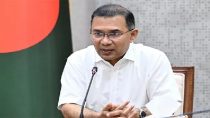
Prime Minister Mr. Tarique Rahman has warned that environmental degradation will have devastating consequences for the country’s future. He has also said that Allah has given the nation an opportunity to do something good for its people, making it a moral responsibility for everyone. Protecting the environment and renovating the National Parliament building require citizens to work beyond their individual interests for the greater good.
State reform must come before broader change. The nation must unite to work for the environment, forests and urban development. The Prime Minister has also urged citizens to expose irregularities and speak out against them.
I welcome his remarks because I have been working on environmental issues for nearly four decades. Dhaka must be made liveable through bold steps. Footpaths in residential areas must be freed from hawkers, commercial establishments must be removed, and the mushrooming coaching centres must be shut down. Indiscriminate car parking must also be stopped.
Having visited several developed countries, I have seen how residential areas, businesses, educational institutions and offices are kept in designated zones rather than being concentrated in the same neighbourhoods. This is a major difference between developed and developing countries.
Unplanned urbanisation and poor coordination have left most of Dhaka’s residential areas struggling with severe traffic congestion. Population density in nearly 50 per cent of these areas has reportedly reached 100,000 people per square kilometre, putting immense pressure on internal roads and connecting streets.
The worst-affected areas include:
Dhanmondi: The expansion of private offices, universities, diagnostic centres, hospitals, shopping malls and coaching centres has turned traffic congestion into a permanent problem.
Mirpur, Uttara and Khilkhet: Rising population density, narrow lanes and excessive numbers of auto-rickshaws and cycle rickshaws regularly congest internal roads.
Bashundhara Residential Area, Green Road and Panthapath: Heavy rainfall causes waterlogging, worsening residents’ suffering and leaving vehicles stranded for long periods.
Rampura, Banasree and Badda: Road development work, defective vehicles and poorly planned connections between internal roads frequently bring traffic to a standstill.
Lalmatia, Kalabagan, New Market and Satmasjid Road: More than a hundred coaching centres have reportedly been established in Lalmatia alone. Vehicles remain parked on both sides of roads for eight to ten hours daily. Hawkers and pushcart vendors also occupy roadsides and footpaths, making movement difficult. Many car owners are secretaries, doctors, businesspeople and other influential individuals. This makes law enforcement agencies reluctant to take action.
Uttara, Gulshan and Banani: Despite being upscale residential areas, these neighbourhoods have attracted numerous private offices and commercial establishments. On-street parking causes persistent congestion around Uttara Junction, the airport and Gulshan’s link roads.
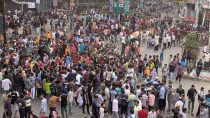
Major projects must be undertaken with the support of law enforcement agencies to ease traffic congestion. In Badda, Banasree and areas along Pragati Sarani, narrow roads, excessive rickshaws and illegal occupation of footpaths leave residents stuck in traffic for hours. Many cannot reach their offices on time. Foreign tourists and diplomats have even been heard asking whether Dhaka is a city of rickshaws.
Although these neighbourhoods were initially developed as residential zones, the government later permitted schools, colleges, universities, shopping malls and offices to operate there. This has pushed traffic congestion beyond the capacity of existing management systems.
The capital also has many dilapidated public transport vehicles that fall far below international standards. Office buildings in residential areas often lack adequate parking facilities, forcing vehicles onto main roads. Illegal occupation by hawkers further reduces road capacity.
An integrated school bus service should be introduced, and schools should be relocated to less populated areas outside the city or near the banks of the Buriganga. Housing companies routinely construct buildings without leaving sufficient open space. Rajuk must be instructed to enforce regulations strictly.
Numerous slums have also developed in residential areas. Unless they are removed, the beauty of these neighbourhoods cannot be restored, nor will residents regain peace and comfort. Coaching centres must also be shut down, with no new centres or diagnostic facilities allowed to operate under different names to evade restrictions. As one elderly resident asked: “Why do we need coaching businesses when there are schools and colleges?”
Residential areas can become free of traffic congestion only if everyone follows the rules. This will also improve the city’s beauty and aesthetic appeal. We hope the present democratic government will deliver a clean and aesthetically pleasing capital. These steps must be taken without delay.
The author is a writer, researcher and social analyst.