Khulna Poised for a New Era of Opportunity After Years of Crisis
There was a time when mornings in Khulna began with factory sirens, workers filling the streets and industrial zones bustling with activity. Today, silence has descended on many of the city’s industrial areas. Rusting gates mark closed factories, machinery lies abandoned, and people who have changed professions in search of a livelihood carry the burden of economic uncertainty. Yet the city still holds enormous potential for a fresh recovery. The expanding economic reach of Mongla Port, improved connectivity following the Padma Bridge, a young population, agricultural and fisheries resources, and growing opportunities for regional trade could give Khulna a new economic identity.
Industrial decline, unemployment, waterlogging, unplanned urbanisation, housing shortages and inadequate public transport are among the city’s persistent problems. At the same time, investment, industrial revival, employment generation, a port-centred economy and modern urban development offer new possibilities. Khulna stands at a crossroads between these challenges and opportunities. Khulna’s history is not simply the story of a settlement evolving into a city. It is the history of an urban centre born, developed and transformed through industrialisation. The city was once nationally renowned for its jute, newsprint, paper, textile and match industries. Its geographical location, river connectivity, proximity to Mongla Port, and the agricultural and natural resources of the southwestern region played crucial roles in industrial growth.
Industrial areas, particularly Khalishpur, Daulatpur and their surrounding neighbourhoods, once symbolised economic dynamism. Large industrial establishments developed during the 1950s and 1960s supported workers’ housing, educational institutions, hospitals, markets, roads and other civic facilities. At one point, nearly 30,000 workers were employed in these industries, with many more people depending on them directly and indirectly. Khalishpur Housing Estate remains a prominent example of this industrial ecosystem. Khulna’s urban development, therefore, was not merely the natural consequence of population growth. Its social and economic structure was built around factories, employment and the lives of working people. But that landscape has changed over time. One industrial establishment after another has shut down. Production has declined, employment opportunities have contracted, and the long-standing income foundations of many families have weakened. The closure of state-owned jute mills in 2020 made the economic crisis of the industrial city even more visible.
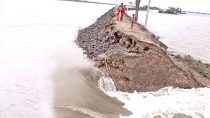
The industrial decline has gone far beyond locked factory gates. Its effects have spread throughout urban life. Workers’ incomes have fallen, markets for small businesses have shrunk, and industrial neighbourhoods have experienced economic stagnation. As a result, many young people are leaving home in search of employment. Although the industrial wheels have stopped turning, people’s lives have not. In search of alternative livelihoods, some sell goods on footpaths, others drive auto-rickshaws or open small shops. Some run small businesses from home, while others support their families through daily-wage labour. Many former factory workers have also been forced to change professions to survive. Climate change has added another dimension to Khulna’s crisis. Following cyclones Sidr and Aila, livelihood insecurity became increasingly severe across the coastal communities of the southwestern region. Salinity, waterlogging, declining agricultural productivity and frequent natural disasters have undermined people’s lives and livelihoods.
Residents of Koyra, Dacope, Paikgachha, Batiaghata, Ashashuni and Shyamnagar in Satkhira, and Sharankhola, Mongla and surrounding coastal areas of Bagerhat have increasingly moved towards Khulna city in search of alternative livelihoods. Some have come looking for jobs, while others have sought better educational opportunities for their children or safer places to live. This migration has increased pressure on the city’s housing, water supply, drainage, healthcare and transport systems. The suburbs are expanding without proper planning, as agricultural land, low-lying areas and water bodies are filled to make way for new settlements and structures. Consequently, the city is expanding geographically even as its traditional economic foundations continue to shrink. With a population of nearly 1.8 million, Khulna is also struggling with a serious public transport shortage, now one of the major sources of hardship in urban life. Ensuring affordable, safe and reliable transport for students, working women, elderly residents and low-income people remains a significant challenge.
Sheikh Ashrafuzzaman, president of the Greater Khulna Development Struggle Coordination Committee, said that despite the numerous challenges, Mongla Port represents one of the greatest opportunities for the city. The port is becoming increasingly important as the lifeline of the southwestern region’s economy. The Padma Bridge has established a new connectivity landscape between the capital and other parts of the country. This could create fresh investment opportunities in import-export activities, transportation, warehousing, product processing and logistics around Mongla Port. However, expanding the port’s capacity alone will not transform Khulna’s economy. Effective connections are needed between the port, industries, agriculture, fisheries, transportation and marketing systems. There is considerable potential to process agricultural products, fish, shrimp and other goods produced across the southwestern region and deliver them to domestic and international markets.
Increased investment in agricultural storage, cold-storage facilities, food processing, packaging, export-oriented small and medium-sized industries, and transportation services could help restore Khulna’s position as an important centre of production and trade. Unused industrial zones also offer opportunities for redevelopment. Modern factories, industrial hubs for small entrepreneurs, technical training institutions and supporting commercial infrastructure could be established on former industrial land. Professor Rama Rahman, president of the Conscious Citizens Committee (SANAK), Khulna, said the city’s young population was another major asset. Universities, colleges, technical education institutions and training centres offer considerable opportunities to develop a skilled workforce. However, educated young people face a fundamental question after completing their studies: where will they find jobs? Limited opportunities for quality employment locally are forcing many to move to the capital or other industrial regions of the country.
Agriculturist SM Nazrul Islam said agricultural land was not merely a place for crop production. It was a crucial foundation for food security, rural employment and economic connections between urban and rural communities. Similarly, canals, water bodies and natural reservoirs were essential for urban drainage and maintaining environmental balance. Advocate Babul Howlader, a civic leader and environmental activist, said Khulna now faced two contrasting realities. On one side were industrial decline, unemployment, climate change, unplanned urbanisation, inadequate public transport and housing shortages. On the other were Mongla Port, regional connectivity, agricultural and fisheries resources, a young population, educational institutions and enormous opportunities for new investment. He said bridging these two realities could usher in a new chapter in Khulna’s economic and urban development.
This would require a development vision in which industrialisation served as an instrument for creating employment, urban planning improved people’s quality of life, environmental protection provided the foundation for future security, and the benefits of economic growth reached every segment of society. Coordination among the Khulna Development Authority (KDA), Khulna City Corporation, national development agencies and surrounding local government institutions is essential for the city’s development planning. An integrated metropolitan management framework is needed, with clearly defined responsibilities for each institution. Every project should also have a specific implementation deadline, funding arrangement, responsible agency and measurable targets.