700-Foot Bamboo Bridge in Sarail: A Million People Live in Hope of a Permanent Bridge
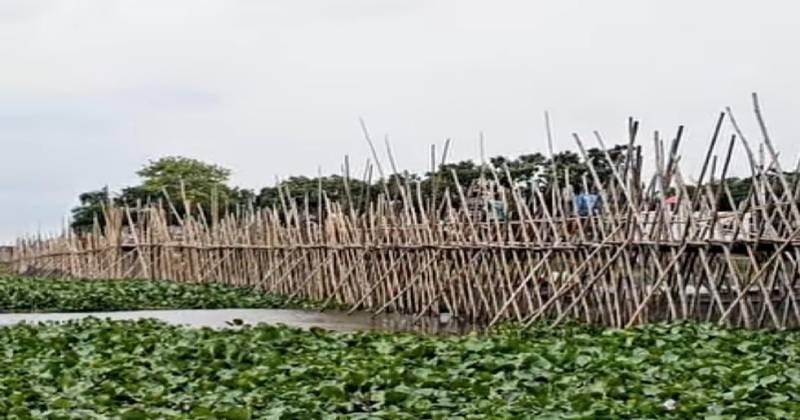
For 55 years since independence, residents of 15 villages across the Oruail and Pakshimul unions in Brahmanbaria’s Sarail upazila, alongside parts of Kishoreganj, have relied on a 700-foot bamboo bridge to cross the Chetra River. Originally built in 1997 and rebuilt annually every November, this temporary structure serves 2,000 to 2,500 daily commuters. The lack of a permanent bridge severely hinders local educational, medical, agricultural, and commercial activities, leaving children, the elderly, and patients especially vulnerable.
Local leaders and residents have repeatedly voiced their struggles regarding this decades-long infrastructural neglect. Islam Uddin, a former union parishad member, noted that students from southern bank villages must cross the bridge to reach secondary schools and colleges on the northern bank. Meanwhile, bridge manager Nur Islam pointed out that while students and goods pass for free, others pay a five-taka toll, though empty election promises have left communities disillusioned.
Highlighting the immense socio-economic impact, Oruail Union Parishad Chairman Md. Mosharraf Hossain Bhuiyan stated that nearly 100,000 people constantly commute using the structure. He emphasized that a permanent bridge would greatly improve student commuting, agricultural transport, and trade. Expressing a community milestone, local schoolteacher Abul Bashar noted that feasibility assessments have been completed, raising hopes for approval in the upcoming Pre-ECNEC meeting.
Political dynamics and administrative actions have further shaped the project’s trajectory. Independent MP Barrister Rumin Farhana initiated surveys following an official DO letter and Project Director directives, which Sarail Upazila Engineer Chibgat Ullah confirmed are currently underway. However, local skepticism persists, with an anonymous 70-year-old resident remarking that political friction surrounding an opposition MP might obstruct development, reflecting widespread community anxieties.
Despite these political hurdles, engineering officials maintain an optimistic outlook for the long-awaited project. Upazila Engineer Chibgat Ullah affirmed that the process to fulfill the 55-year aspiration of the regional population is progressing following the completion of surveys. As feasibility reports move forward, residents continue to hope that their decades of hardship will finally end with the construction of a permanent bridge.