Arab Parties Join Forces Behind Eisenkot to Oust Netanyahu
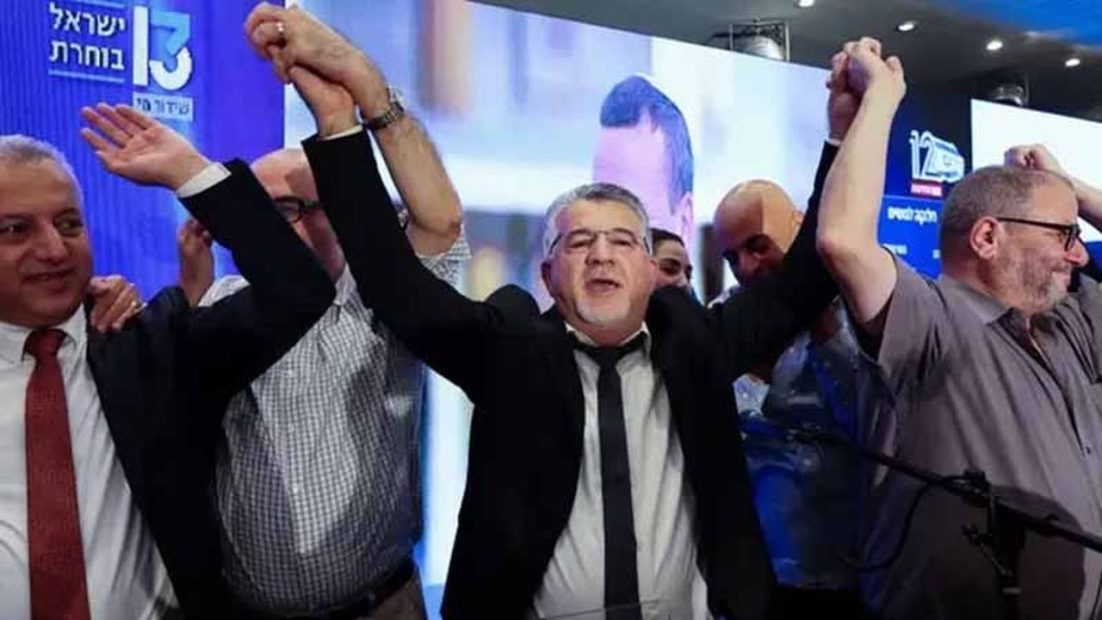
An alliance of Arab-led parties in Israel has announced its support for opposition leader Gadi Eisenkot in the race to form a new government. On Thursday (November 5), the Joint List said it would recommend to President Isaac Herzog that Mr. Eisenkot be given the task of forming the government. As a result, Mr. Eisenkot has the support of more lawmakers than Prime Minister Benjamin Netanyahu. However, this support does not guarantee that he will be able to form a government.
In the general election held in Israel on October 27, Arab-led parties won a record 19 seats in the 120-member Knesset. The Joint List won 11 seats and Ra’am won eight. A candidate needs the support of at least 61 lawmakers to form a government.
On Thursday, the Joint List said it would recommend Mr. Eisenkot to President Herzog as the person who should be given the task of forming the government. Earlier, Ra’am, which won eight seats, had also announced the same decision. With the support of these two parties, Mr. Eisenkot has the recommendations of 67 lawmakers. In contrast, 46 lawmakers have recommended Netanyahu.
However, despite having the support of 67 lawmakers, Mr. Eisenkot still faces a difficult path to forming a government. The Joint List said it does not want to join the government directly but wants to support it from outside. Mr. Eisenkot has also rejected the possibility of forming a government with the two Arab-led parties. Therefore, it is still unclear how he will secure the parliamentary support needed to run the government.
In the election, Netanyahu’s religious-nationalist alliance won 53 seats, while Eisenkot’s opposition alliance won 48. Arab-led parties won the remaining 19 seats. As a result, neither side won enough seats to form a government on its own.
Mr. Netanyahu’s position has become weaker after the ultra-Orthodox Jewish party United Torah Judaism decided not to recommend any candidate to the president. The four lawmakers from Degel HaTorah, a faction within the party, also said they would not recommend either Mr. Netanyahu or Mr. Eisenkot.
The dispute with Netanyahu’s coalition government grew after it failed to pass a law exempting Haredi men from mandatory military service.
Mr. Netanyahu has also created controversy over the role of Arab parties in the election. He accused the Arab parties of election fraud with foreign support. However, no evidence was found to support the allegations. On Wednesday, Israel’s Central Elections Committee said there had been no incident that harmed the transparency or fairness of the election.
Meanwhile, Netanyahu’s Likud party called cooperation between the Arab parties and the opposition alliance “treason.” In a statement after the election, the party warned that cooperation between Zionist parties and Arab-led parties would be dangerous for Israel.
President Herzog, however, called for the Arab minority to be treated with respect and condemned racist statements in political discussions.
After meeting with political parties on Thursday, President Herzog said he would announce the name of a candidate to form the government on Sunday. He said he would choose the person he believes is most capable of forming a government.
The nominated candidate will have 28 days to form a government. If necessary, the period can be extended by another 14 days.
If no candidate can form a government within the given time, Israel may hold another election. Until then, Mr. Netanyahu will remain as caretaker prime minister.
Source: Reuters