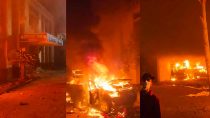
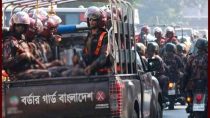
Production Runs at Full Capacity in Calm Industrial Zones Despite Closure of Some Garment Factories
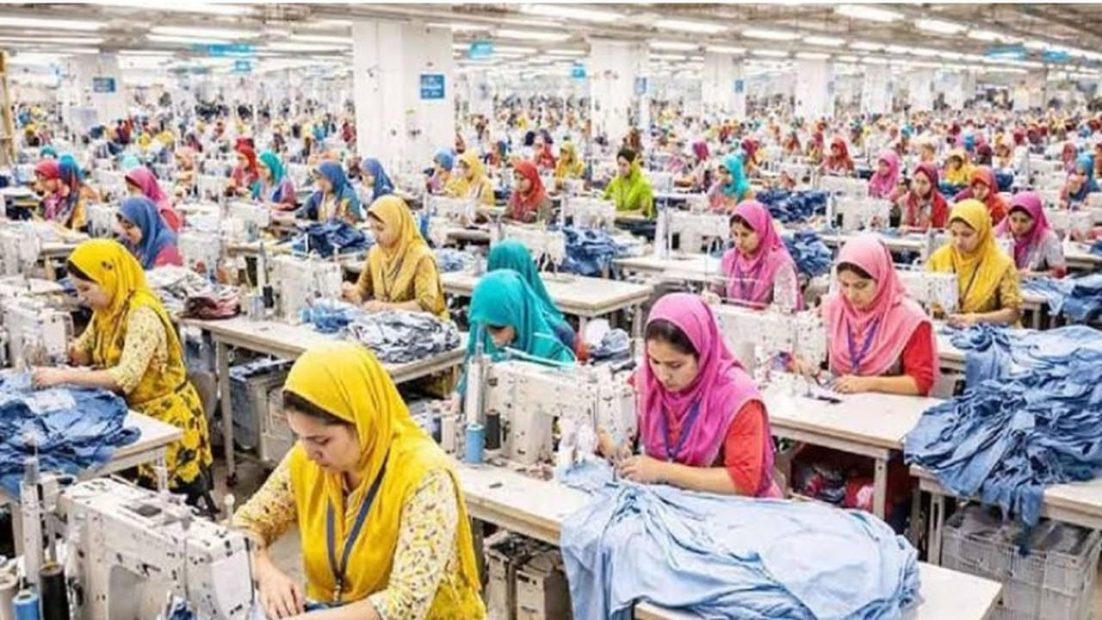
Most factories in the industrial zones of Savar, Ashulia and Gazipur remained busy on Sunday (November 15), following several days of protests, tension and unrest over demands for a minimum monthly wage of Tk 30,000, payment of outstanding wages and other issues.
Although some factory owners kept their units closed under labour laws or for security reasons, workers voluntarily joined their duties at factories that remained open. Production activities continued at full capacity in most operational factories.
However, there were isolated attempts to block highways in some areas of Gazipur. Law enforcement agencies intervened to bring the situation under control. Additional police, industrial police, joint forces and Border Guard Bangladesh (BGB) personnel have been deployed across the industrial zones.
Workers Return to Factories in Savar and Ashulia
Since Sunday morning, factories in several areas of the Savar and Ashulia industrial zones, including Baipail, Jamgora, Zirabo, Narsinghpur, Nishchintapur, Kathgara and Hemayetpur, presented a largely peaceful picture.
Workers gathered outside factories before their scheduled opening hours and entered peacefully after showing their identity cards. No unrest was reported at garment factories in Narayanganj either. Workers joined their duties, and factories continued production, according to local correspondents of The Daily Inqilab.
Khairul Mamun Mintu, legal affairs secretary of the Bangladesh Garments and Sweater Workers Trade Union Centre, said workers entered factories peacefully in the morning and joined their respective departments. However, some factories remained closed due to security concerns and the overall situation.
Mohammad Mominul Islam Bhuiyan, superintendent of police of Ashulia Industrial Police-1, said more than 40 garment factories had been closed under Section 13(1) of the Bangladesh Labour Act, 2006. Additional police and law enforcement personnel have been deployed at key points and in front of closed factories to prevent vandalism and other untoward incidents.
Protests and Highway Blockades in Gazipur
The situation in Kaliakair and Mouchak areas of Gazipur remained mixed. While production continued normally at most factories, workers staged protests and attempted to block roads in some areas. On Sunday morning, workers from at least five factories in the Mouchak area came out of their workplaces without joining their duties and blocked the Dhaka-Tangail Highway. Traffic on the route remained completely suspended for around 30 minutes.
After receiving the information, industrial police, local police and BGB personnel rushed to the spot to bring the situation under control. As tensions escalated, law enforcement agencies fired sound grenades to disperse the protesters. Traffic returned to normal by 9:00am.
Following the incident, authorities declared a general holiday at several factories in Mouchak and surrounding areas. Mohammad Amjad Hossain, superintendent of police of Gazipur Industrial Police-2, said factory owners had kept some units closed for various reasons. However, production was continuing normally at most garment factories in the district from the morning.
He added that law enforcement agencies immediately removed workers who attempted to block roads in the Mouchak area. Meanwhile, Shahidul Islam, officer-in-charge of Kaliakair Police Station, claimed that those attempting to block highways and create disorder in the name of the movement were not genuine garment workers.
He alleged that some groups were taking advantage of the workers’ protests to create unrest. Police conducted an immediate operation and detained several people in connection with the incidents.
Workers Demand Tk 30,000 Minimum Wage
Protesting workers said it had become impossible to run their households on their current wages amid rising commodity prices. They are struggling to cover house rent, food expenses and their children’s education costs.
“We want to work, but we demand a minimum wage of Tk 30,000 that allows us to survive. However, we do not want to stop work; we want a solution through discussion,” they said.
Factory owners’ representatives, however, said a sudden wage increase of this scale would be difficult due to the global order crisis, shortages of gas and electricity, and rising production costs. They also expressed concern that continued protests could force more factories to shut down in the coming days.
An unnamed factory owner said, “We want to keep our factories running and are trying to ensure workers’ safety. But if security is disrupted and factories face vandalism or attacks from outside, it becomes impossible to continue production.”
Tight Security Across Industrial Zones
The administration has taken a strict security stance at key points in Dhaka, Savar, Ashulia and Kaliakair in Gazipur to ensure overall security in the industrial zones. Alongside regular police and BGB patrols, the situation is being monitored round the clock through drones, body-worn cameras and live footage by the monitoring cell at BGB headquarters.
Analysts say protecting workers’ legitimate rights and living standards while ensuring uninterrupted production is essential for the long-term stability of the country’s garment sector. Stakeholders hope that dialogue and mutual understanding will restore lasting peace and order in the industrial zones. There are also growing demands for strict punishment of those allegedly instigating unrest in the name of workers to deliberately destabilise the industrial areas.