Manik Alis Displaced Three Times in His Lifetime in Assam
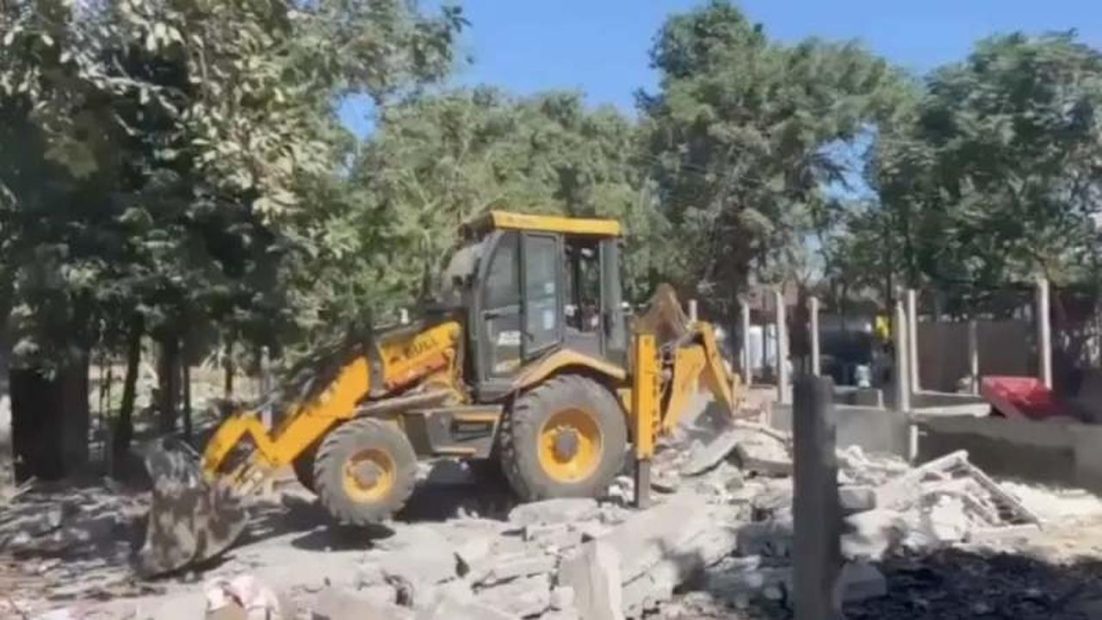
Seventy-three-year-old Manik Ali watched bulldozers demolish the only mosque in Muslim Camp in Assam’s Lakhimpur district on the morning of November 13, before Friday prayers. The mosque was among 132 houses and structures demolished by the district land revenue department in a drive to reclaim government land allegedly occupied without valid documents.
The district administration had served eviction notices to residents two weeks earlier. The operation left hundreds homeless and brought back memories of two previous displacements in Mr. Manik’s life, one caused by river erosion and the other by political violence.
In the mid-1970s, the Brahmaputra River swallowed all his family’s agricultural land in Barpeta district. The family moved to Lakhimpur, where members of the local Mising community helped them settle near the river for sharecropping and livestock rearing. Around two dozen other families displaced from Barpeta also settled there.
However, the Assam Movement (1979 to 1985), an anti-foreigner agitation led by the All Assam Students’ Union (AASU), forced them to flee again. The movement began against the inclusion of alleged foreigners, most of whom had migrated from what was then East Pakistan, on Assam’s electoral rolls. Although initially directed against all people of East Bengali origin, regardless of religion, it increasingly targeted Bengali-speaking Muslims.
In February 1983, a mob of Assam nationalists attacked Mr. Manik’s settlement in the Bhimpora area of Bodhakora. Moinul Ali, a Bengali-origin Muslim, and seven Bengali-origin Hindus were killed. Their homes were looted and set on fire. Mr. Manik, then 30, survived an arrow wound to the back of his thigh.
Recalling the attack, he said, “We were displaced after the violence. Later, the government rehabilitated us on this land beside the Boginadi weekly market.”
After spending three months in a temporary shelter, 25 families displaced from the area were rehabilitated on Boginadi Professional Grazing Reserve (PGR) land in June 1983. The settlement later became known as Muslim Camp.
Displaced for the Third Time
Seventy-year-old Mujibur Rahman, another resident evicted in the recent operation, said the government had rehabilitated the families on PGR land and issued them identity cards after the 1983 violence. “We have been living on this land for the past 47 years,” he said.
Seventy-five-year-old Hanif Ali, citing records from the 1951 electoral roll, said his family had lost its ancestral land to river erosion before moving from Barpeta in 1977. They were displaced again in 1983 and are now facing eviction for a third time.
River erosion destroys an estimated 8,000 hectares of land in Assam every year. More than 30,000 hectares of agricultural land were lost between 2016 and 2024. Evicted families are now spending nights on the sandy banks of the largely dried-up Boginadi River.
Eighteen-year-old Banesh Ali, who is preparing for the National Eligibility cum Entrance Test (NEET), said he could not sit for his first-semester BSc practical examination because of the eviction.
A college student collecting textbooks from the rubble of her home asked, “There are elderly and sick people, pregnant women, and school and college students here. Where are we all supposed to go now?”
State Indifference
Government reports say the eviction drive across Boginadi PGR Blocks 1 and 2 displaced 704 people from 132 families and reclaimed 320 hectares of land.
Government departments had recorded the settlement as “Refugee Camp”, “Muslim Camp” and “Miya Camp”. It had a primary school, an Anganwadi centre, piped water under the Jal Jeevan Mission and electricity connections from the Assam Power Distribution Company Limited.
However, the identity cards issued to residents did not mention their rehabilitation on PGR land. They only recorded their arrival at and departure from a relief camp in February and June 1983. The cards also lacked serial, issue and file numbers.
The mosque’s land documents were similarly unclear. Four bighas, two kathas and 10 lechas of PGR land had been allocated for a mosque and cemetery in 1992. But the corporation that made the allocation had no registration number and had long since been dissolved.
The original 25 families and their descendants therefore lived on the land for more than four decades without formal ownership. Successive governments failed to provide them with permanent land settlements. Their requests to convert the occupied land into Miyadi Patta, a form of land lease, were either ignored or allegedly caught up in corruption.
Mahar Ali alleged that families paid between 5,000 and 20,000 rupees to a revenue official who promised to convert their land into Miyadi Patta.
BJP’s Eviction Drives
Eviction drives gained momentum after the BJP came to power in Assam in 2016. The party campaigned on protecting “Jati, Mati and Bheti” (community, land and homestead) and cited Gauhati High Court directives to justify operations against alleged encroachers.
The drives began around Kaziranga National Park in September 2016 and later spread to areas including Sipajhar, Dhubri, Hojai, Lakhimpur and Barpeta.
After Himanta Biswa Sarma became chief minister in 2021, large-scale operations were carried out in several districts. In September that year, two people were killed in police firing during an eviction drive at Gorukhuti in Darrang district. The incident sparked widespread outrage after a government photographer was seen jumping on the body of one of those killed.
According to 2024 state revenue department data, more than 10,620 families, most of them Bengali Muslims, had been evicted from government and forest land in Assam since 2016.
The BJP has faced allegations of selectively targeting Bengali Muslims. In the latest operation, only Bengali Muslim families were evicted from 320 hectares of the approximately 900-hectare Boginadi PGR, while non-Muslim communities continue to live on the remaining land.
A woman from an affected family questioned the selective action, saying, “When people from other religious communities are still living on the other side of the PGR land, why are only Muslims being targeted for eviction? Are we Muslims not human beings?”
Desperate Appeals for Rehabilitation
For decades, Muslims of Bengali origin in Assam have been labelled “Bangladeshi” or “Miya” by sections of the state’s mainstream commentators. The Assam Accord, signed in 1985, set March 25, 1971, as the cut-off date for identifying foreigners, regardless of religion.
The BJP’s political narrative of sheltering Hindu migrants of East Bengali origin while deporting their Muslim counterparts gained wider support from 2014. The Citizenship Amendment Act was passed in 2019.
Assamese-speaking Muslim communities have also faced discrimination despite their historical ties with mainstream Assamese society. The Moria community, whose ancestors were soldiers of the Delhi Sultanate captured in Assam in the 15th century, received eviction notices in Lakhimpur this month. The Goria community had also faced eviction in 2015, affecting 218 families.
In an attempt to protect his family, Mr. Manik left the Indian National Congress and joined the BJP as a party worker in 2016. His son is the vice-president of the Lakhimpur district BJP Minority Morcha. Mr. Manik said he had campaigned for the BJP’s Manab Deka in the last Assembly election, yet the same administration was now evicting him from his home.
The displaced residents are seeking government assistance for rehabilitation. They have cited a November 12, 2026, Gauhati High Court order directing the Assam government to rehabilitate and compensate families evicted from Hasila Beel in Goalpara, Bongara in Kamrup (Rural) and Kachua in Nagaon district.
Speaking to Maktoob, Mr. Manik appealed to the state government to consider the families’ history of displacement and their previous rehabilitation with compassion.
Source: Maktoob